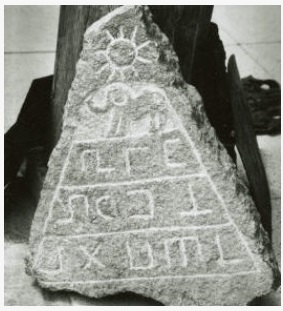
Elephant Tablet found during construction of Cuenca Airport, Ecuador
© 2016 B. L. Freeborn, updated August 2022
This piece from the Crespi Collection found during construction of the Airport in Cuenca, Ecuador is obviously related to the three stones shown below. An image of the Cuenca stele was published in a book by Barry Fell in 1976. The other three are from Burrow’s Cave which was reportedly found in 1982. In a previous post this stone was translated. Can it be determined if the other three are copies of this stone and if the copies were made relatively recently?
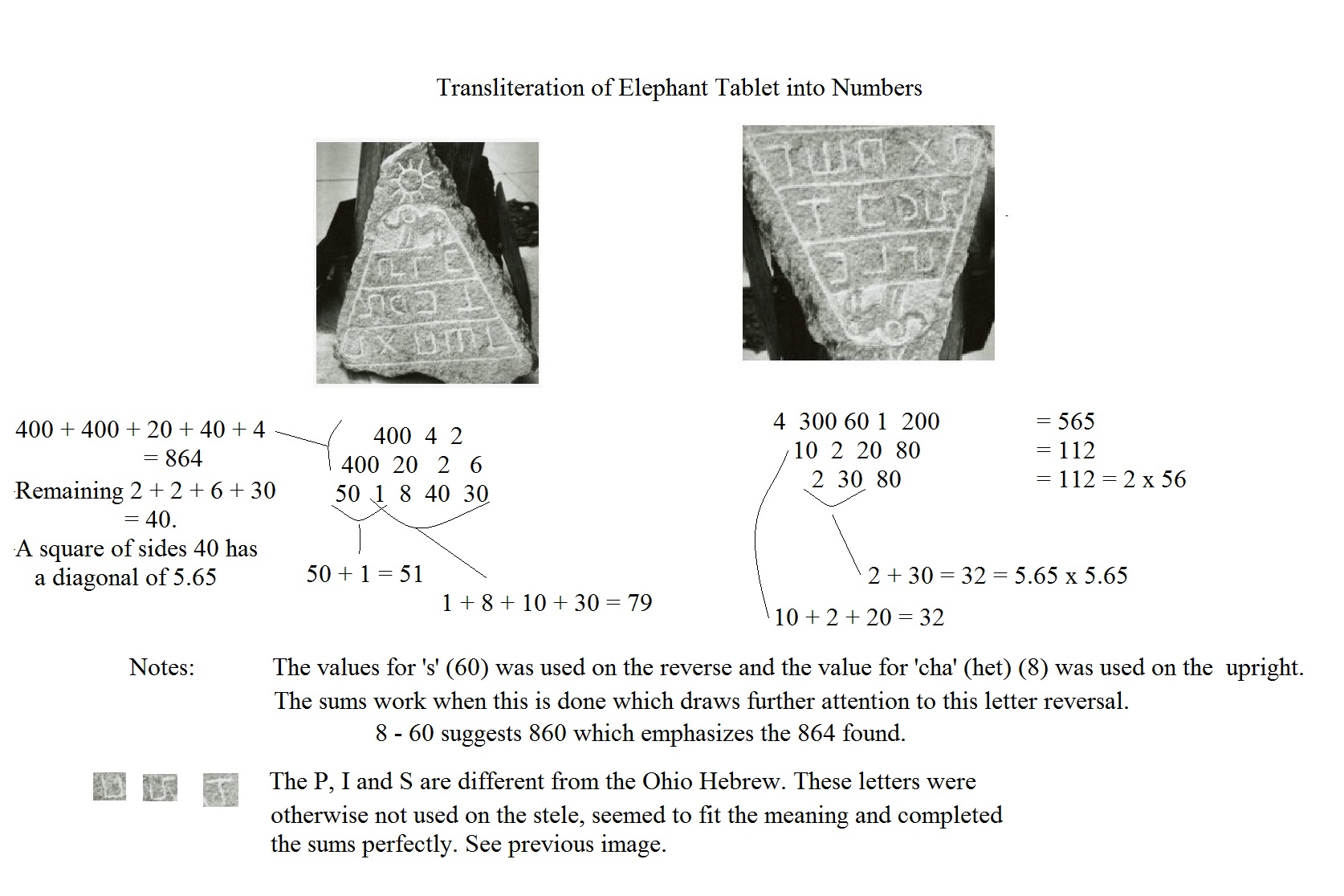
Using transliteration into Paleo-Hebrew circa 200 to 100 BC and Hebrew Letters as derived by J. Huston McCulloch in his study of the Newark Decalogue Stone from Ohio, the Elephant Tablets are translated with the aid of the Anglo-Saxon Language.

These copies of the elephant stele are believed to be from Burrow’s Cave which means their authenticity is in question.
Compare the detail in the elephant and Sun. The Sun should appear as a dual reference to Baal’s crater as an origin. The Cuenca shows two eyes and lines radiating from a central O. The trunk of the elephant does not show the all important crater shape in any of the other copies. The back of the mammoth does not appear broken and in the eyebrow shape of Hudson Bay. If it was copied from the Cuenca Stele then the ‘copier’ was far removed from the significance of the detail in it.
The overall presentation on circular and chipped tile shapes is consistent with the story of Baal. However, the stones on the left and right appear freshly machined. And finally, the inscriptions in line 1 and 2 are different than the Cuenca.
The letter ‘th’ in the first line is not reversed as in the Cuenca example which suggests two possibilities. The first is both lines are to be read left to right. The second possibility is the copier was unaware of why the ‘th’ was reversed in the first line and corrected it. The lifespan of the copier cannot be determined by this difference just that he might have thought it was an error in the original. The middle stone’s N (center of first line) is truer to the Paleo-Hebrew style. But it also appears to be an L which then gives the word BL or Baal when read right left.
Lastly, note the facing C’s in the middle line of all four. These were seen in other tablets from Ohio and in art from Knowth, Ireland. Previously, using Luwian glyphs the meaning Great Origin or Mighty Crater was derived from this pattern. It also leads one to another translation of the middle line. If the ‘Th’ stands alone to represent ‘the’ and the C is the Luwian symbol for ‘great’. This then reads ‘The Great cave of Baal’ which is totally plausible and in line with ancient wit to use two languages/alphabets within a text (as academics still do today) and two meanings within the same line.
The overall problem remains though. Because the image of the Cuenca stele was freely available, did Burrow’s make the other three by copying it with minor changes? Barry Fell himself stated the first image published of the stele had an incorrect letter. That mistake appears in the Burrow’s Cave steles.
Old and real? New and fake?
Or copies of secreted away originals?
_________
Back to first post on Elephant Tablet Ahead to Next Post
Back to Newberry Tablet beginning or its conclusion.
____________________
See full article on the alphabet by J. Huston McCulloch at:


 noahsage