Another Riddle in Stone from Canada

B.L. Freeborn © March 2023                            (Full article as PDF)

Another riddle presents itself. The origin and meaning of the inscription on the Feather Stone of Eastern Canada like many others is debated.
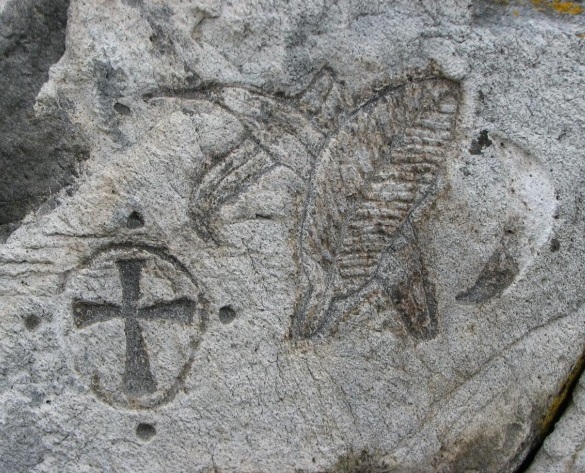
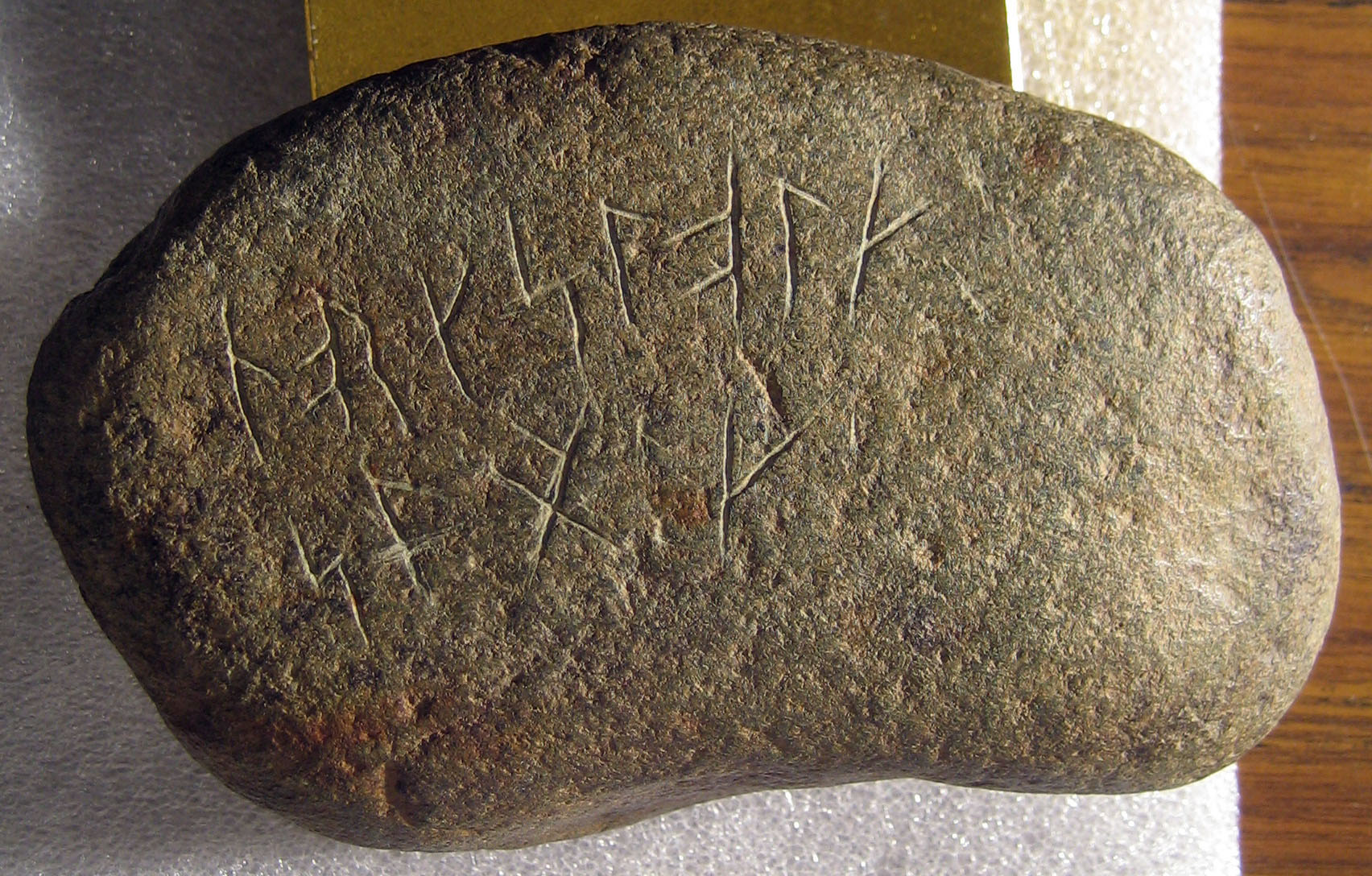
Upper carving on stone.
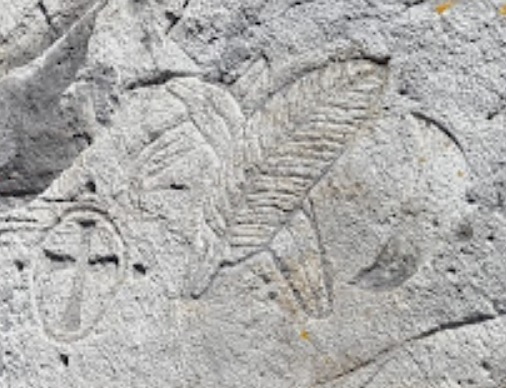
Upper carving.

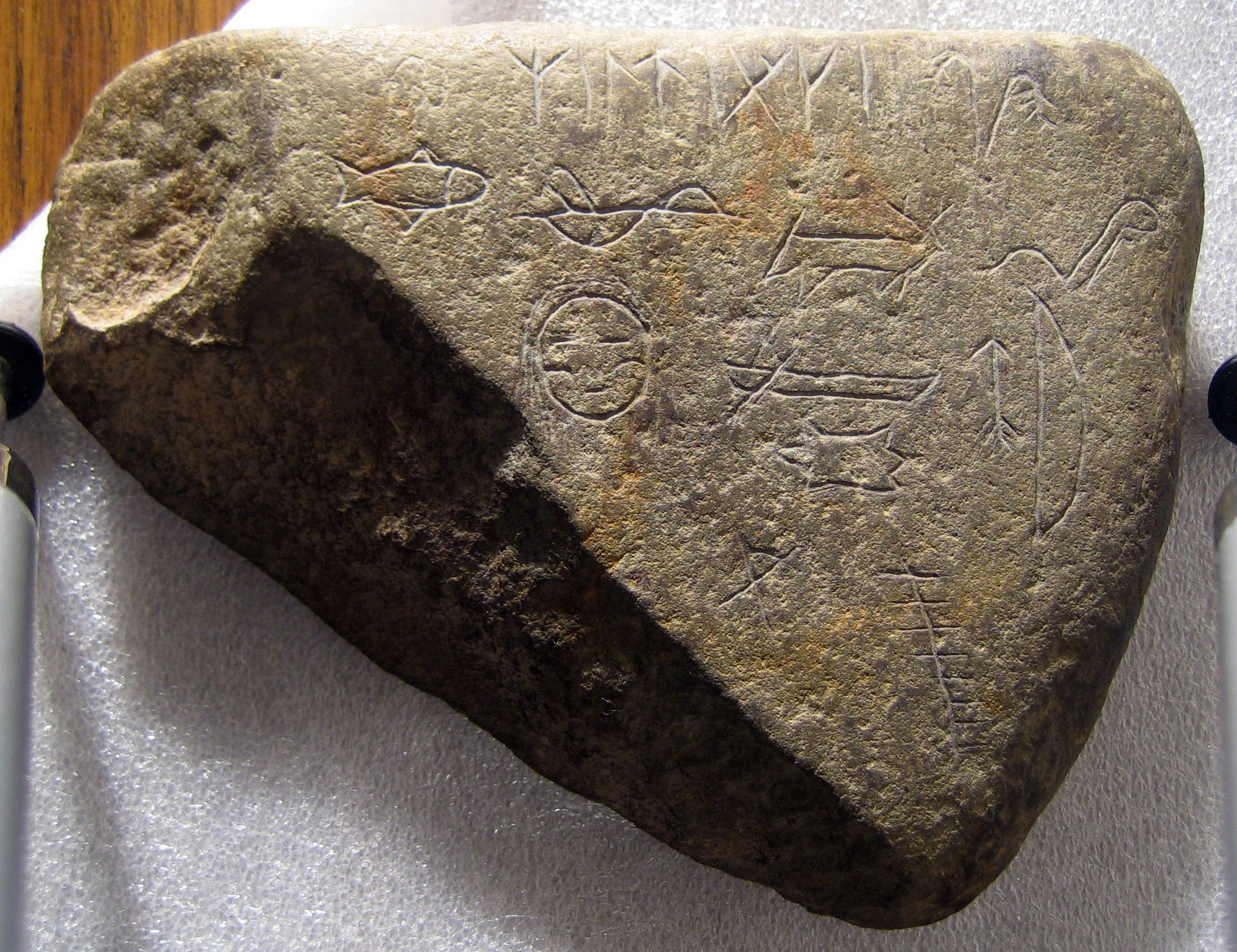
The first of these carvings is a rebus. The second (see below) is a pictogram. Once you see it, there is no going back! The upper carving reads:

Father Henricus left (us) in 1124.
OM to leave for north cup tie in 1154.
Baal hit north (at) cup.

Similarly, the lower carving reads:

Henricus 1116-1117
(at) site Bael’s cup, (the) pole tie.
Daggers hit pole (and it) turned.
Baal hit (the) peg (at the) arc (and) hole.
1123-1124

The upper carving appears Christian. The observer is supposed to think it is, to protect it. [To continue this protection, because of vandalism, its location is not stated. It is off limits to the public now.] This seems to have worked since it still exists. The message is the same in both. These are pagan / Baalist statements similar to others found in the Spirit Pond stones, the Kensington Rune Stone and the Vinland Map. The date given on the map stone and others from Spirit Pond for Henricus’ departure is 1124.(Monge) Those stones date from around 1214-16 (Freeborn) and were written to commemorate Henricus who is clearly described in the long legend of the Vinland Map as having been the Bishop of Greenland around 1117. The next bishop was named in 1124. These must have been carved after 1124 but before Henricus faded from hero status in Vinland which provides a date span.

Interpretation of Upper Carving

The artist was clever. He spells out Henricus. The ‘feather’ provides the letter I which is a straight line in both Latin and Futhark alphabets. The ‘two leaves’ create a T. Now the word TI can be formed or ‘tie.’ They are also arranged in such a manner as to create an H, which is the same in both Latin and Elder Futhark. This creates HIT or ‘hit.’ This is also the H of Henricus. The I was just found. There is a notable similarity between ‘father’ and ‘feather.’ See it as ‘father + E.’ (Spellings varied at the time.) Now we have an E for Henricus.

The crescent provides a U and C depending on your view. It is also an arc which also provides an ‘a’,‘r’ and ‘c.’ So if you do not like the idea of getting an ‘e’ from feather then the ‘a’ and ‘e’ can switch, however the reader might want to see it. Then again, in the Younger Futhark, ‘I’ is also an ‘e’ so once again the E of Henricus is found.

The R is there as well. The arc/crescent provides the upper curve of R. The feather is the upright and the end of the leaf is the downstroke of R. We now have HE_RICU_. What of the S and N? There are ‘2 leaves’ or ‘to leave + S.” The S is found.

Now, where to find the N? That circle and cross is supposed to emphasize this is Christian. That is important in an era when Christians are committing genocide of pagans and Baalists. Look at it again and you will see it is a compass. The cross is a Futhark N in an O. (See tables at end.) This same idea is found on the Kensington Rune Stone. The 4 dots further indicate the cardinal directions. The compass implies North. The O and N spells ‘on.’ The N of Henricus is found. Additionally, the O represents Baal and where it hit is provided by the idea of North in the compass.

Now we have the phrase ‘to leave on’ which suggests a date must be here. Knowing it in advance is perhaps cheating. There is 1 arc, 1 feather, 2 leaves and 4 dots ⇒ 1124. This can additionally be confirmed by the Elder Futhark letter/number equivalents. The letter values for H and U are 9 and 2 which sums to 11. The value for O is 24 so that 1124 is found again. The Golden Number (GN) used in the Perpetual Easter Table (see table) is 4 for that year. The Day Letter (DL) value for that year is 5. Around the O are 4 dots. Furthermore, there is a 5th dot pecked directly above which is the DL. The Elder Futhark E is shaped like an M. The two leaves and feather can be seen as an M or as stated, a Futhark E with value 19. This is the line number for years 1116 to 1124. The year then is confirmed.
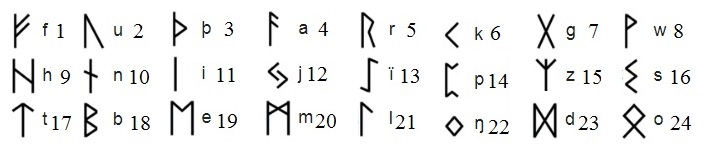
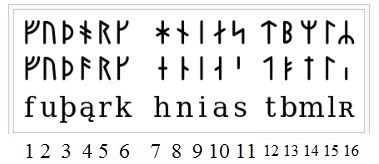
Elder Futhark Alphabet sound and numerical value.

Now that it has been decided what this carving says, an additional bit reveals the artist himself. As stated, the compass provides an O. If the leaves and feather form an M, then perhaps these are initials OM. The date could be 1154 for similar reasons as stated above. The artist names himself and states when he carved this. This is the work of OM and he traveled here in 1154. This OM left other beautiful art work that shall be discussed in another article. So, we add the artist to this interpretation.

It reads quite easily now:

Father Henricus left us in 1124.
OM to leave for north cup tie in 1154.
Baal hit north (at) cup.

Interpretation of Lower Carving

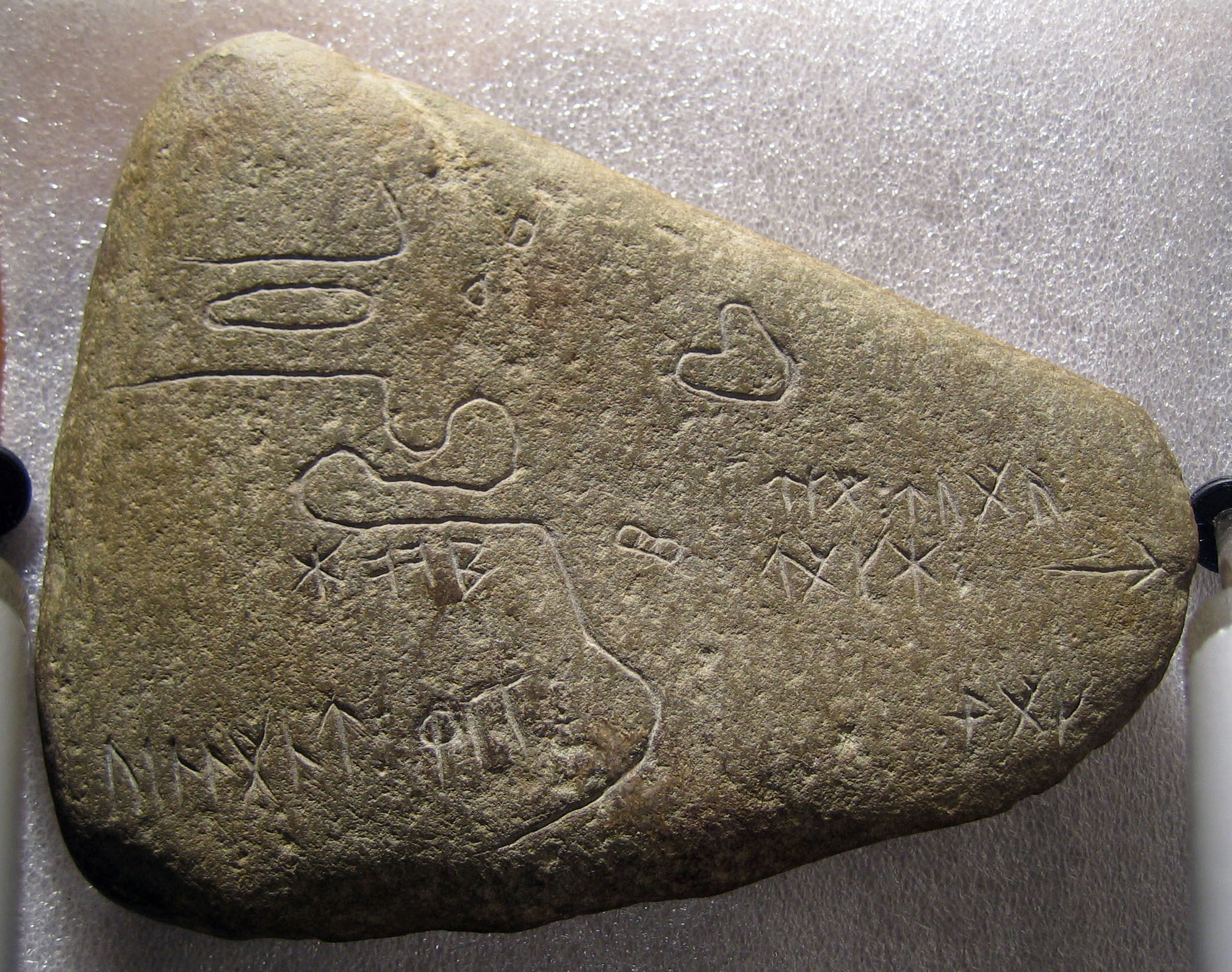
The second inscription is more weathered probably due to its lower position on the stone in a climate with a lot of snow. Typically the bottom two portions are read as 06 07 which are Arabic numerals. These were in use within mathematical circles in Europe before the 1100’s. If the intention was to emphasize these, then they suggest a date of inscription of 1206-1207 for reasons as stated above. However, they are not just an 06 and 07. The images here show this is what we want to see because that is what we expect and what is actually there seems …well…odd.
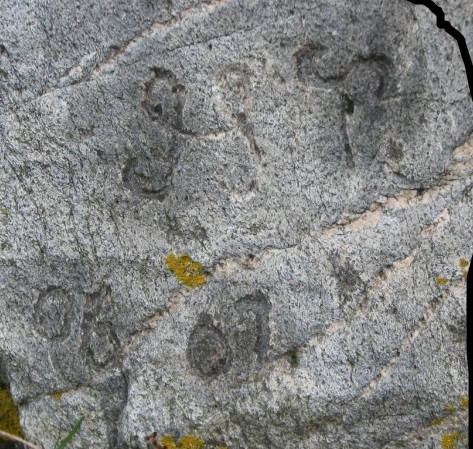
Lower carving on stone.

The 06 begins with an O as in the name O-den. It represents a hole. Then the arc as seen in the upper carving is represented here and connects the O to a peg. The ‘6’ is Baal, a round object with a tail, that strikes the peg or pole. In plain language, ‘a comet strikes the north pole.’ This is a pictogram of an event that is an essential part of the pagan / Baalist religion. It is similar in nature to statements found on the Kensington Rune Stone, Spirit Pond stones and even the Vinland map etc.
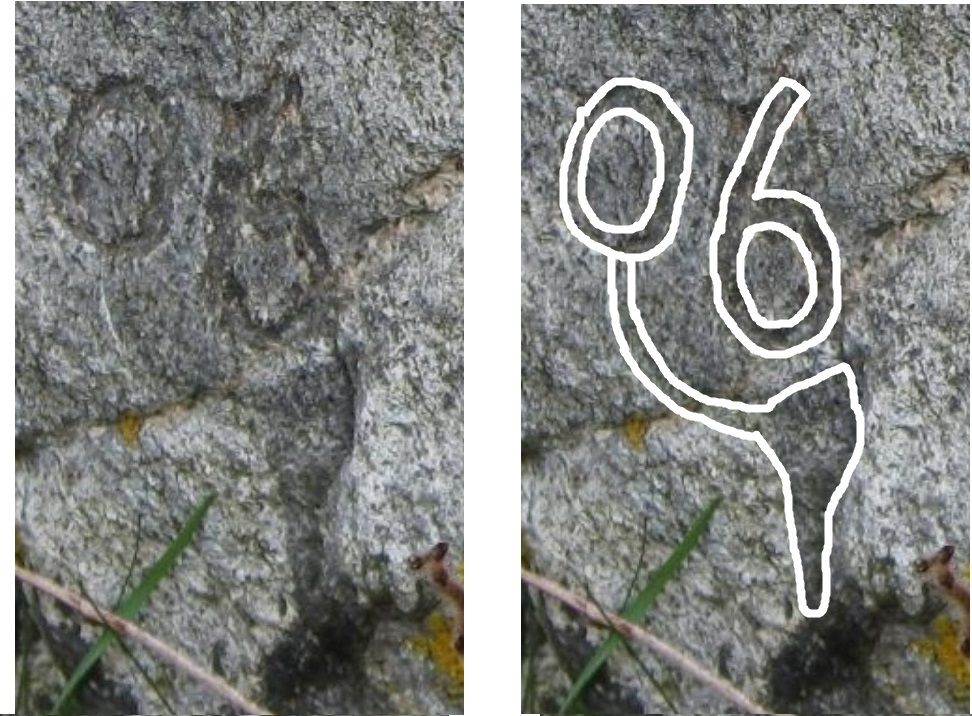
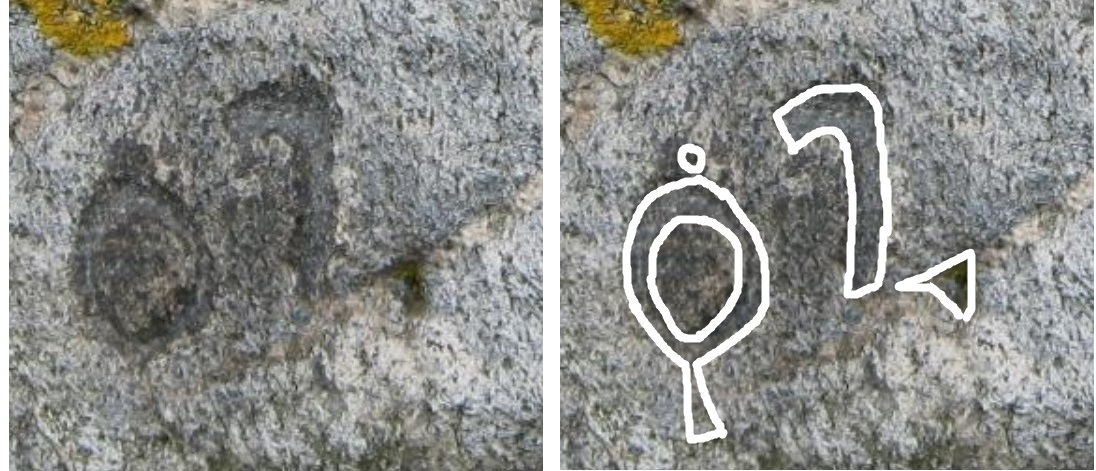
The 07 provides an O on a peg as well. The slightly curved 7 is very useful. It suggests a pole, an arc, small ‘r’ and the upright stroke of an L. The small wedge at its base completes the L and also creates a V shape. The ‘r’ is turned. The pictogram tells us the ‘dagger struck the pole on top of the world and it turned.’

The cursive looking H is most certainly the first letter of Henricus. The cup and U are found within the H at the top. C is in the left vertical. A cursive/lower ‘e’ is at the top left. The lower M shape of the H might also be seen as an Elder Futhark E. The right upright provides P. The double loop at the top is both a Latin and Futhark B. The left intersection is a Futhark N and the right is an A. We now have: HENR_CU_ , BAEL and also POLE. The I and S of Henricus are obvious in the letter to the right that creates a T as well. Now the words are complete with Henricus, Bael, tie, hit, sit/site and pole.

If a date is suggested here, it appears to be …24. The carving is on 2 lines with 4 groups which suggests 24. A similar date can be found by counting parts. The ‘06’ has 2 parts and the ‘07’ has 3 parts …23. These years are seen in the Bourne Stone, Newport Tower, Long Inscription Stone from Spirit Pond in reference to Henricus. The repetition of these numbers suggests it commemorates these dates.

For those who are interested – for year 1123: the Line # is 19, the GN is 3 and the DL is 7. If that useful H is seen as an Elder Futhark ‘E’ then 19 is found. Similarly, for year 1124: the Line # is 19, GN is 4 and DL is 5 and 6 (a leap year). The 19, 4 and 6 have all been found.

Two other dates are apparent. The year of Henricus’ arrival in Vinland is considered to be 1116-1117 per the Spirit Pond Stones, Vinland Map and the Newport Tower inscription. That same I of the T, on the right side, has value 11 in Elder Futhark, an S has value 16 and the T has value 17 so ….1116 – 1117.

The interpretation reads:

Henricus 1116-1117
(at) site Bael’s cup, (the) pole tie.
Daggers hit pole (and it) turned.
Baal hit (the) peg (at the) arc (and) hole.
1123-1124

The reader might want to explore the references below to confirm these translations are supported elsewhere. It would appear the extent of Norse / northern peoples exploration and occupation in North America is vastly misunderstood and underestimated. Overall, they are both clever reminders that Henricus once led Vinland and he was important to people of northeast North America.

PREVIOUS POST  – NEXT POST

Similar Articles by the Same Author in PDF and Post:

*Easter Tables

** For numeric background see:

**Freeborn, B.L., Validating North American Runic Inscriptions, noahsage.com, November 2022. PDF only.

Freeborn, B.L., The Vinland Map Ciphers, noahsage.com, December 2025. Book only see post.

Freeborn, B.L., The Vinland Map Ciphers Addendum, noahsage.com, December 2025. PDF only.

Freeborn, B.L., Ancient Riddles to Test Our Wits: The Secret Chamber, noahsage.com, January 2016. Post here.

Freeborn, B.L., Another Riddle in Stone from Canada, noahsage.com, August 2025. Post here.

Freeborn, B.L., Deciphering the Spirit Pond, Nomans Land and Narragansett Runic Inscriptions, noahsage.com, November 2022. Amulet post. Map stone postPDF only.

Freeborn, B.L., Et in Arcadia Ego – OUOSVAVV DM – Deciphered, noahsage.com, December 2022. Post here.

Freeborn, B.L., Kensington Rune Stone: A New Translation, noahsage.com, February 2023. Post here.

Freeborn, B.L., Rök runestone of Sweden, noahsage.com, April 2023. Post here.

Freeborn, B.L., Runic Riddles: Time Capsules, noahsage.com, December 2022. Post here.

Freeborn, B.L. The Long Debated Bourne Stone, noahsage.com, January 2023. Post here.

Freeborn, B.L., The Nomans Land – Leif Eriksson Inscription, noahsage.com, December 2022. Post here.

Freeborn, B.L., The Narragansett Inscription: A Translation with its Date of Dedication, Author and Inscriber, noahsage.com, October 2022. Post here.

Freeborn, B.L., The Newport Tower: Finding the Date of Dedication, its Designer and Builder, noahsage.com, October 2022. Post here.

Freeborn, B.L., The Wawa Stone and Its Viking Ship, noahsage.com, August 2025. Post here.

Freeborn, B.L., Rok Rune Stone and its ciphers, noahsage.com, November 2024. Post here.
The Wawa Stone and its Viking Ship

B.L. Freeborn © August 2025, Updated September 2025                     (Full article PDF here.)

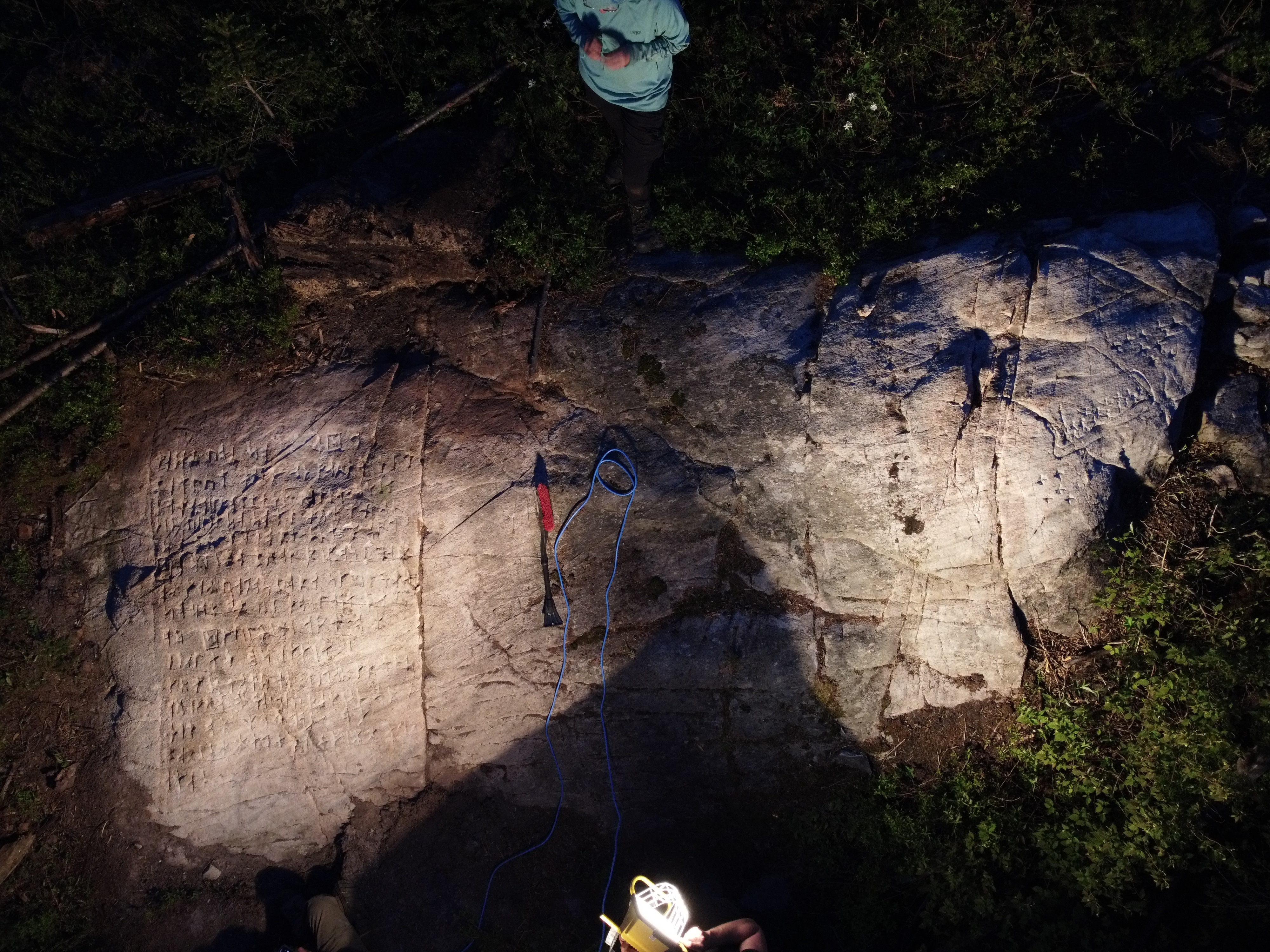
The Wawa Runestone is an excellent topic for study. It is located in Wawa, Ontario above Lake Superior. More information and photos are available at OCARE, Ontario Centre for Archaelogical Research & Education.

Image from OCARE.

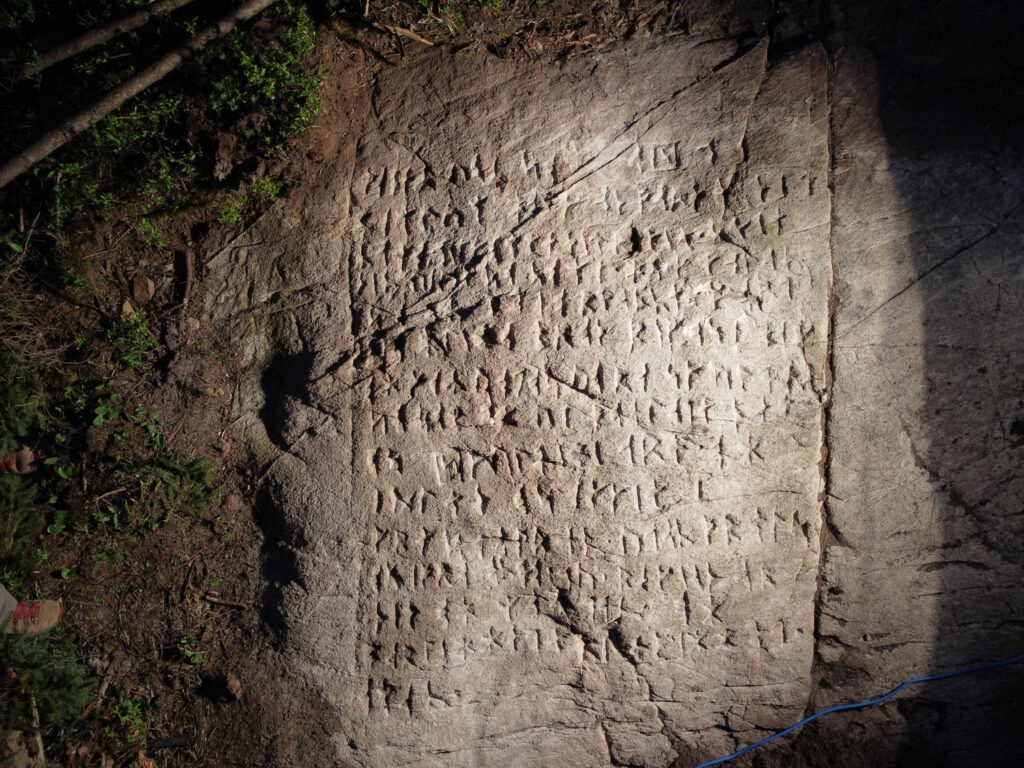
The runestone is composed of two parts. There is an extensive inscription in runes on the left and higher up on the rock to the right is a ship in a Viking style. Dr. Henrik Williams was first to study the inscription and will be publishing a paper on the topic. In the meantime, a video is available where he discusses the stone with David Pompeani. (YouTube link here.) In that discussion, he states that often a runic inscription has no relation to the art presented and that the two parts may have been done by different people. That seems to be true here. Indeed, the reader can see easily that the long inscription was done with a sharper, finer tool while the ship was done with a more blunt tool and a much stronger arm. Dr. Williams has identified the inscription as a protestant version of the Lord’s Prayer in modern Swedish. The inscriber did not date the inscription which leaves room for some discussion. It is believed to be of 17th to 19th century origin.

Image from OCARE – Long inscription on left side of Wawa Stone.

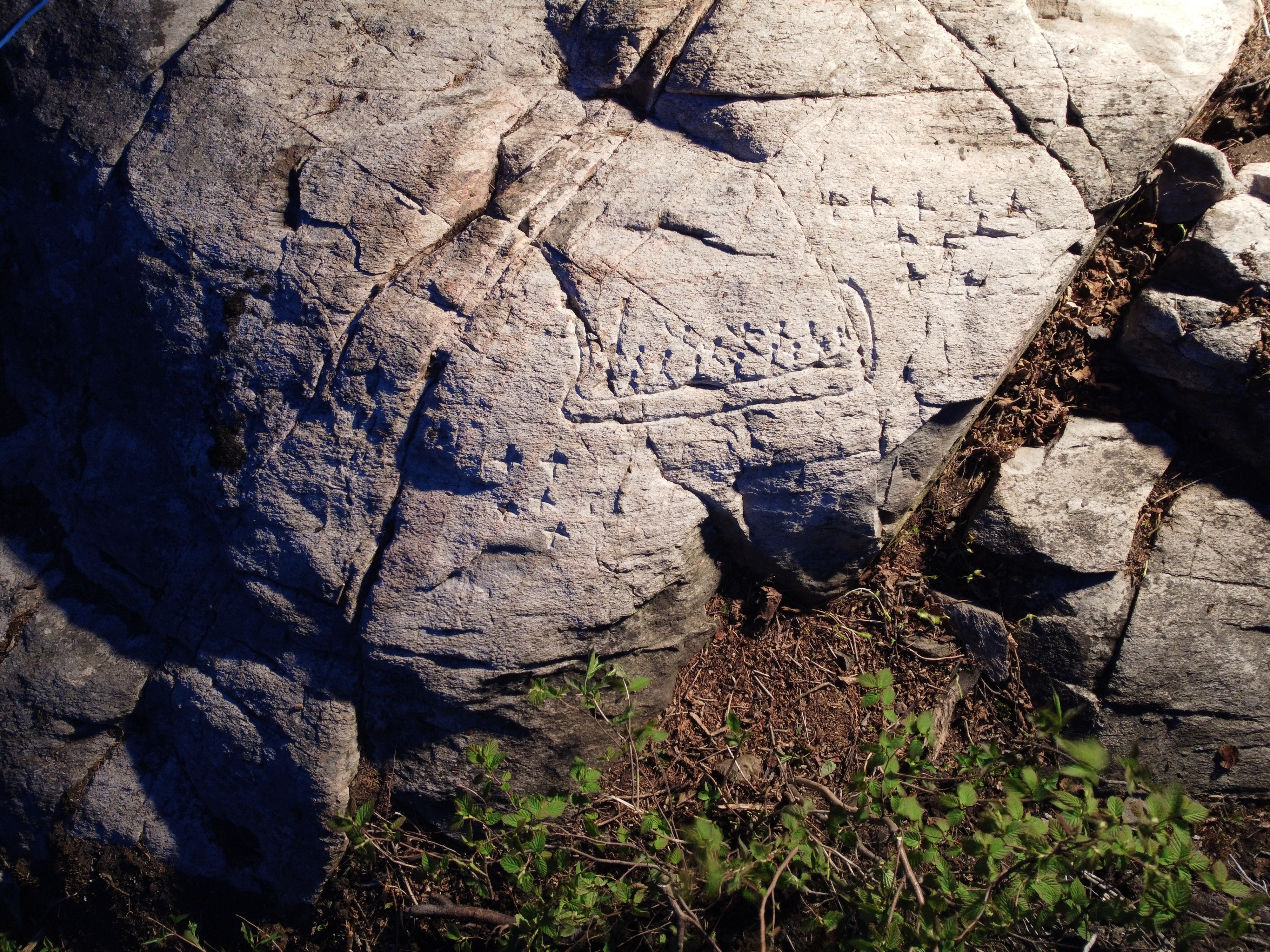
As far as the right side with the Viking ship, Dr. Williams could not comment on it, nor did he know the meaning of the X’s. Many would presume these X’s are burial crosses but that implies Christianity, and the Vikings were not necessarily Christian despite their supposed conversion. People converted at knife point are seldom true believers. What then did the artist intend to convey with the crosses? There are no runes present to give any further clues.

Image from OCARE – Ship on right.

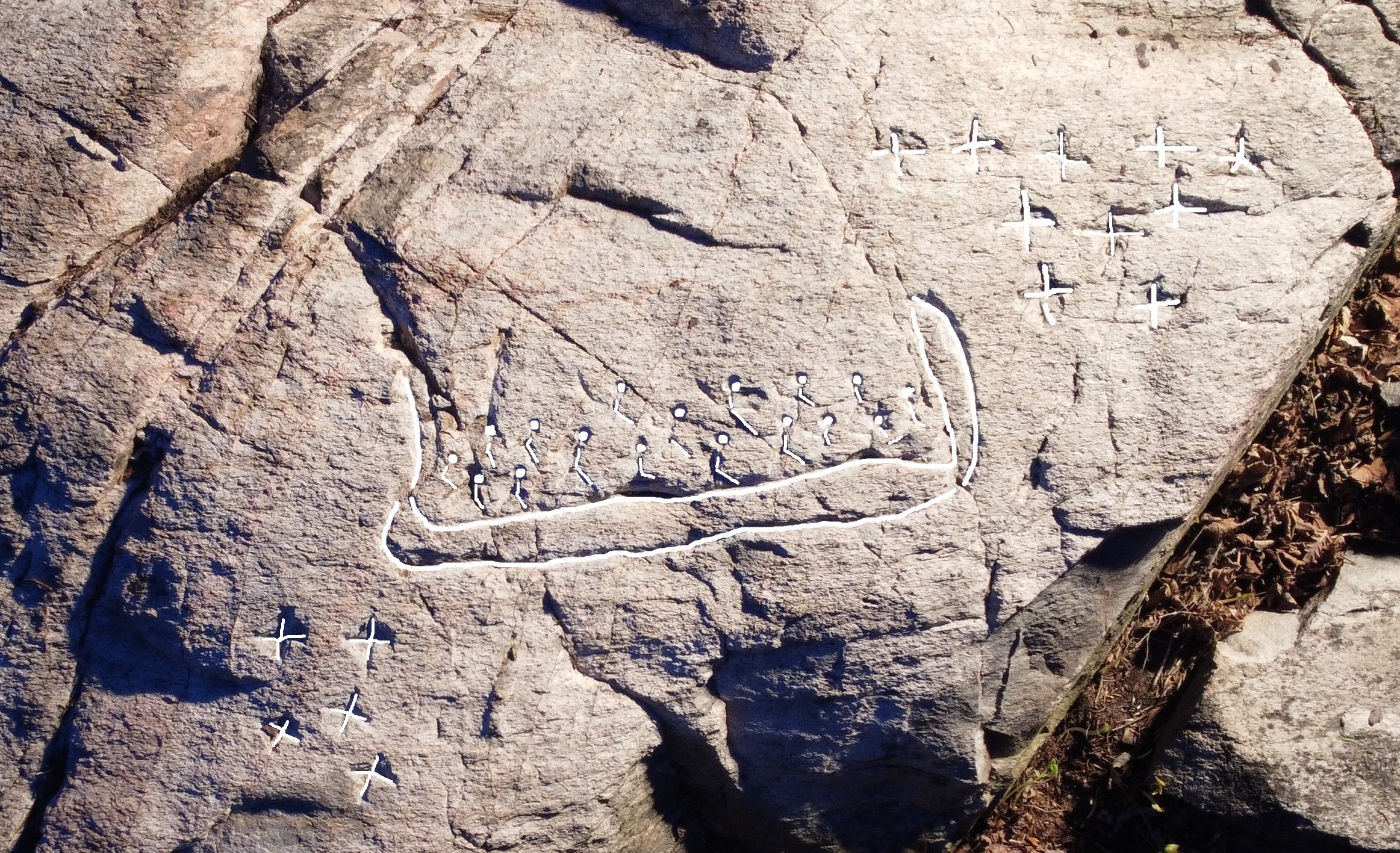
Let this not deter us from further study. Notice the artist has presented us with two groups of crosses separated by the ship which implies the number of X’s has some significance. There are five on the left and ten on the right. The number of people shown in the ship appears to be seventeen but others count sixteen. This gives 17, 10 and 5 which is hardly enlightening. However, on closer inspection one notices that the 5 X’s are so arranged to provide two groups of 3 and 2. This grouping then provides 5,3,2. (See image below.)

Closer inspection of the group of ten on the right provides 5 X’s in the first horizontal line, 3 in the next and 2 in the last so that 5,3,2 repeats. This is significant. The Perpetual Easter Calendar/Table was used in the Catholic Church from early times and was still in use long after the Viking era ended. Since calendars were not available, a device was invented similar to a slide rule that allowed the user to determine on what day of the week the first Sunday would fall for each year (known as the Dominical or Day Letter). It repeats every 532 years. (See PDF – Easter Table.) The artist may not have known his letters/runes but he knew his numbers. By providing the 532 in each group of X’s the artist makes it clear there is a date here.

Men and X’s highlighted in white.

To obtain a date from the Table one needs a Line Number #, Golden Number (numbers within the table) and the Dominical Letter/Day Letter (DL) which runs along the top. A proper dating should repeat the date in someway in a more straight forward manner. Presumably, this is the purpose of the X’s.

If one uses the numbers 5, 10 and 17 as provided by the groupings there is no match within the table. However, if the X’s were to announce a date is present, then the 17 men must imply the date in some way. Perhaps it is 1017,1117,1217, etc. But which century?

Year 1217 is on Line #3 with Golden Number (GN) 2 and Dominical Letter (DL) #1. These numbers are provided easily by the three groups of numbers, two of which are X’s and one of which is men. This makes this date a strong possibility. However, it is more likely they refer to year 1123. The Spirit Pond Stones speak of Henricus who was the Bishop in the Vinland Map. He traveled to Vinland circa 1116 and died presumably in 1123, based on church records for his replacement.

The number 23 is easily found in more than one way by the positioning of the X’s. The year 1123 has Table numbers: Line #19, GN 3 and DL # 7. The value 19 is not represented but the right hand grouping of X’s can be easily separated into 3 and 7.

Other dates were studied with mixed results. One might say that the artist did not mean for us to use the calendar to derive the date. But the artist certainly used the number 532 to alert us to the presence of dates.

Both 1117 and 1123 are strongly supported by the art. Indeed, they are both supported by the Spirit Pond Stones (link to study), the Feather Stone of northeast Canada (link here) and 1117 is supported by a runestone found in the Newport Tower (link to study). Both of these dates refer to the arrival and departure of Bishop Henricus in Vinland as mentioned in the Vinland Map.  According to both the Spirit Pond Long Inscription Stone and the Vinland Map, he explored up the St. Lawrence and down into Hudson Bay. The proximity of Wawa to Hudson Bay should be noted. The 1117 and 1123 would then be commemorative dates. They mark the beginning of exploration of northern North America by the Vikings. Continued exploration should have followed which explains who may have carved this ship and suggests when.

The unknown artist commemorates
Henricus and his Viking sailors’ exploration
in 1117-1123.

Sadly, virtually everything found in North America that might indicate any European explorer from the dawn of time tread here before Columbus has been declared a fake, destroyed or intentionally forgotten. One such notable work that discusses this topic is “The Rediscovery of Lost America” by Arlington Mallery and Mary Roberts Harrison, 1979. This work has also been denigrated but if one takes the time to read his references, then his work speaks volumes.

What then happened to the Vikings / Norse / Normans who came to America? Why has history forgotten them? There is a simple answer. If these people were anti-Catholic, then it would have been essential to keep the continent and their colonies a secret. If they lived very simple lives in longhouses and communities, then they left little behind. If they remained in contact, on the sly, with northern Europe, then the Black Death came with the sailors and wiped them out in the late 1300’s as well as any memory of them that existed in Northern Europe.

PREVIOUS POST   –   NEXT POST ON THE FEATHER STONE

Similar Articles by the Same Author in PDF and Post:

*Easter Tables

** For numeric background see:

**Freeborn, B.L., Validating North American Runic Inscriptions, noahsage.com, November 2022. PDF only.

Freeborn, B.L., The Vinland Map Ciphers, noahsage.com, December 2025. Book only see post.

Freeborn, B.L., The Vinland Map Ciphers Addendum, noahsage.com, December 2025. PDF only.

Freeborn, B.L., Ancient Riddles to Test Our Wits: The Secret Chamber, noahsage.com, January 2016. Post here.

Freeborn, B.L., Another Riddle in Stone from Canada, noahsage.com, August 2025. Post here.

Freeborn, B.L., Deciphering the Spirit Pond, Nomans Land and Narragansett Runic Inscriptions, noahsage.com, November 2022. Amulet post. Map stone postPDF only.

Freeborn, B.L., Et in Arcadia Ego – OUOSVAVV DM – Deciphered, noahsage.com, December 2022. Post here.

Freeborn, B.L., Kensington Rune Stone: A New Translation, noahsage.com, February 2023. Post here.

Freeborn, B.L., Rök runestone of Sweden, noahsage.com, April 2023. Post here.

Freeborn, B.L., Runic Riddles: Time Capsules, noahsage.com, December 2022. Post here.

Freeborn, B.L. The Long Debated Bourne Stone, noahsage.com, January 2023. Post here.

Freeborn, B.L., The Nomans Land – Leif Eriksson Inscription, noahsage.com, December 2022. Post here.

Freeborn, B.L., The Narragansett Inscription: A Translation with its Date of Dedication, Author and Inscriber, noahsage.com, October 2022. Post here.

Freeborn, B.L., The Newport Tower: Finding the Date of Dedication, its Designer and Builder, noahsage.com, October 2022. Post here.

Freeborn, B.L., The Wawa Stone and Its Viking Ship, noahsage.com, August 2025. Post here.

Freeborn, B.L., Rok Rune Stone and its ciphers, noahsage.com, November 2024. Post here.
 

Rök Rune Stone and its ciphers

From Wikipedia.

B.L. Freeborn © October 2024

If you like old runic riddles this one is endless….. The story it tells is beyond expectation.

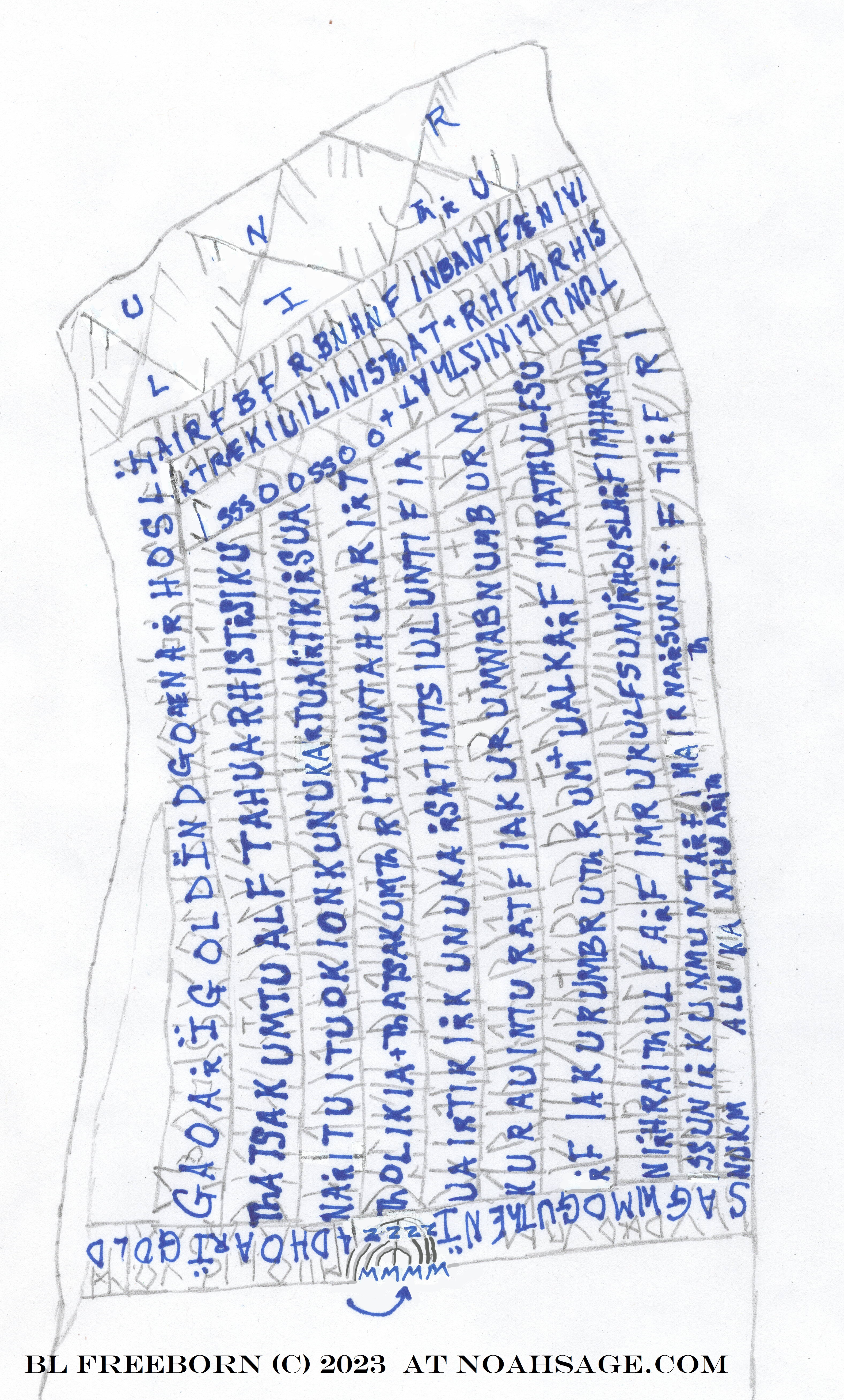
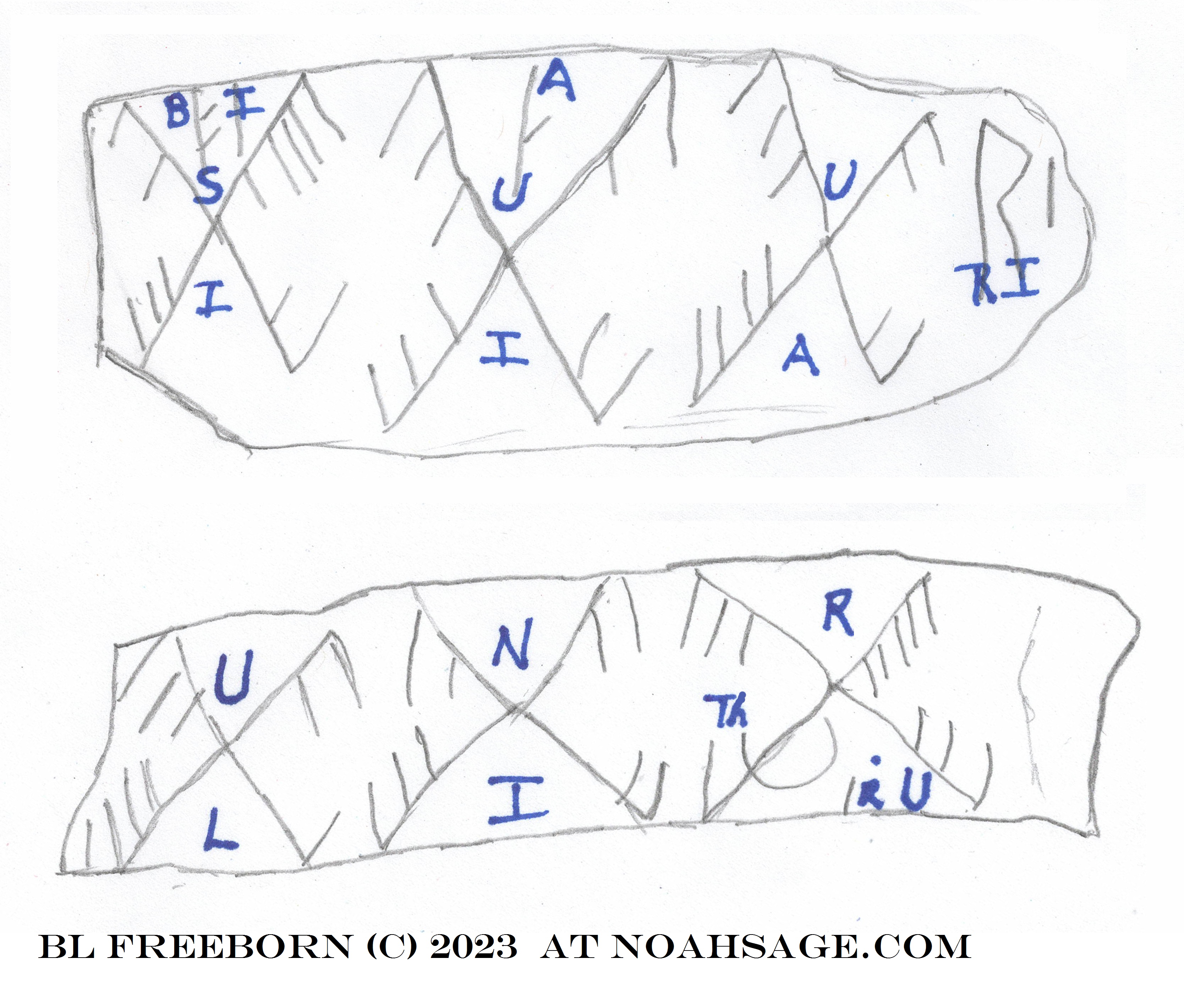
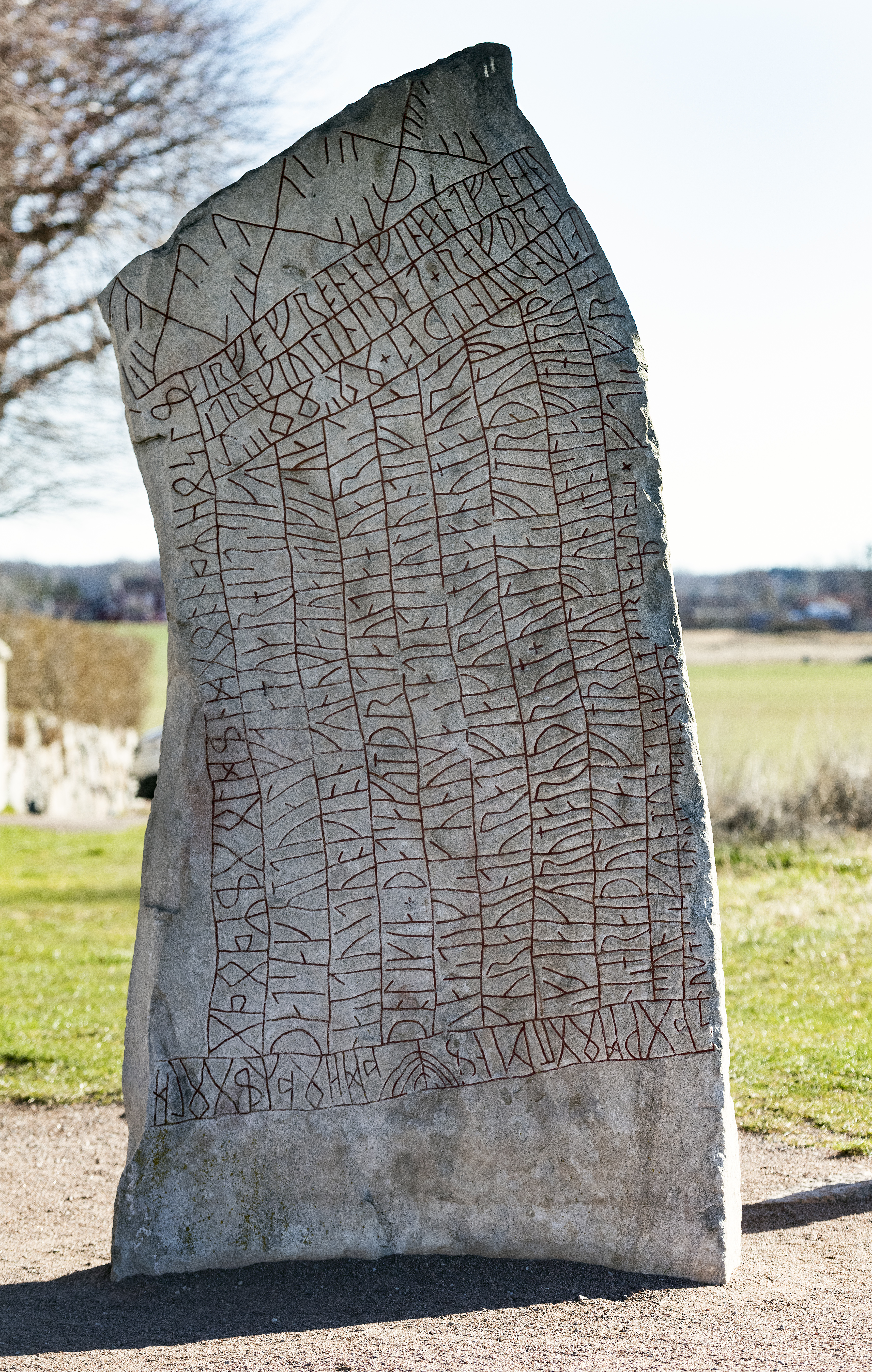
“Aft Vamoð stãnda runaʀ þaʀ…”(Holmberg) begins the Rök Rune Stone of Ödeshög, Sweden. It consists of approximately 770 runes and is decorated with obvious ciphers. From the time of its discovery in the 1600’s in the wall of an adjoining building at the Röks kyrka (church) built in the 12th century and complete unveiling in 1862, each new investigator has written their views, and thereby, has pushed our understanding of its intent and meaning further along.

The attached (pdf) is a thorough study of the ciphers on the stone. Below is one of the more clever ciphers for the reader’s enjoyment. Spoiler alert – the solution follows so take care when scrolling down.

Excerpt from the study:
§308
The single line shown in the image here, that runs up the long side on the right, is an amazing cipher. It has thirty-six runes which are presumably straightforward. There are no spaces between the symbols or word breaks. It was translated by Holmberg  et al. ,pg.22-23) to read:

From Wikipedia.

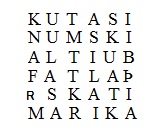
As given: kuta sinum skialti ub fatlaþʀ skati marika

As transliterated: guta sinum, skialdi umb fatlaðʀ, skati mæringa.

As translated: “…his shield strapped, foremost of the famous.”

Let us look at this again.

As given: KUTASINUMSKIALTIUBFATLAÞʀSKATIMARIKA

And spaced out as: KUT AS I NUM SKIALTIUBFATLAÞʀSKATIMARIKA

“Cut as I num”…ber? Which leaves one to question if this is actually in English and if so, what are the numbers here?

From Wikipedia

SOLUTION FOLLOWS IMAGES……


SOLUTION FOLLOWS ……

The total sum checks so the transcription seems accurate but there is a notable lack of 56’s or other familiar numbers within the text. However, it does begin with two groups of 6 runes that sum to 50. Obviously, 6 + 50 = 56. After trying several shift ciphers to no avail the riddler’s hint was taken and the following was formed:

Now the reader may find in this square:
CUT AS I ASK, CUT, ASK four times and
SKA, an anagram of ask.

Along the diagonal find:
CUT L TA ⇒ CUT AT L

There is no question this is in English. Taking the script again and trying to do as asked find:

K U T A S I N U M S K I A L
T I U B F A T L
A Þ ʀ S K A T I M A R I K A

Not much better, but certain words do stand out such as the double AT and to their right
is LI as in ‘lie’. Immediately above is INU or ‘in now, I now or in U.’ The ‘U’ we shall interpret as ‘cup.’ Then vertically we can also read U LI ⇒ ‘cup lie.’

There is a whole slew of other words in English present such as: TI (tie); UB (web); FAT (fate); FATL (fatal); SIN (sin); SKAT (sheat); NUM (niman-grasp); SKIAL (shell), MA (more); RIK (rick – stack) and KATI in reverse is  ‘I take’.

Maybe one has to really ‘cut as I ask’ and ‘take’; or remove and take away as directed which leaves:
K U T A S I N U M S K I A L
T I U B F A T L
A Þ ʀ S K A T I M A R I K A ➟➟ I M A R I K A ??

In Younger Futhark I’s are also E’s. This is then an anagram of AMERIKA or America.

The phrase then reads: ‘I lie now in …America’ or ‘In cup at America.’

From Wikipedia.

  • References:

Holmberg, Per; Gräslund, Bo; Sundqvist, Olof; Williams, Henrik (2020). “The Rök Runestone and the End of the World” (PDF). Futhark: International Journal of Runic Studies. 9–10: 7–38. doi:10.33063/diva-401040.

Previous Post

Next Post

Similar Articles by the Same Author in PDF and Post:

*Easter Tables

** For numeric background see:

**Freeborn, B.L., Validating North American Runic Inscriptions, noahsage.com, November 2022. PDF only.

Freeborn, B.L., The Vinland Map Ciphers, noahsage.com, December 2025. Book only see post.

Freeborn, B.L., The Vinland Map Ciphers Addendum, noahsage.com, December 2025. PDF only.

Freeborn, B.L., Ancient Riddles to Test Our Wits: The Secret Chamber, noahsage.com, January 2016. Post here.

Freeborn, B.L., Another Riddle in Stone from Canada, noahsage.com, August 2025. Post here.

Freeborn, B.L., Deciphering the Spirit Pond, Nomans Land and Narragansett Runic Inscriptions, noahsage.com, November 2022. Amulet post. Map stone postPDF only.

Freeborn, B.L., Et in Arcadia Ego – OUOSVAVV DM – Deciphered, noahsage.com, December 2022. Post here.

Freeborn, B.L., Kensington Rune Stone: A New Translation, noahsage.com, February 2023. Post here.

Freeborn, B.L., Rök runestone of Sweden, noahsage.com, April 2023. Post here.

Freeborn, B.L., Runic Riddles: Time Capsules, noahsage.com, December 2022. Post here.

Freeborn, B.L. The Long Debated Bourne Stone, noahsage.com, January 2023. Post here.

Freeborn, B.L., The Nomans Land – Leif Eriksson Inscription, noahsage.com, December 2022. Post here.

Freeborn, B.L., The Narragansett Inscription: A Translation with its Date of Dedication, Author and Inscriber, noahsage.com, October 2022. Post here.

Freeborn, B.L., The Newport Tower: Finding the Date of Dedication, its Designer and Builder, noahsage.com, October 2022. Post here.

Freeborn, B.L., The Wawa Stone and Its Viking Ship, noahsage.com, August 2025. Post here.

Freeborn, B.L., Rok Rune Stone and its ciphers, noahsage.com, November 2024. Post here.
Kensington Rune Stone: A New Translation

B.L. Freeborn © January 2023

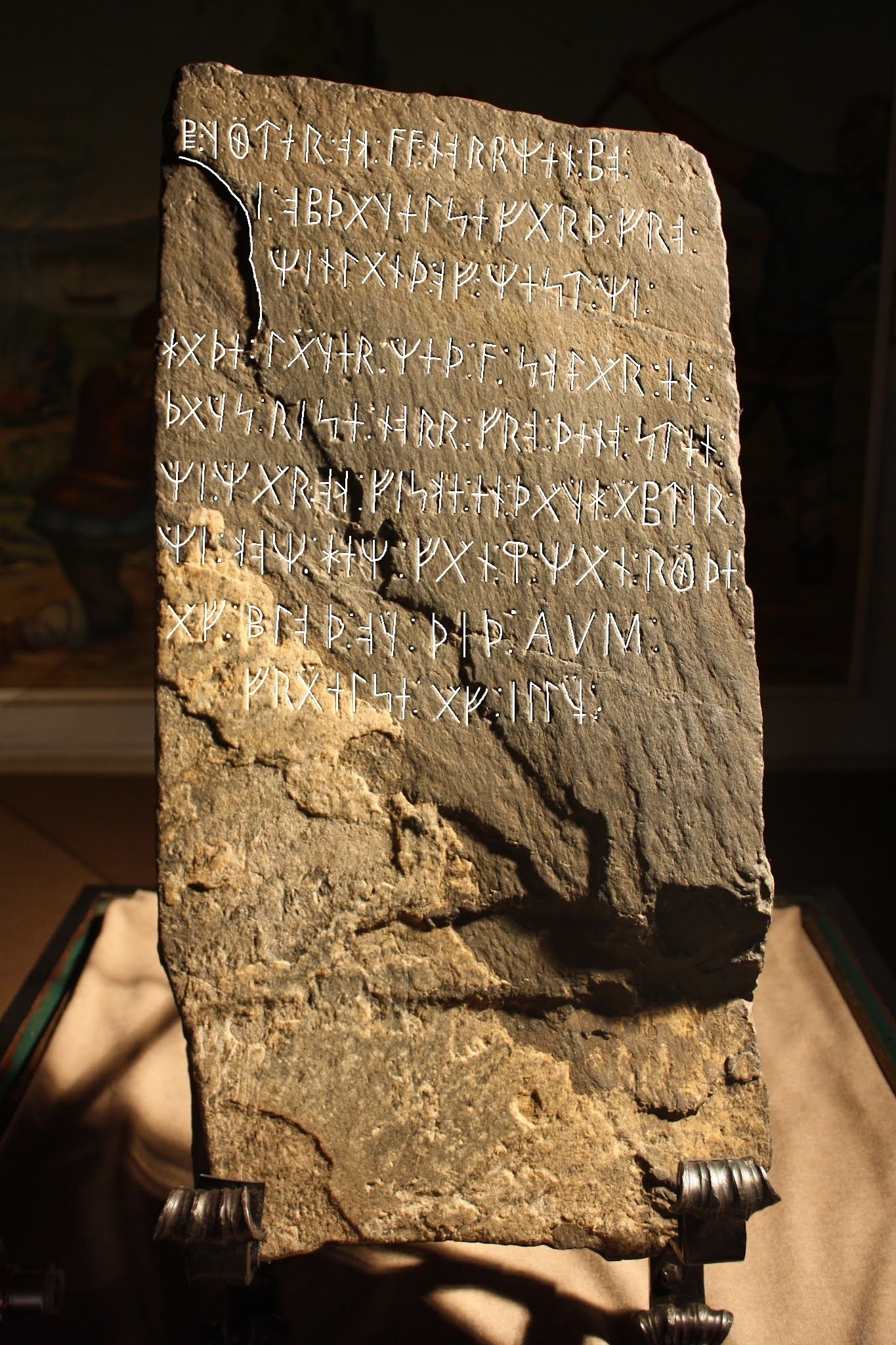
This paper is entirely in the pdf here. It is too long and complicated to be suitable for a blog post. It begins…

Kensington rune stone with runes traced.

Table of Contents

Introduction………………………….2
Before The ‘I’…………………………3
The Lines……………………………….5
The Numbers……………………..12
Calendar Dating…………………15
The ‘Skip’ Cipher…………………16
The ‘End O’ Cipher……………..17
The Telestic and Acrostic…..19
Finding the Lairs ………………..22
Gods and more…………………..25
From Lairs to Layers…………..26
Typical Baalist Statements…29
Summary Translation…………32
Conclusion…………………………..35
References……………………………36
Tables…………………………………….37

Kensington rune stone side text traced.

Introduction

It is time for a new translation of the Kensington Rune Stone from Minnesota. The provenance is known, over studied, over debated and grown dull. The skill of the craftsman is superb. The cuts are clear, clean, and precise. The major problem is the time honored translation. It cries fake! Here’s the gist of it – so many people have looked at it – but not. The following is an entirely new approach to studying this artifact. It is not the intention of this translation to end all debate – only to point out a few things have been overlooked. What is revealed is … well … revealing!

The old translation usually reads as follows:

‘8 Goths and 22 Norwegians on journey of exploration from Vinland over the west. We made camp by 2 slides one days journey north from this stone. We went and fished one day. After we came home (we) found 10 men red with blood and dead. AVM. Save us from evil. (We) have 10 men by (the) sea to look after our ship(s) 14 days journey from this island. Year 1362.’

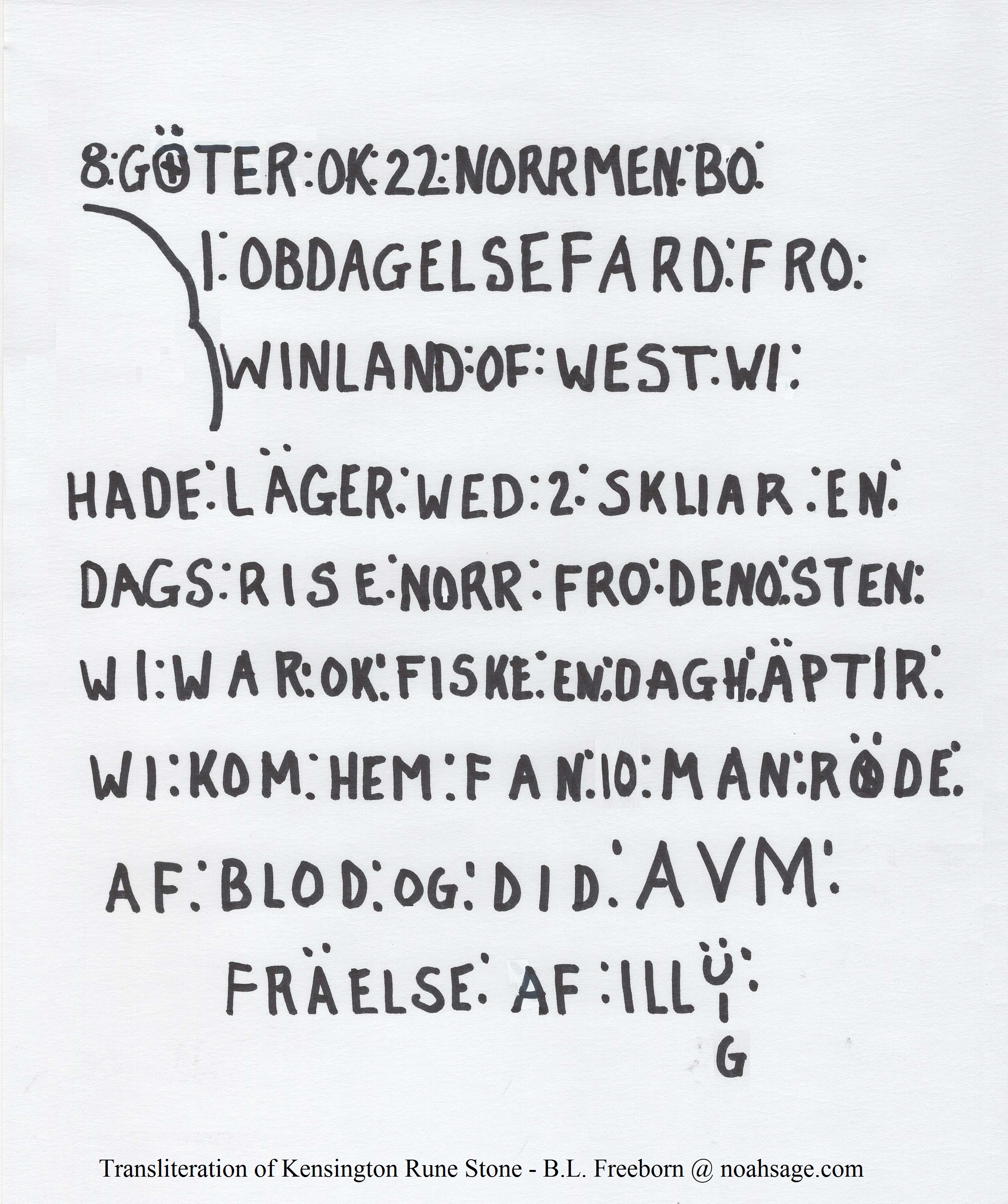
Text Transliterated maintaining position.

The transliteration used here:

Front:
8 : GÖTER : OK : 22 : NORRMEN : BO :
I : OPDAGELSEFARD : FRO :
VINLAND : OF : VEST : VI :
HADE : LÄGER : WED : 2 : SK(IL)AR : EN :
DAGS : RISE : NORR : FRO : DENO : STEN :
WI : WAR : OK : FISKE : EN : DAGH : ÄPTIR :
WI : KOM : HEM : FAN : 10 : MAN : RÖDE :
AF : BLOD : OG : DED : AVM :
FRÄELSE : AF : ILL(ÜIG)

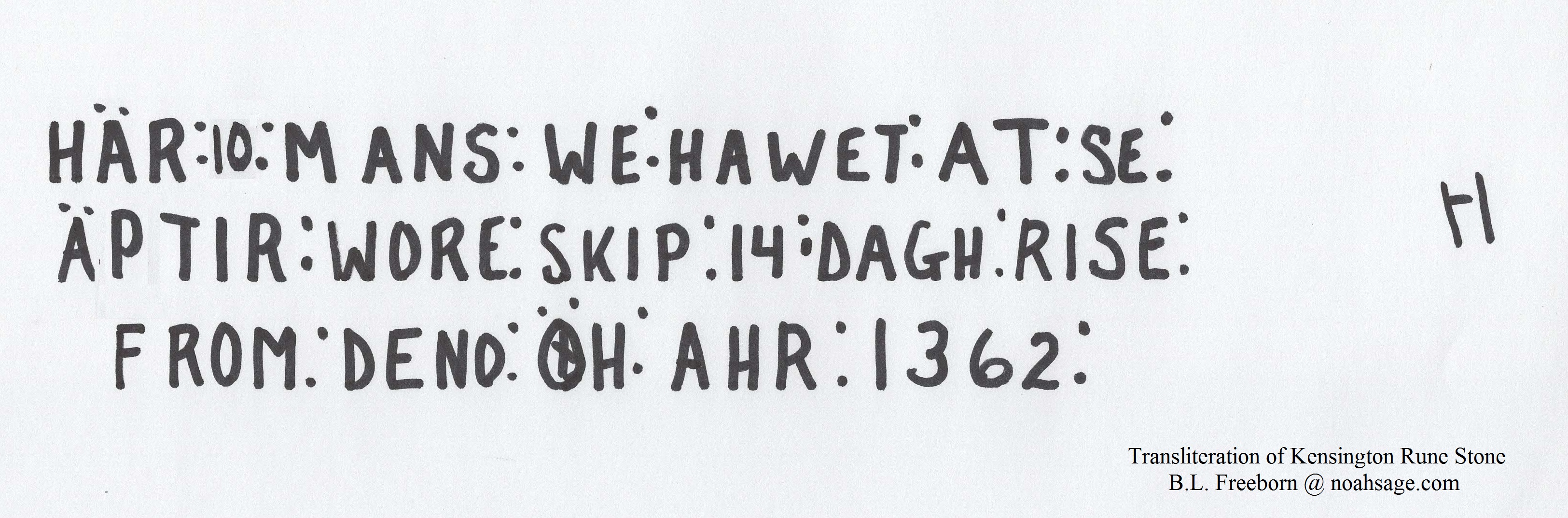
Side text transliterated maintaining position.

Side:
HÄR : 10 : MANS : WE : HAWET : AT : SE :
ÄPTIR : WORE : SKIP : 14 : DAGH : RISE :
FROM : DENO : ÖH : AHR : 1362 :
RI

This is called the plain text reading and the accepted translation is as seen above. This is what the average reader was supposed to get out of it. Behind this facade is a full and living story. It tells of a journey by a people we never knew existed and of their beliefs. It is told with humor and emotion. For your enjoyment and study – the really real – Kensington Rune Stone’s story……

The translation ………………… see pdf for continuation.

Previous Post              Next Post

Similar Articles by the Same Author in PDF and Post:

*Easter Tables

** For numeric background see:

**Freeborn, B.L., Validating North American Runic Inscriptions, noahsage.com, November 2022. PDF only.

Freeborn, B.L., The Vinland Map Ciphers, noahsage.com, December 2025. Book only see post.

Freeborn, B.L., The Vinland Map Ciphers Addendum, noahsage.com, December 2025. PDF only.

Freeborn, B.L., Ancient Riddles to Test Our Wits: The Secret Chamber, noahsage.com, January 2016. Post here.

Freeborn, B.L., Another Riddle in Stone from Canada, noahsage.com, August 2025. Post here.

Freeborn, B.L., Deciphering the Spirit Pond, Nomans Land and Narragansett Runic Inscriptions, noahsage.com, November 2022. Amulet post. Map stone postPDF only.

Freeborn, B.L., Et in Arcadia Ego – OUOSVAVV DM – Deciphered, noahsage.com, December 2022. Post here.

Freeborn, B.L., Kensington Rune Stone: A New Translation, noahsage.com, February 2023. Post here.

Freeborn, B.L., Rök runestone of Sweden, noahsage.com, April 2023. Post here.

Freeborn, B.L., Runic Riddles: Time Capsules, noahsage.com, December 2022. Post here.

Freeborn, B.L. The Long Debated Bourne Stone, noahsage.com, January 2023. Post here.

Freeborn, B.L., The Nomans Land – Leif Eriksson Inscription, noahsage.com, December 2022. Post here.

Freeborn, B.L., The Narragansett Inscription: A Translation with its Date of Dedication, Author and Inscriber, noahsage.com, October 2022. Post here.

Freeborn, B.L., The Newport Tower: Finding the Date of Dedication, its Designer and Builder, noahsage.com, October 2022. Post here.

Freeborn, B.L., The Wawa Stone and Its Viking Ship, noahsage.com, August 2025. Post here.

Freeborn, B.L., Rok Rune Stone and its ciphers, noahsage.com, November 2024. Post here.
 

The Long Debated Bourne Stone

B.L. Freeborn © January, 2023, Updated January 2026                  (PDF version.)

Photo of Bourne Stone by Gene M. Marchand, The Enterprise – Bourne

2003 rubbing by Scott Wolter, Sherry Malecha and Charlotte Czarnecki.

The Bourne Stone from Cape Cod provides another riddle to be deciphered. Its reading and origin have been long debated. There are four very good write ups on the Bourne Stone listed below. The reader is left to explore these for background and other views. The traced image at the Bourne Historical Society, where the Bourne Stone is displayed, appears to be the one created by Scott Wolter, Sherry Malecha and Charlotte Czarnecki in 2003 and shown in his book (pg. 311).

Below is a translation of the stone based on the drawing which appears to be more than correct. The symbols do translate as runes primarily in the Younger Futhark with two exceptions which are in the older. The number work below is explained in Validating North American Rune Stones.(see PDF list below) It is too long to explain here adequately. Essentially, the numbers 56 and 792 must be found once the runes are converted to their numeric values.

There is an immediate give away that this is Pagan – Runic in nature and probably a riddle. The LI in a vertical line preceding the images which are read right to left is very notable. In the Kensington Rune Stone (post), Spirit Pond Long Inscription Stone (post) and the Rök Rune Stone in Sweden a TI is used. In the Kingigtorssuaq Inscription a BL is used (see Validating North American Inscriptions pdf list below). The proposed significance of the images are: comet, lake, sail; and walk about /tour -or- giant’s footprints/shoe meaning ‘foundation.’

If what follows seems odd or ridiculous to you, remember the Catholic Church went to great lengths to wipe out all pagans. The victor has taught us what they want us to think pagans believed. The question becomes as suggested in the movie ‘The Da Vinci Code,’ what was so dangerous to the Church in pagan beliefs? Perhaps their beliefs were not even remotely what we have been led to believe.

Number Proof of Transliteration

A number proof of the transliteration is required to prove certain values appear. If they do not, then it is either not transliterated correctly or not Pagan / Baalist in origin. (See below.**) (Rune/number charts are below.)

  • Note: G and H are from Older Futhark.
  • Total sum on right (G,H,S,I,S,U,K,I and L) ⇒ (7,9,11,9,11,2,6,9 and 15) is 79.✓
  • Sum of SUKI is 28.✓
  • Sum of GHSI is 36.✓
  • There are 18 runes on the first line.✓
  • GH, SI is 7,9, 11,9 ⇒ 7920.✓
    N to G (N ʀʀʀʀG) (8,16,16,16,16,7) =79 and it is followed by HS (9,11) = 20 or 7920.✓
  • There are 5 images and then it turns and there is a 6th ⇒ 56.✓
    There are 5 I’s and 6 ʀ’s ⇒ 56.✓
    5 I’s is 5 x 9 = 45. 6 ʀ’s is 6 x 16 = 96. Sum is 141 and twice this is 282.✓
  • Also 5 x 9 x 6 x 16 = 4320.✓
  • The four strokes (ʀ’s) are in two groups. Each group is 16,16 or 32.✓
  • The four strokes (ʀ’s) are 4 x 16 = 64. This is preceded by N or 8 so 864.✓
  • The first three strokes are separated off by the fourth that is lower. IʀI is 9,16,9 = 34.✓
  • Then ʀ N and N is tall or 16, 8 = 24.✓
    IL is 9,15 = 24.✓
  • Placement of ‘fingers’ on comet is 1, 3, 1⇒ 113 or twice 56.5✓ and 32.✓
  • Total sum on left is 131 ⇒ 113 or twice 56.5✓

Let’s give some of these meaning:

  • There are 24 hours in a day and 24 hours of longitude mark the planet.
  • There are 360 degrees of longitude and 36 suggests 360.
  • Similarly, the 18 runes of the inscription suggests 180 degrees of latitude.
  • The number of seconds of longitude is 86400. This is also the number of seconds in a day. Half of this is 432,000 or 432 for short.
  • The diameter of the planet is 7920 miles.
  • The 113, 32, 34 and 282 are related to 56. The complementary angle of 56 is 34. The square of 5.65 is 32 and twice 282 is 564. Twice 56.5 is 113.

All of these seem to refer to time, longitude and/or latitude except for the last group.

It would appear the transliteration is correct. Not far from where this is located was the Leif Erikson stone on Nomans Land (post). This inscription is very similar to it, so we might suspect he used some of the same tricks. In that inscription the date was prominent in the middle, many I’s were used, part of the writer’s name was included in the script and the rest of his name had to be deduced by working the numbers backwards to obtain runes. In that script Leif was spelled out clearly. Here the name appears to be hidden in an anagram.

Translation of Text

In the Younger Futhark I’s can be used as E’s. In this riddle one ʀ becomes R so that:
I ʀ I I ʀ N ʀʀʀʀ GHSISUKI and L is an anagram of ‘Henricus’, ( HENʀIKUS), and other words. After Henricus is removed the remaining letters are Iʀ II ʀʀʀʀ G S L.
The four strokes (ʀ’s) suggest an Æ /O.
The G can be seen as an X as in ‘X marks the spot’ or with O it is ‘go.’
Now remaining S, L, Iʀ II ⇒ S LI Iʀ I ⇒ S lie ire eye or South lies the eye that wandered which is a typical Baalist statement. Other Pagan / Baalist concepts: Iʀ I Iʀ N ʀ ⇒ Ire I Ire, Near, North go.
The enlarged NI provides ⇒ nigh ……and comet, lake, footprints’ of the giant, and foundation.
The N is actually written as an A which is its mirror image. This reversal is suggestive of the name An which is the name of a Baalist goddess. In actuality, it refers to the North pole and the mountain that once was there. This provides A = 10 and N = 8 or the sum 18 again.

A pagan/Baalist reading might be:

South lies the eye that wandered in ire as it went.
There are two foundations now, the Magnetic and True.
The North foundation went South.
An lies nigh in the comet’s lake where it left its giant footprints.

Henricus and Dates

Bishop Henricus was believed to be the first bishop in Vinland. He was supposedly sent by Pope Paschal II (AD 1099-1118). (Gordon, pg. 93) However, it appears he was pagan. There is nothing else known about him in the historical record, except who replaced him.  Hidden in the anagram on the right side are dates which correspond to those mentioned in the Spirit Pond Stones (post) and seen imbedded in the Newport Tower (post). Both of these suggest Henricus had a much more interesting fate.

Recall the letters/numbers on the right are: (G,H,S,I,S,U,K,I and L) ⇒ (7,9,11,9,11,2,6,9 and 15).

Note that in the center is the word ‘is’ in both directions and note that SUKI provides 11 and 2,6,9 ⇒ 1117. Also, GHS provides 11 and 9,7 ⇒ 1116. Taking this one step further, the I and L or 9 and 15 sum to 24 and on either side is a S/ 11 so that we have 1124. These are the same dates seen in the aforementioned inscriptions. These years coincide with when he arrived in Vinland after taking his journey to the seat of Baal, ie. Belcher Island in the giant’s footprints which we call Hudson Bay; and when Henricus supposedly passed.

Henricus sailed to the comet lake for a tour in 1116 to 1117.
It is where the eye wandered and turned. It lies nigh and near…
He left us in 1124.

Author and Date of Inscription

This stone is dated via the Easter Tables. (The reader is directed to Landsverk’s books below on this method of dating.) The total number of runes is 19 with 18 on the first and 1 below. There are first 5 strokes, N = 8, and 4 ʀ strokes. Line #19 begins years 1112 etc. This is an appropriate line. Golden Number (GN) 18 has Day Letter (DL) 5 ⇒ year 1119. Similarly, GN 19 has DL 4 ⇒ 1120. Both years 18 and 19 are suggested by the rune layout. The ‘SIS’ which is ‘11,9,11′ also suggests 1119.

The author’s name remains to be found. The Nomans Land – Leif Iriksson stone uses a ÞIʀ as three letters from the author’s name. The remaining letters were found by counting and converting back to letters/runes. The same occurs here. The IʀN are central and large which suggests it is important. There are 4 ʀ (strokes) on the right of the N which implies 4 = Æ/O. There are 3 strokes on the left which implies Þ (Th or D). So, we have ÞOʀN I or simply put I am Thorn. This is also an anagram of I north. It is also ‘I R 3 N O’ which might be read easily as ‘I are three North O’s.’ This is a description of Hudson Bay.

I am Thorn and I also went north. I wrote this here in 1119.

More Hidden

On the left side the runes Þ, I, R, N, O have now been found and on the right G,H,S,I,S,U, K,I and L. (Þ is ‘th’) This makes 14 letters.

Previously, Henricus was pulled out. This now leaves – Þ, O, G, S, I, L which can be rearranged to: TH I S G O L. The phrase is then: ‘ This Henricus’ goal.’ The same exercise can be repeated for these fourteen letters. The phrases found are consistent with those found in other Runic Riddles including ‘The Vinland Map Cipher,’ ‘The Long Inscription from Spirit Pond’ and ‘The Rök Rune Stone.’

With these 14 letters find:

N GO S THIS LI RK HIU ………. North go South. This lie 56 792.
THIS HENRIKUS GOL ………. This Henricus’ goal.
THUS KINK O LI RI SH ………. Thus King O lie (about) RI. Shhh…
HI NORTH KIL US GIS ………. He – North kill? Us – Yes!
R GO THIN HU IS SKIL ………. Are (a) go then. How is skill.
GO THIR NU HIS SKIL ………. Go there – now his skill.
GO THIR N KIL US SIH ………. Go there. North kill us. Sigh.
3 RING U I SHO SKIL ………. 3 ring cups. I show skill.
HI THUS ORING SKIL ………. He thus oaring skill.
THIN SIK LUC S RI OH ………. Then sick. Luck south RI island. (Oh = island.)
NU THIS RISK LIG OH ………. Now this risk leg. Oh!
THE KINK LI RU S SHO ………. The King lie. Row south (to) show.
NU GO THIS S RI HI LK ………. Now go this south RI. He look.
KING O SLI THIR HUS ………. King O sly. There house.

More phrases can be found.

‘King O’ is King Oystein of Norway who supposedly died in 1123 which is the same year Henricus also supposedly passed. The suggestion throughout these runic riddles was that King Oystein traveled as Bishop Henricus and lied about his whereabouts.

South lies the eye that wandered in ire as it went.
There are two foundations now, the Magnetic and True.
The North foundation went South.
It lies nigh in the comet’s lake where it left its giant footprints.
It is where the eye wandered and turned. It lies nigh and near… 56̊ N and 79.2̊ W.

Henricus sailed to the comet lake for a tour in 1116 to 1117.
Then he traveled south to RI island.

The King left us in 1124.

I am Thorn and I also went north to RI. I wrote this here in 1119.

– – – – –

Previous Post              Next Post


From Wikipedia

Similar Articles by the Same Author in PDF and Post:

*Easter Tables

** For numeric background see:

**Freeborn, B.L., Validating North American Runic Inscriptions, noahsage.com, November 2022. PDF only.

Freeborn, B.L., The Vinland Map Ciphers, noahsage.com, December 2025. Book only see post.

Freeborn, B.L., The Vinland Map Ciphers Addendum, noahsage.com, December 2025. PDF only.

Freeborn, B.L., Ancient Riddles to Test Our Wits: The Secret Chamber, noahsage.com, January 2016. Post here.

Freeborn, B.L., Another Riddle in Stone from Canada, noahsage.com, August 2025. Post here.

Freeborn, B.L., Deciphering the Spirit Pond, Nomans Land and Narragansett Runic Inscriptions, noahsage.com, November 2022. Amulet post. Map stone postPDF only.

Freeborn, B.L., Et in Arcadia Ego – OUOSVAVV DM – Deciphered, noahsage.com, December 2022. Post here.

Freeborn, B.L., Kensington Rune Stone: A New Translation, noahsage.com, February 2023. Post here.

Freeborn, B.L., Rök runestone of Sweden, noahsage.com, April 2023. Post here.

Freeborn, B.L., Runic Riddles: Time Capsules, noahsage.com, December 2022. Post here.

Freeborn, B.L. The Long Debated Bourne Stone, noahsage.com, January 2023. Post here.

Freeborn, B.L., The Nomans Land – Leif Eriksson Inscription, noahsage.com, December 2022. Post here.

Freeborn, B.L., The Narragansett Inscription: A Translation with its Date of Dedication, Author and Inscriber, noahsage.com, October 2022. Post here.

Freeborn, B.L., The Newport Tower: Finding the Date of Dedication, its Designer and Builder, noahsage.com, October 2022. Post here.

Freeborn, B.L., The Wawa Stone and Its Viking Ship, noahsage.com, August 2025. Post here.

Freeborn, B.L., Rok Rune Stone and its ciphers, noahsage.com, November 2024. Post here.
References

Firestone, Richard; West, Allen; Warwick-Smith, Simon; The Cycle of Cosmic Catastrophes: Flood, Fire, and Famine in the History of Civilization, Bear & Company, Rochester, VT., 2006.

Gordon, Cyrus, Riddles in History, Crown Publishers, Inc. New York, 1974.

Landsverk, O.G., Ancient Norse Messages, Norseman Press, Glendale, California, 1969.

Landsverk, O.G., Runic Records of the Norsemen in America, Erik J. Friis, Publisher, Rushford, MN, 1974.

Nielson, Richard and Wolter, Scott, The Kensington Rune Stone: Compelling New Evidence, Lake Superior Agate Publishing, 2006.

Mongé, Alf & O.G. Landsverk, Norse Medieval Cryptography in Runic Carvings, Norseman Press, Glendale, California, 1967.

Syversen, Earl, Norse Runic Inscriptions with Their Long-forgotten Cryptography, The Vine Hill Press, Sebastopol, California, 1979.

– – – –

Websites

Chartier, Craig, New Thoughts on an Old Rock or Confessions of an Ignorant Skeptic, January 2016, at: https://plymoutharch.com/wp-content/uploads/2016/01/The-Bourne-Stone.pdf

Hoxie, Nelda, Visiting the Mysterious Bourne Stone at the Bourne Historical Society, 2 September 2015, at: https://wizzley.com/visiting-the-mysterious-bourne-stone-at-the-bourne-historical-society/

Petiet, Mary, New Theory Presented About Bourne Stone Markings, The Enterprise Bourne, 15 October 2015 at: https://www.capenews.net/bourne/news/new-theory-presented-about-bourne-stone-markings/article_c471626c-0d8e-509f-bb5b-c0c235e62f31.html

Wicked Yankee, The Bourne Stone – Bourne, Ma, 31 October, 2012 at:
http://wickedyankee.blogspot.com/2012/10/the-bourne-stone-bourne-ma.html

The Spirit Pond Rune Stones: Deciphering the Amulet and Short Inscription

B. L. Freeborn © November 2022

This an excerpt from: Deciphering the Spirit Pond, Nomans Land and Narragansett Runic Inscriptions –  See list below for PDF version.

Amulet and  Short SP-2

Introduction

In the paper entitled “Validating North American Runic Inscriptions” (see PDF list below) , by this author, the Spirit Pond Rune stones were discussed briefly. It became apparent that there was too much information on the Spirit Pond stones to include there. The previous post discussed the Map Stone, SP-1, and the long Inscription Stone, SP-3 is discussed in the next post. The amulet and short SP-2 are discussed below.  The Leif Erikson (Post) inscription from Nomans Land and the Narragansett (Post) were discussed previously. These six represent the best runic inscriptions found on the east coast of North America.

Apologies are given in advance. This is end to end numbers which makes for poor reading. Do not let the number work deter one from discovering what lays within the inscriptions. The essence can be grasped regardless of the level of interest in the math.

Reading the first paper (PDF listed below) is essential to understanding the importance of the numeric information that is given here and followed by ✓ marks. There are four stones from Spirit Pond, Maine. The Amulet and Short Inscription Stone are studied here.

Back to Top

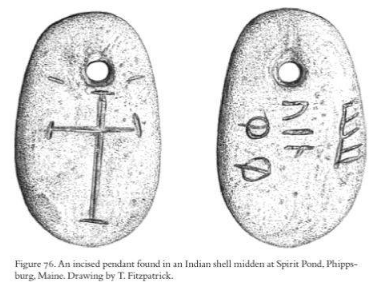
Spirit Pond Amulet. Image Lenik, 2009.

Amulet

The amulet stone which is designed to be worn is part of the Spirit Pond Stone collection. On the front side is the number 1010 which is presumably the year. The question remains whether it is a commemorative year or the year it was originally devised. Either way the 10’s are composed of a line and a circle which repeats the idea of the Ankh. Above the date are three runic letters, VIN, assumed to represent Vinland. There are then 5 runic figures on this side. The 6th is a hatched symbol for 5 so 56.5 repeats.✓

The runes in the center stand for V I N with numbers 2, 9 and 8. Their sum as 19 is of no interest. But if one sees it as a 2 ̸ 8 then 28 is found.✓ (See Rune chart at end for number equivalents.)

The 10 and 10 sum to 20 so the sum of the 5, 19 and 20 is 44 which interestingly is the latitude of Spirit Pond.

Then by summing 5 and 2, a 7 can be found which provides 7 9 and 20 or 7920.✓

Easy enough, but this leaves no apparent use for the 8 except that 89 x 89 is 7921?!✓ And a square of sides 5.65 has a diagonal of 8.✓

Lastly, here there are 3 letter runes and 2 numbers or 32.✓

The Cross below the circle (string hole) may repeat the idea of the Ankh again. The cross suggests this person had converted to Christianity or wanted to appear Christian despite the Pagan message on the other side.

Back to Top

Photo Scott Wolter ©2009. Used with permission.

The Short SP-2

This is the short inscription stone from Spirit Pond known as SP-2. Its inscription is brief having 8 runes on the top line and 4 on the second line with 3 on the left and 1 on the right. One rune on each line is a bindrune (two or more runes joined together) positioned directly over each other.

There are 3 words on 2 lines for 32.✓ The sum of the top line is 74. The sum of the second line is 51.✓ The total sum is 125. The first number is 8 and the second bindrune is 9. Recall 89 x 89 = 7921.✓ The sum from 15 to the last 6 is 40.✓ The first number is 8 and the last number on either line is 6 suggesting 86.✓ The sum on the left bottom is 45. The sum between the 6’s is 45. Add a 6 from either side and obtain 51 again.✓ The R and K adjoining each other provide 56.✓

The : is directly under 15 and it is followed by 4 and 15. Year 1002 is on line 15 of the Easter Table.  **It has GN 15 and DL 4. This date follows the discovery of Vinland by Leif Erikson by a year, so it is possible. Also, one can see in 6 11 15 4 15 6 series that 19 appears twice and is proceeded by 17 and followed by 6. This refers to 1118 on the Easter Table. The commemoration date on the others was 1010.

This can then be dated to either year. It is the reader’s choice. Once the date is plainly stated then one can see it in the text ‘10 :’ or 10 0 2! The year of Leif’s discovery! The year 1116/1117 is the usual date of Henricus in Vinland.

As far as what it says…it reads like it is straight Baalist – strange but true. The second line is an anagram for KILSA which was seen on the other Spirit Pond stones. Taking it bit by bit find:

N over S. North went south.

(ÆRIL) ⇒RÆL I ⇒ roll eye.

KS over A. ⇒ SAK ⇒ sack or sagged.

The L over two dots. ⇒ two dots suggests a missing letter U so this becomes LU or low.

Then it is ÆL over K ⇒ cull. The last two in reverse KL ⇒ kill.

North went south as the eye rolled and sagged. It is low. It culled and killed.

This sounds like he is describing the apocalypse or perhaps some element of Ragnarök. His devotion to Baal seems complete but what of his name?

It might be helpful to see the Æ as O. Now notice there are two anagrams for ‘look’ spelled LÆK or LOK. So we should do as directed and look. Mongé points out this implies a shift cipher. A shift cipher implies instead of ‘a’ use ‘b,’ instead of ‘b’ use ‘c,’ etc. or in reverse. If a shift cipher is applied (shift each letter to the preceding) find:

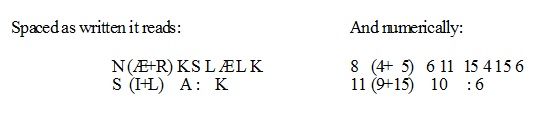
N (Æ+R)KS L Æ L K ⇒ H (Th Æ) R A B Th B R

S (I+L) A : K ⇒             A ( N B) I : R

which is not productive. But if you make a mistake and substitute M for B (the following rune instead of preceding) then…

H (Th Æ) R A M Th M R

A ( N M) I : R

then one can read: hath name thar (there) I am thr (there)? This suggests it is a forward/reverse cipher. After some struggle one finds that only the bindrunes are used.

Lothær inscribed this stone in honor of Lief, 1102, and Henricus,1118.

Back to Top

This series continues with the long Inscription Stone.

**(Easter Table dating and explanations can be found in any of Landsverk’s books referenced below.)

Previous Post          Next Post

Younger Futhark Runic Alphabet

From Wikipedia

Similar Articles by the Same Author in PDF and Post:

*Easter Tables

** For numeric background see:

**Freeborn, B.L., Validating North American Runic Inscriptions, noahsage.com, November 2022. PDF only.

Freeborn, B.L., The Vinland Map Ciphers, noahsage.com, December 2025. Book only see post.

Freeborn, B.L., The Vinland Map Ciphers Addendum, noahsage.com, December 2025. PDF only.

Freeborn, B.L., Ancient Riddles to Test Our Wits: The Secret Chamber, noahsage.com, January 2016. Post here.

Freeborn, B.L., Another Riddle in Stone from Canada, noahsage.com, August 2025. Post here.

Freeborn, B.L., Deciphering the Spirit Pond, Nomans Land and Narragansett Runic Inscriptions, noahsage.com, November 2022. Amulet post. Map stone postPDF only.

Freeborn, B.L., Et in Arcadia Ego – OUOSVAVV DM – Deciphered, noahsage.com, December 2022. Post here.

Freeborn, B.L., Kensington Rune Stone: A New Translation, noahsage.com, February 2023. Post here.

Freeborn, B.L., Rök runestone of Sweden, noahsage.com, April 2023. Post here.

Freeborn, B.L., Runic Riddles: Time Capsules, noahsage.com, December 2022. Post here.

Freeborn, B.L. The Long Debated Bourne Stone, noahsage.com, January 2023. Post here.

Freeborn, B.L., The Nomans Land – Leif Eriksson Inscription, noahsage.com, December 2022. Post here.

Freeborn, B.L., The Narragansett Inscription: A Translation with its Date of Dedication, Author and Inscriber, noahsage.com, October 2022. Post here.

Freeborn, B.L., The Newport Tower: Finding the Date of Dedication, its Designer and Builder, noahsage.com, October 2022. Post here.

Freeborn, B.L., The Wawa Stone and Its Viking Ship, noahsage.com, August 2025. Post here.

Freeborn, B.L., Rok Rune Stone and its ciphers, noahsage.com, November 2024. Post here.

References

Gordon, Cyrus, Riddles in History, Crown Publishers, Inc. New York, 1974.

Landsverk, O.G., Runic Records of the Norsemen in America, Erik J. Friis, Publisher, Rushford, MN, 1974.

Landsverk, O.G., Ancient Norse Messages, Norseman Press, Glendale, California, 1969.

Lenik, Edward J., Making Pictures in Stone: American Indian Rock Art of the Northeast, 2009.

Mongé, Alf & O.G. Landsverk, Norse Medieval Cryptography in Runic Carvings, Norseman Press, Glendale, California, 1967.

Syversen, Earl, Norse Runic Inscriptions: with their Long-forgotten Cryptography, The Vine Hill Press, Sebastopol, California, 1979.

Derogatory article by Aslak Liestol of Alf Mongé’s work: http://collections.mnhs.org/MNHistoryMagazine/articles/41/v41i01p034-042.pdf  and….

…Landsverk responded to these comments in Ancient Norse Messages pg. 126-129; and often in Runic Records of the Norsemen in America.

Back to Top

Deciphering the Spirit Pond Rune Stones: Map Stone, SP-1

B. L. Freeborn © November 2022, Updated Dec. 2025

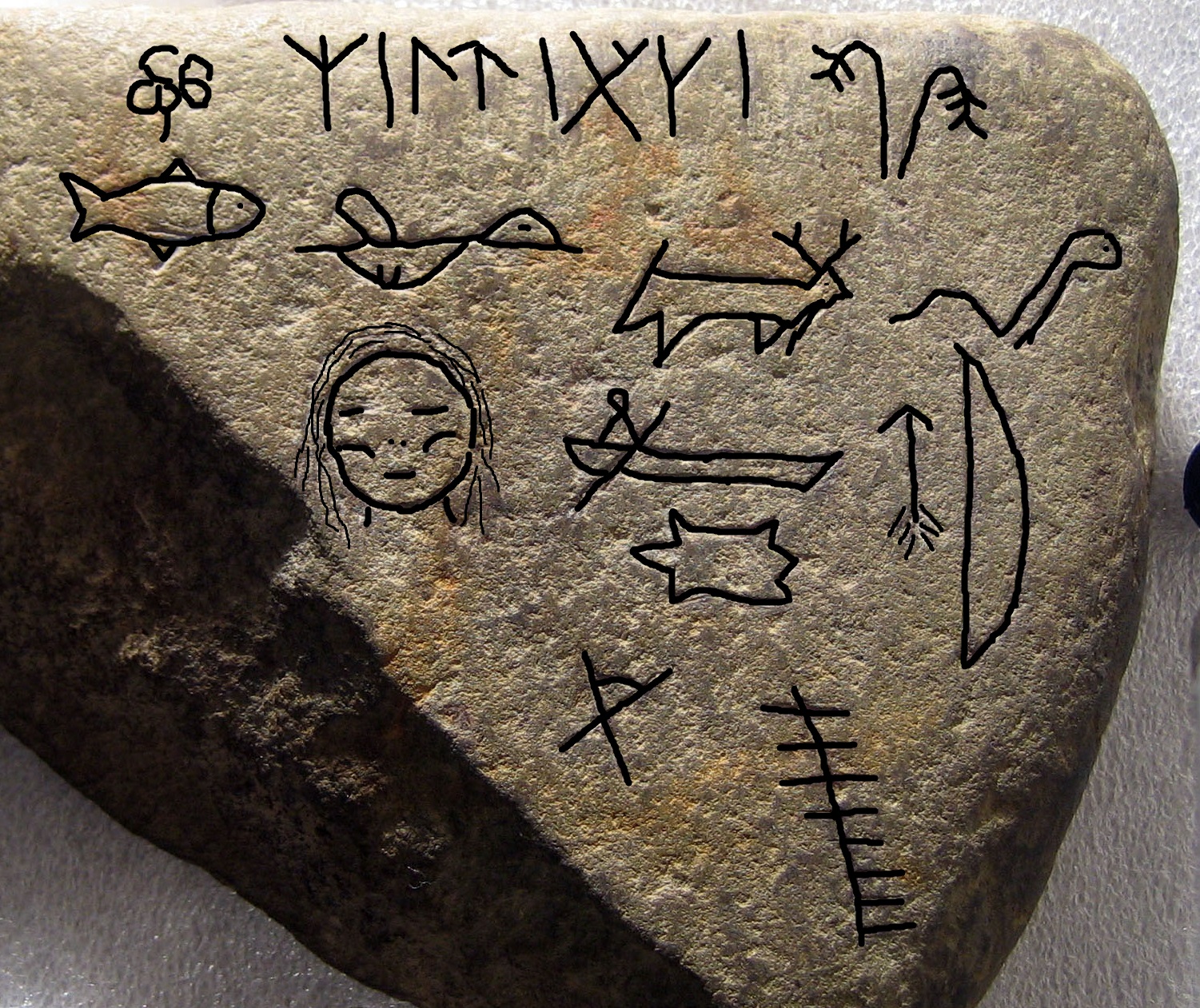
Map Stone – Front. Photo Scott Wolter ©2009. Used with permission.

Map stone – obverse. Photo Scott Wolter ©2009. Used with permission.

The SP-1, Map stone

This an excerpt from: Deciphering the Spirit Pond, Nomans Land and Narragansett Runic Inscriptions –  See PDF list below.

In the paper entitled “Validating North American Runic Inscriptions” (PDF below) , by this author, the Spirit Pond Rune stones were discussed briefly. Reading this first is essential to understanding the importance of the numeric information that is given here and followed by ✓ marks. SP-1, the Map Stone, is discussed first. Its front has a map of Hoop, Maine and the reverse has ten pictograms.

Back to Top

Map Stone Obverse. Runes and pictograms traced in black.

SP-1, Map Stone, Back

The stone has a significant shape which can be seen from this side. It is shaped like an axe. The left upper corner is shaped like a crater. Both of these ideas are important to the story of Baal.

The back of the stone has eight✓ runes centered at the top between two pictures which immediately suggests 28.✓ There are two pictures on the top line and eight below in the group or 28.✓ The symbol Wolter suggested (X with hook) meant 40 degrees latitude is present next to a hatch mark symbol. The 40 implies 56 because a square of sides 40 has a diagonal of 56.56.✓ To its right the hatches can be counted two ways evidently. As he did and find 44 which is the latitude of Spirit Pond; and as others do, find 48 which is the latitude of Newfoundland Island.

The runes at the top center are transcribed as M I L T I A K I and correspondingly the numbers in Futhark are: 14 9 15 12 9 10 6 9.

The sum is a sad and useless 84. However, the sum from 14 to 10 is 69 which is repeated by the last two numbers 6 and 9. This is essentially the longitude of Spirit Pond. The correct modern coordinates are 43.75 ̊ N, 69.81 ̊ W with respect to the Greenwich Meridian which they were apparently using. The location of Newfoundland is 48 ̊ N, 56.5 ̊ W.✓ Imagine that.

The translation of the runes on SP-1 reverse has certainly not satisfied anyone. It appears it can be broken up as follows: MIL TI (A) KI. This is in simple Old English…mill tie (56) key. From this Mongé derived the message: LIT A MIK or ‘seen by me’. Or perhaps it is actually stating who wrote and inscribed (let) this stone. Read in both directions: ⇒ Me let…I Aki…… I tell ⇐. Altogether it says:

Mill tie A key seen by me. I Aki designed and carved.

Back to Top

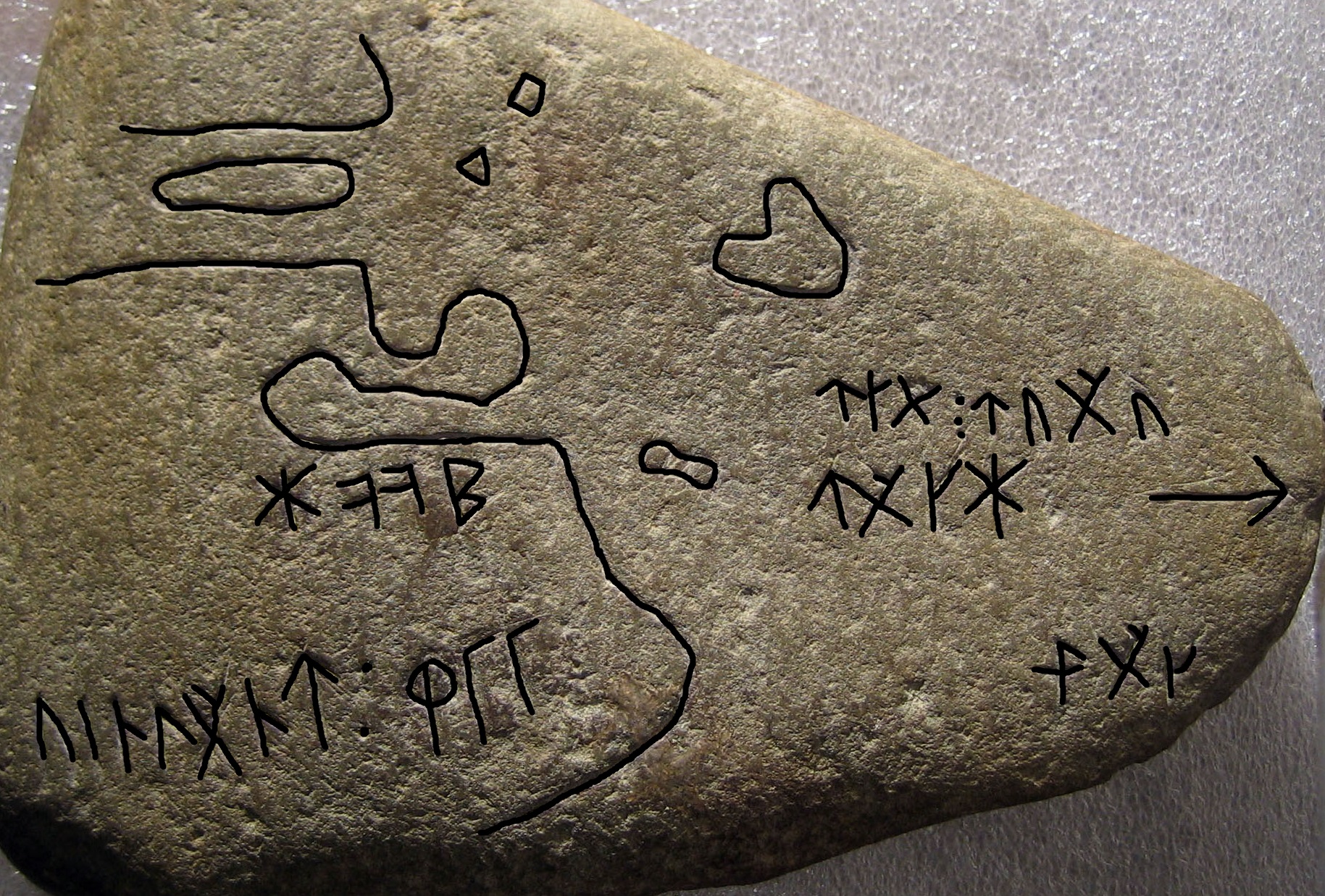
Spirit Pond Map Stone, SP-1, front, with runes and images traced in black.

SP-1, Map Stone, Front

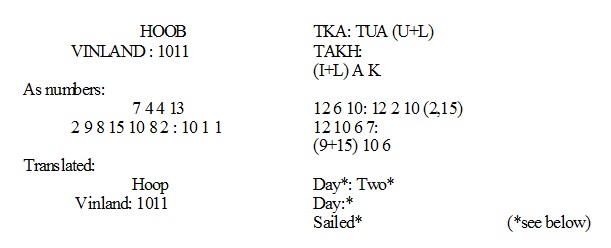
SP-1 or the map stone, front is a sheer pleasure to study. It transliterates easily and the typical translation is shown below.

The Numbers and Dates:

The sum of HOOB(P) is 28.✓ The sum of TKA is 28.✓ The sum of TUA is 24.

Very similar to the Kensington and the Kingigtorssuaq Inscription, the first letter, H, has value 7 and there is a 2 and 9 on the following line or 792.✓ The next numbers (8,15,10, 8,2) sum to 43.✓ The last two are 8 and 2 or 28 in reverse.✓ On the left there are 3 word groups on 2 lines or 32.✓ On the right there are 4 word groups on 3 lines or 43.✓

(This is an excerpt so there is information on dating missing. Briefly, inscriptions can be dated using the Easter Tables which provides a Rati/Line #, Golden Number (GN) and Day Letter (DL) for each year. This is explained in any of Landsverk / Mongé’s books.)

Mongé dates this to 6 October 1123 using the phrase (I+L) A K . (He used L= 14.) He presumes it is an anagram for SIKLA (sailed). Anagrams of SIKLA are also used on SP-2 and SP-3. He dated all the inscriptions then to that date. The associated numbers are (23)10 6. Note the S or 11 is missing. There is a hint in the two lines above it which use 11 runes. If Mongé is correct and L= 14 then the sum is 39 but the 11 (S) is missing. Take the hint and subtract an 11 from 39 and find 28.✓ He uses the rune count of 3 and 7 on line one to prove the GN and DL. Furthermore, the riddle master no doubt assumed the solver would find the date 6 October in the remaining numbers of (I+L)AK. The DN table (See Easter Tables) indicates this is 79 days to the end of the year. 79 and 23 from the joined runes creates 7923 and this is a very clever 792✓ which makes it an unlikely date.

If L = 15 then the sum of (I+L)AK is 40.✓ By similar reasoning the year becomes 1124. The GN for year 1124 is 4. The DL is 6. Both 4 and 6 repeat in the text. This makes 1124 a plausible year as well. As a date, it is likely the year when Henricus sailed to ‘Kilsa’; left the settlement for other duties elsewhere; or, as implied by the Vinland map, he passed away.

The GN for the stated year 1011 is 5 and the DL is 7. The Rati is #15. Although there are two 7’s there are no 5’s making it unlikely this is the date of the inscription.

*All of the words in the right word group are either misspelled or anagrams which suggests there is something hidden here. This group is usually taken to mean two days travel by sea since there is an arrow. Two days to the north is Nova Scotia. Two days to the south is Narragansett Bay where lies another rune stone (once at the shoreline). It is as if there were other settlements along the coast.

A closer look at these runes is warranted. Note the riddle master gives a hint. They refer to time (day). It is likely then that this group is where the date is embedded.

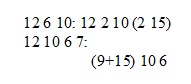
The right side numbers:

Note the repeating 12’s and that 10,6 and 6,10 are in a group and sum to 16. The 10,6 repeats in the last word. The 2 and 10 sum to 12. The 19th line of the Easter Table begins with year 1112 and year 1117 has GN 16 and DL 1,2 because of Leap Year. Checking year 1006, the GN is 19, DL is 6 which is unsatisfactory. The likely year then is 1117 which is confirmed again below.

The first two runes of HOOP sum to 11 and the last two to 17 which seems to confirm the date as 1117. In the Long Inscription stone 1117 was the implied date of Henricus’ arrival. So then, this stone implies the Hoop settlement began in 1011 and the author wrote this one hundred years later in 1117 or so. Archeological dating suggests it was active in the 1400’s. (Wolter, pg. 80) The area is still known as Hoop.

Mill tie A key seen by me 1117.

I Aki designed and carved.


Back to Top

Previous Post          Next Post

Younger Futhark Runic Alphabet

From Wikipedia

Similar Articles by the Same Author in PDF and Post:

*Easter Tables

** For numeric background see:

**Freeborn, B.L., Validating North American Runic Inscriptions, noahsage.com, November 2022. PDF only.

Freeborn, B.L., The Vinland Map Ciphers, noahsage.com, December 2025. Book only see post.

Freeborn, B.L., The Vinland Map Ciphers Addendum, noahsage.com, December 2025. PDF only.

Freeborn, B.L., Ancient Riddles to Test Our Wits: The Secret Chamber, noahsage.com, January 2016. Post here.

Freeborn, B.L., Another Riddle in Stone from Canada, noahsage.com, August 2025. Post here.

Freeborn, B.L., Deciphering the Spirit Pond, Nomans Land and Narragansett Runic Inscriptions, noahsage.com, November 2022. Amulet post. Map stone postPDF only.

Freeborn, B.L., Et in Arcadia Ego – OUOSVAVV DM – Deciphered, noahsage.com, December 2022. Post here.

Freeborn, B.L., Kensington Rune Stone: A New Translation, noahsage.com, February 2023. Post here.

Freeborn, B.L., Rök runestone of Sweden, noahsage.com, April 2023. Post here.

Freeborn, B.L., Runic Riddles: Time Capsules, noahsage.com, December 2022. Post here.

Freeborn, B.L. The Long Debated Bourne Stone, noahsage.com, January 2023. Post here.

Freeborn, B.L., The Nomans Land – Leif Eriksson Inscription, noahsage.com, December 2022. Post here.

Freeborn, B.L., The Narragansett Inscription: A Translation with its Date of Dedication, Author and Inscriber, noahsage.com, October 2022. Post here.

Freeborn, B.L., The Newport Tower: Finding the Date of Dedication, its Designer and Builder, noahsage.com, October 2022. Post here.

Freeborn, B.L., The Wawa Stone and Its Viking Ship, noahsage.com, August 2025. Post here.

Freeborn, B.L., Rok Rune Stone and its ciphers, noahsage.com, November 2024. Post here.

References

Gordon, Cyrus, Riddles in History, Crown Publishers, Inc. New York, 1974.

Landsverk, O.G., Runic Records of the Norsemen in America, Erik J. Friis, Publisher, Rushford, MN, 1974.

Landsverk, O.G., Ancient Norse Messages, Norseman Press, Glendale, California, 1969.

Mongé, Alf & O.G. Landsverk, Norse Medieval Cryptography in Runic Carvings, Norseman Press, Glendale, California, 1967.

Syversen, Earl, Norse Runic Inscriptions: with their Long-forgotten Cryptography, The Vine Hill Press, Sebastopol, California, 1979.

Wolter, Scott F, The Hooked X: Key to the Secret History of North America, North Star Press of St. Cloud, Inc., St. Cloud, Minnesota 2009.

Derogatory article by Aslak Liestol of Alf Mongé’s work: http://collections.mnhs.org/MNHistoryMagazine/articles/41/v41i01p034-042.pdf  and…. Landsverk responded to these comments in Ancient Norse Messages pg. 126-129; and often in Runic Records of the Norsemen in America.

Back to Top