The Ohio Adena Pipe – Art from Ancient Ohio

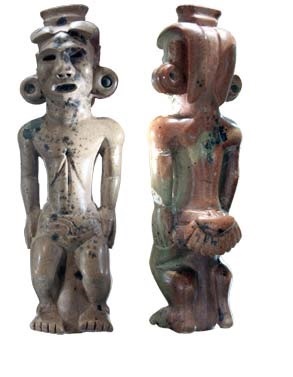
The Adena Effigy Pipe from Ancient Ohio

The Adena Effigy Pipe from Ancient Ohio

The Ohio effigy pipe is from Chillicothe in southern Ohio. It is attributed to the period 800BC to 1 AD. It is part of the Ohio Historical Society’s Collection in Columbus, Ohio.

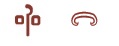
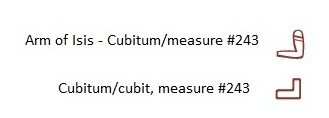
The classic explanations are available at the Society’s page. (here) As part of this study we only need notice that some parts of the man’s depiction are symbolic rather than realistic. Compare his features to the men on the Ramey Pete Tablet (see below) and notice the unique hair style may be an attempt by the artist to make what had been symbolic into reality. In Luwian/Hittite Glyphs this symbol means a cubit or measurement.

Hittite/Luwian Glyph for cubitum/measure

Hittite/Luwian Glyph for cubitum/measure

Further symbolism is found in the loincloth. It depicts a snake and we may assume the snake overlays a ‘pole.’ This then symbolizes the comet that struck the North Pole. The feathered bustle is clearly a wing and the wing in Hittite/Luwian glyphs means army. Ironically, a wing in English, both old and new, means troops or a portion of an army.

Without need for much explanation notice the arrow carved on the chest points upwards towards the gaping open mouth like it’s pointing out ‘a crater.’

The two earrings represent the two craters of Baal. The mouthpiece, the functional part of the pipe, also suggests the crater on the crown of the Earth. Indeed, this cupped mouthpiece as crater has further symbolism if the two L hairpieces are considered to be symbols about measure. It suggests there is a crater and two poles. There are definitely two poles. If we are to believe this story there is at least one if not two craters also.

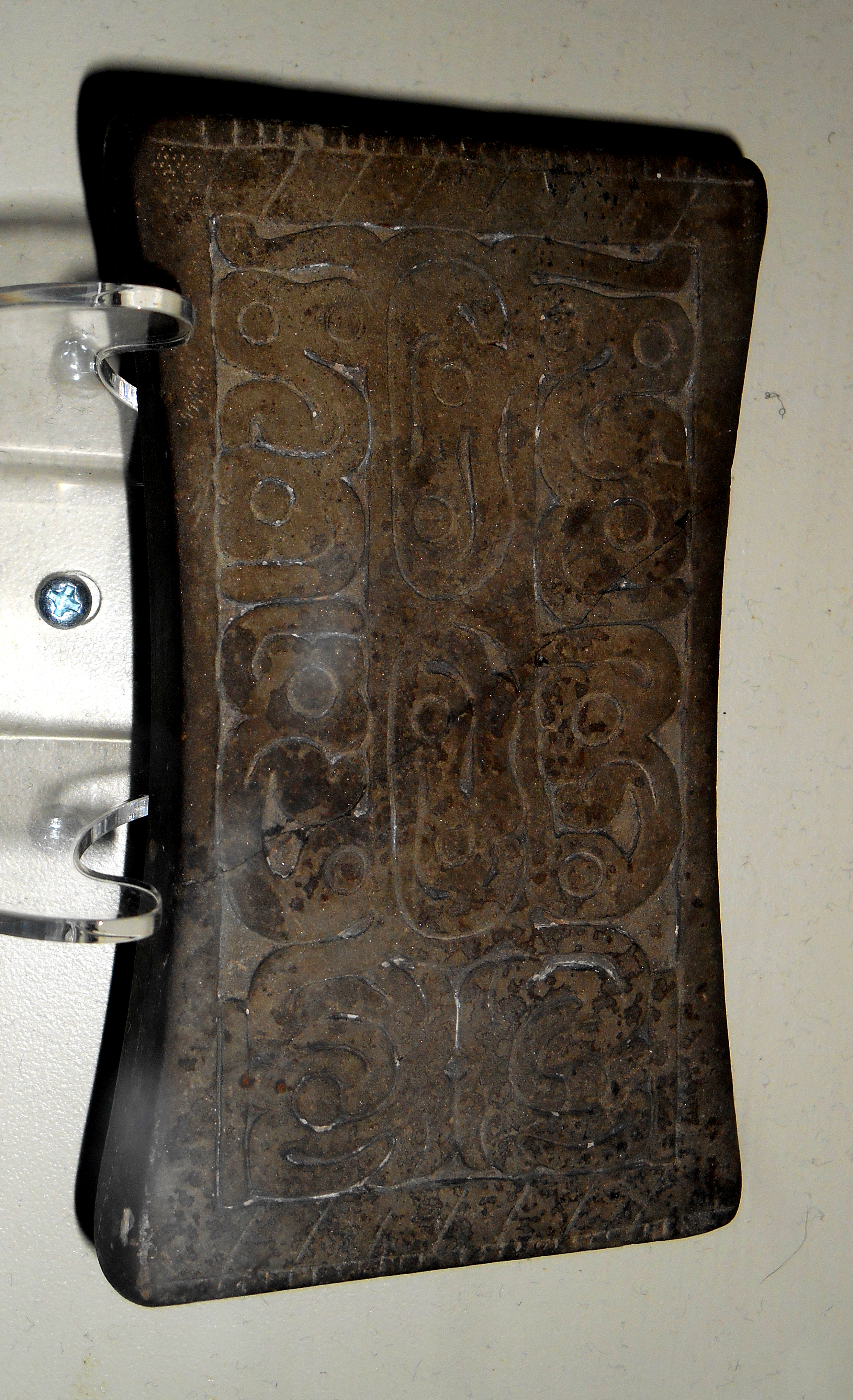
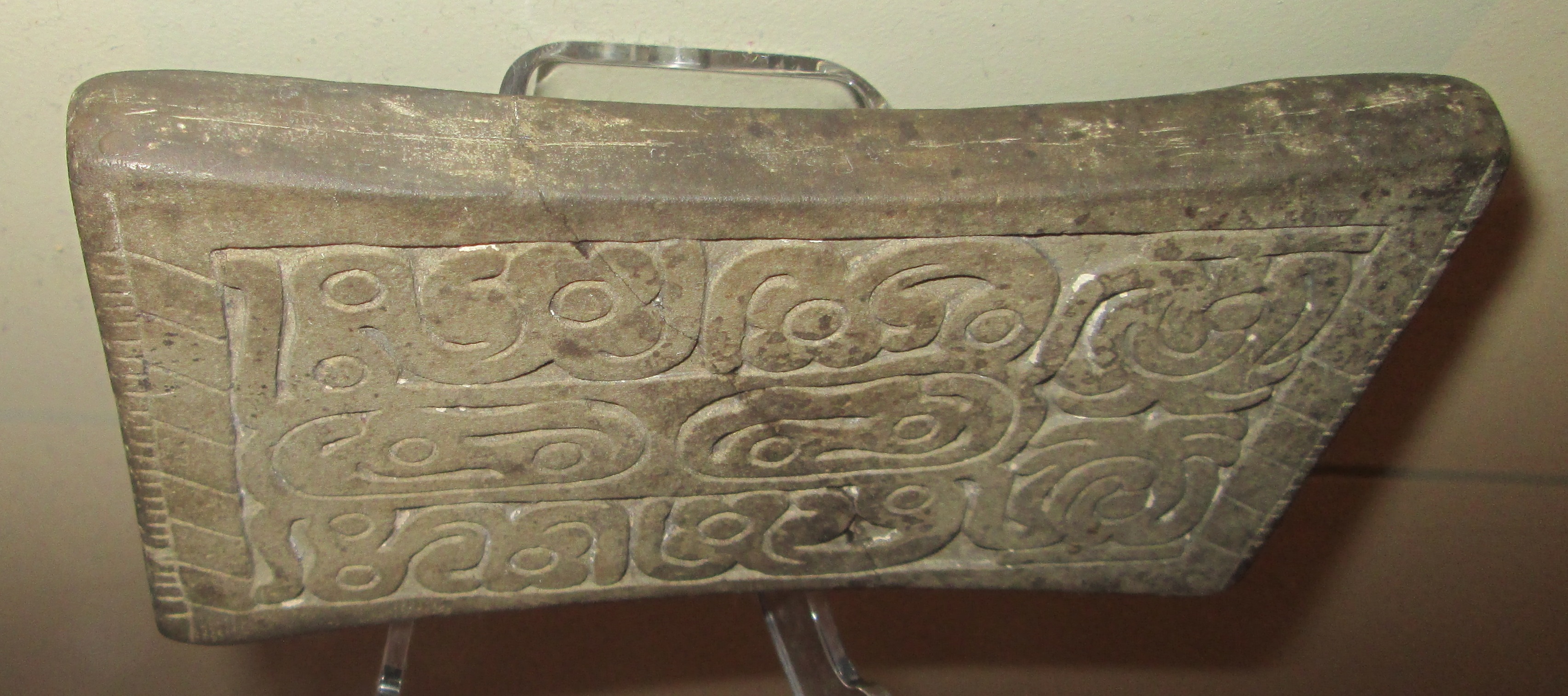
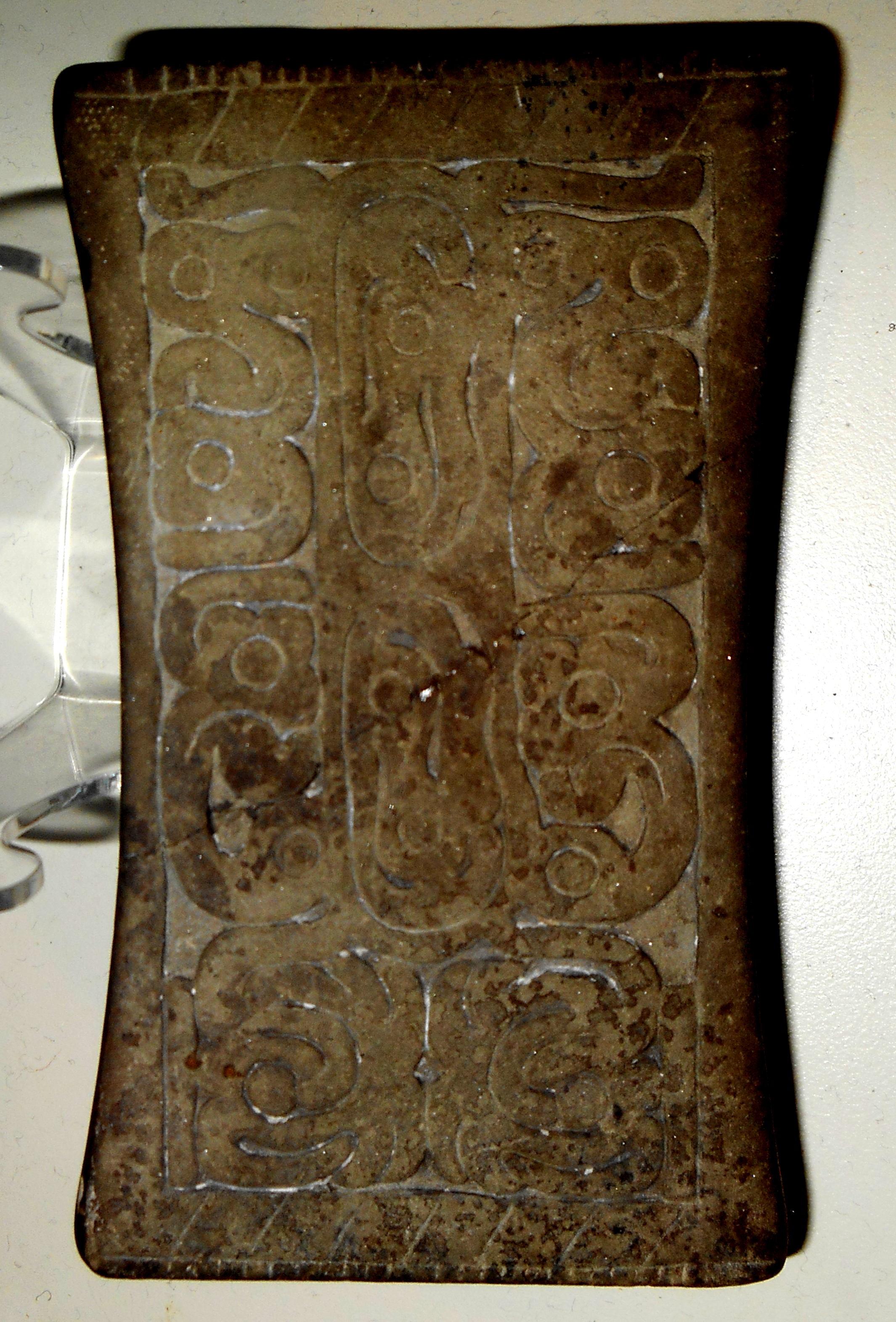
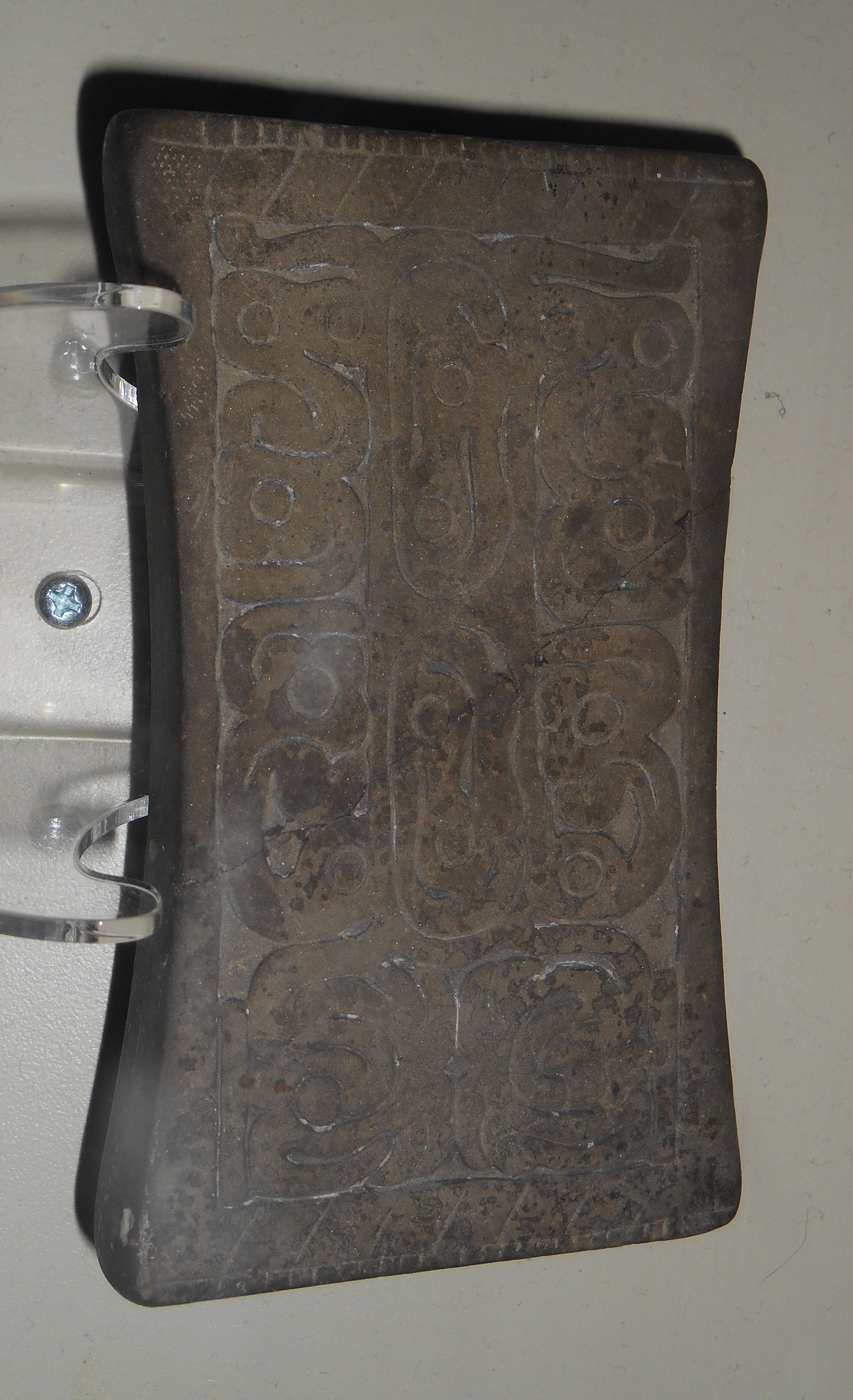
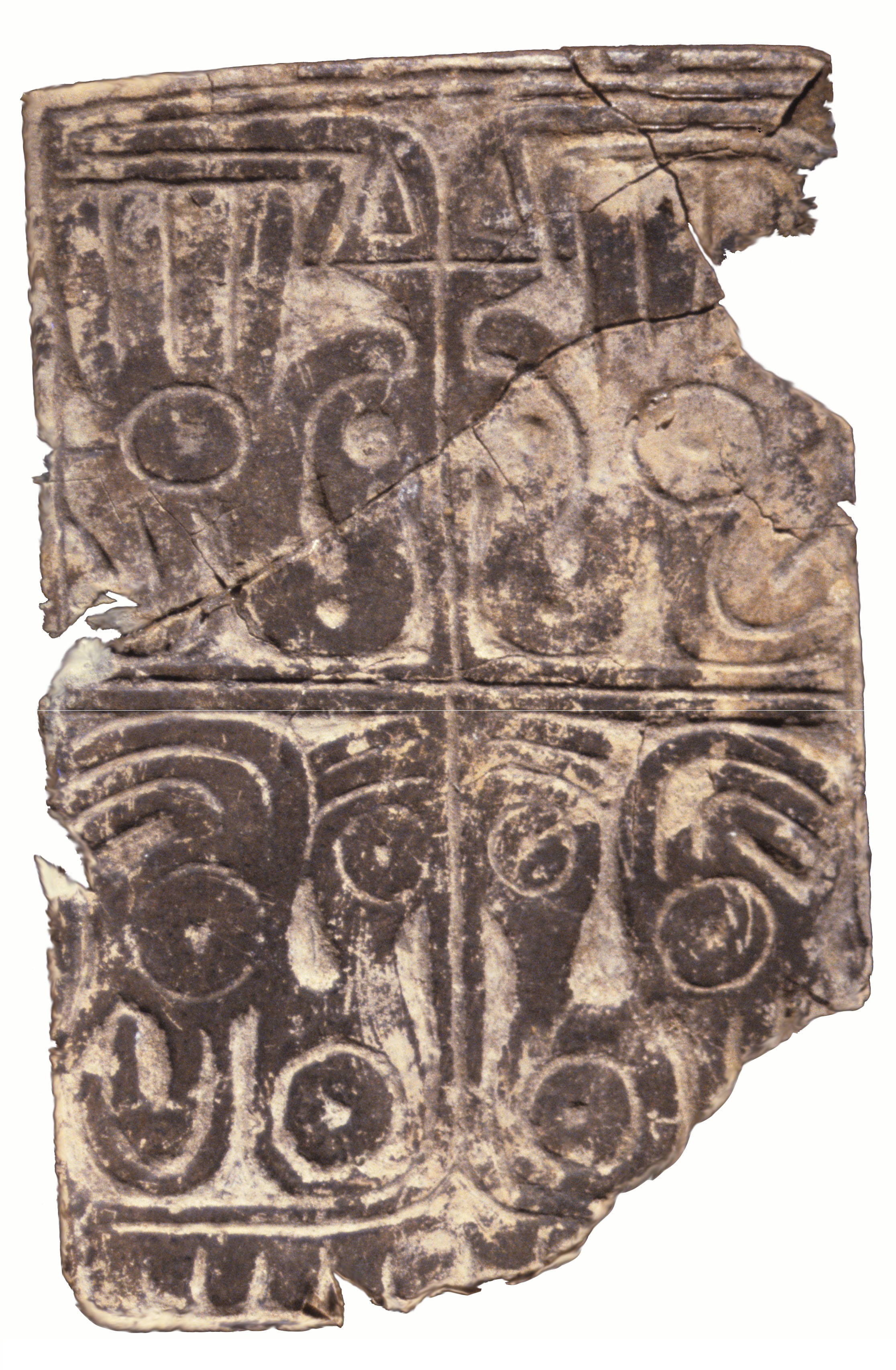
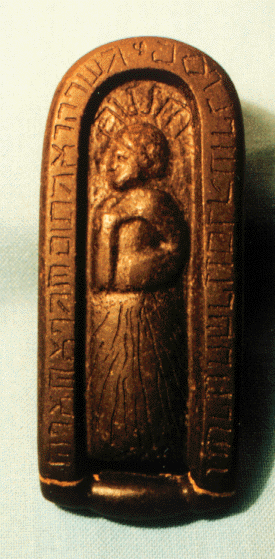
Ramey Peet Tablet from Cahokia Mound, obverse

Ramey Peet Tablet from Cahokia Mound, obverse

Numerically, the mouth with the two ears makes three and the eyes make two. This gives the 23,32 which suggests the Arctic Circle. The bustle has 10 feathers. Next to the bustle neatly placed are the two hands. Counting fingers as well as feathers find: 1, 4, 10,4,1 or 141 and 141. This recalls the value of the square root of 2 at 1.414. The sum of 141 and 141 is 282 and this is half of 564.

This then completes the essential knowledge of Baal and it is beautifully woven into the art of this functional object. Similarly lifelike and even more symbolic is the Ohio Shaman Bear Statue found in Newark, Ohio which is the topic of the next post.

See more at:

http://www.ohiohistorycentral.org/w/Adena_Pipe?rec=1278

http://ohsweb.ohiohistory.org/gallery2/main.php?g2_view=core.DownloadItem&g2_itemId=1266

Back to the very beginning of series on Adena Tablets

Previous Post on the Numbers and their Meaning

Posts on: Ramey Peet Tablet, Gridley Stone

McKensie and Bainbridge Tablets, Cincinnati Tablet,

Egyptian Art Comparison, Wilmington Tablet, Lakin A Tablet,

The Gaitskill Clay Tablet, Allen Tablet, Grave Creek,

The Kiefer Tablet, Wright, Lakin B and Meigs Tablets,

Berlin Tablet, Gaitskill Stone Tablet, The Low Tablet,

The Waverly Tablet, Metcalf Stone, and pdf article on

Hudson Bay as a comet crater of recent origin.

The Adena Tablets of Ancient Ohio – The Ramey Peet Tablet

© 2014 B. L. Freeborn

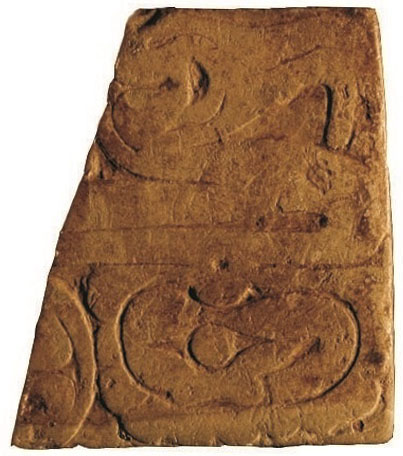
The Ramey Peet Tablet is from Mound 18 at the Cahokia Mound Site in Collinsville, Illinois very near St. Louis. Comparing and analyzing this tablet as has been done with the Ohio Tablets does not disappoint. It is generally assumed that only half the tablet has been found. However, the first thing that should be noted is that as presented the tablet forms a cup shape and that in and of itself indicates the topic. The shape suggests this is about a great event which involved a crater despite the fact that to a casual observer the front face appears to depict two chanting men and the obverse two woodpeckers. So, we shall look closer and discover not only two comets and lots of numbers but some rather familiar Luwian/Hittite Hieroglyphs from ancient Turkey.

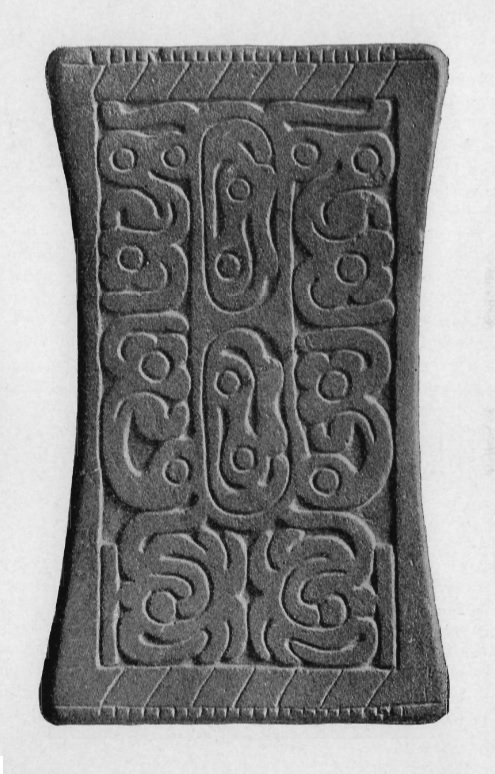
Ramey Peet Tablet found at Cahokia Mounds, Illinois

Ramey Peet Tablet found at Cahokia Mounds, Illinois

Ramey Peet Tablet from Cahokia Mound, obverse

Ramey Peet Tablet from Cahokia Mound, obverse

The woodpecker side positioned as shown can be described as two panels divided by a center bar with cross pieces. In other words there is a ‘T’ here. The ‘T’ is found in Egyptian art as the lower portion of the Ankh in the hand of Isis. (See Iuny Stele)

At the top of each half of the woodpecker side are crater shapes just below the T side bars. Emanating from or pointing towards the center are the tear drop shapes surrounding the ‘sa’ symbol often seen on the Ohio Tablets. This can be interpreted as before. It reads two comets struck the center of the pole and/or that two comets divided from one larger comet. Each of these figures overlap what appears to be double (comet) tails. On the right side there seems to be a hook shape around the tail implying once again as seen on other tablets the symbol for a hook or staff. The left side shows the twirl symbol seen on the New Hampshire Mystery Stone suggesting something turned.

Combined the symbols relate the identical story as deciphered before. A great comet broke into two parts and after striking the pole the staff/pole was turned.

From the New Hampshire Mystery Stone

From the New Hampshire Mystery Stone

Notice the numbers indicated on the center bar. It is divided into 6 portions but only one contains a dot. There are 5 without dots out of 6 portions or the number 56 appears again. Notice on the left panel there are 4 bars beneath the cross bar but only 3 on the right side for 43 or 34. The sum of 34 and 56 is 90. There are 90 degrees from the pole to the equator. The 43 reminds us the radius of the Sun is 432,000 miles.

Overall, this side is a simple statement of the basic numbers and narration. The obverse side is a bit more challenging but as seen in the examination of the Egyptian Iuny Stele these distorted faces are composed of numbers and glyphs making the fellows look rather unique.

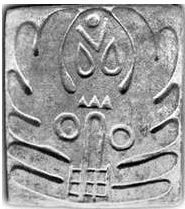
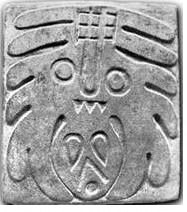
An overall description of the second side would be two men chanting with a ‘T’ shape dividing the image. Beginning with this T notice it is divided into three sections at the top with a center knot. There are four sections in the vertical portion. This gives us three familiar numbers immediately: 33, 34 and 43. The first two refer to the change in the lay of the pole and the latter to the radius of the Sun. Count the sections with dots and without. There are 5 with dots and 6 without. The number 56 is easily created. Count the dots on the vertical and then the crossbar, and find 2 then 3. The numbers 23 or 32 can be created or the latitude at which the Arctic Circle ends. The ‘T’ then represents the north pole and the large dot-knot at the top suggests a large crater.

Luwian/Hittite Hieroglyphs from ancient Turkey

Luwian/Hittite Hieroglyphs from ancient Turkey

Notice there are dots in the faces as well. Each man has two circles at the forehead and those circles have tails. Instead of viewing them as headdress ornaments perhaps they should be viewed as a statement that ‘two objects struck at the crown of the head.’ The image once again describes a comet striking the planet on the ‘crown of its head.’ Each man wears a large circular earring beneath his ear. This recalls something present on the McKensie Tablet. The whorls within the average ear are an orderly disarray of circles around the central canal and that is a good description of the McKensie Tablet. The placement of the large circle below the ear suggests that circular disorder radiated out from the central crater. Hence, we might recall that the Egyptian Iuny Stele also made use of the ear. In that instance it is carved with great care and skill to accurately portray an ear yet the eye is shown from the wrong angle. This striking difference must be intentional. The ear in the Egyptian art suggests radiating disorder from a central eye. The symbolism reveals a common theme. Taking it one step further, in Old English the word ‘ear’ means wave.

By counting dots find there are three upon each man so that there are 3 and 3 or 33 repeating the angle of rotation. Each man’s dots can be counted as 1 and 2 for 12. The number of houses in the heavenly Zodiac is 12. Count them as two ear dots and four forehead dots for the 24 hours in a day. There are 5 dots on the bar. There are 6 dots on the men. The 56 reappears. There are 3 dots on the top bar. There are 8 dots below the bar. The number 38 is formed which is half of 76. This number is the period of years of Halley’s Comet.

The hats demonstrate more numbers. The left side has three sections. The right has two. Create 32 and 23 again. The dots with tails differ. The left side shows one tail and the right shows two tails. The Wilmington showed a two tailed comet on one side and only one tail on the opposing side. So then the statement a ‘comet split into two’ is suggested by this image as well. Now those odd strong lips have meaning. The two comets created two craters.

The nose is interesting. It is bold and is making a statement in a notably Old English way. The word ‘nose’ derives from the word ‘ness’ which means prominence, headlands. It is the most prominent feature on the face, hence the association. The image, by exaggerating the nose, makes it clear that it is part of the story. A mountain can be called a ness. The image suggests the crater lies near the ‘ness.’ The north pole or headlands was once overlain by mountains of ice.

Notice that the eye is portrayed in the Egyptian manner and in this full on view rather than sideways it is the glyph for ‘eye.’ The image with its large nose, accented crater mouth and sideways eye tells us the eye (of the comet) is near the crater and ness/mountain.

Hittite/Luwian Glyoh for cubitum/measure

Hittite/Luwian Glyoh for cubitum/measure

Another glyph is clearly present. The Iuny Stele used symbol #243 in both forms to indicate Cubit/measure. This is the distinct shape the hair of these men forms. Each ‘head measures’ and this is a true statement. The north pole and the magnetic pole acting as heads of the planet are both used to measure.

The study is completed by counting. The odd formation of the neck gives 2 nubs. The projections on the face give 3 if the nose is not counted and 4 if it is. This gives us the familiar 23, 32, 24, and 43.

The last number to be found is on the right head. He has four portions to his hair. It appears the man on the left has one or none. The hair is divided to make a count just as was done in the Iuny Stele. Recall that a square of 4 unit sides has a diagonal of 5.65 units. Similarly, 1 and 4 as 14 make 56 since 4 x 14 = 56.

Like the previous tablets, this one tells the same important story to initiates. To all others, it is just two men chanting and woodpeckers. The famous statement ‘they have eyes to see but do not see’ is now understood.

The Gridley Stone is up next. It is also a half circle shape and what it reveals is exactly why it has come up missing.

Back to the very beginning of series on Adena Tablets

Previous Post on McKensie and Bainbridge Tablets

Posts on: Cincinnati Tablet, Egyptian Art Comparison,

Wilmington Tablet, Lakin A Tablet, The Gaitskill Clay Tablet,

Allen Tablet, Grave Creek Tablet, The Kiefer Tablet,

Wright, Lakin B and Meigs Tablets, Berlin Tablet,

Gaitskill Stone Tablet, The Low Tablet, The Waverly Tablet,

Metcalf Stone, and pdf article on

Hudson Bay as a comet crater of recent origin.

——————————————

Further Information on the Ramey Peet Tablet:

The link to the museum site with a great deal of information is here:

http://cahokiamounds.org/explore/archaeology/bird-man-peet-tablets

Vince Barrows has written extensively on the mounds and his work with many diverse links can be found here: http://www.bibliotecapleyades.net/arqueologia/monks_mound03.htm

The Adena Tablets of Ancient Ohio – The Bainbridge and McKensie Mound Tablets

© 2014 B. L. Freeborn, updated Sept. 2022
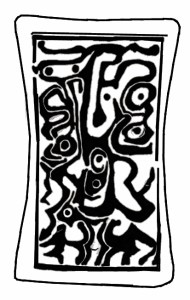
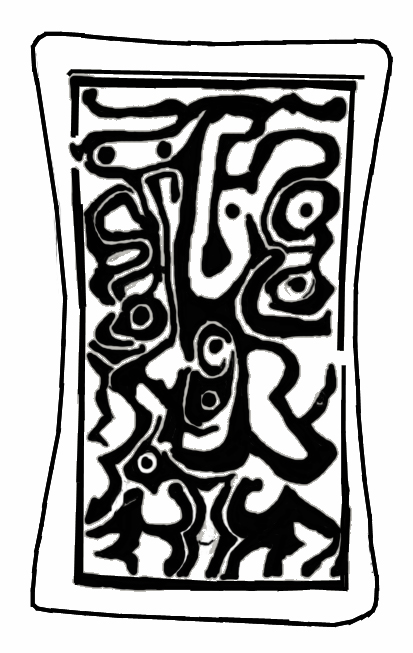
Bainbridge Tablet

Sketch of Bainbridge Tablet after Caldwell photo.

The Bainbridge and McKensie Mound Tablets are both owned by Duncan Caldwell. View actual photos and read his analysis on line here. (Also see link below.)

The Bainbridge Tablet is from Ross County, Ohio and the McKensie Tablet is from Pike, County, Ohio. The latter was found in 1899. The Bainbridge is studied first here.

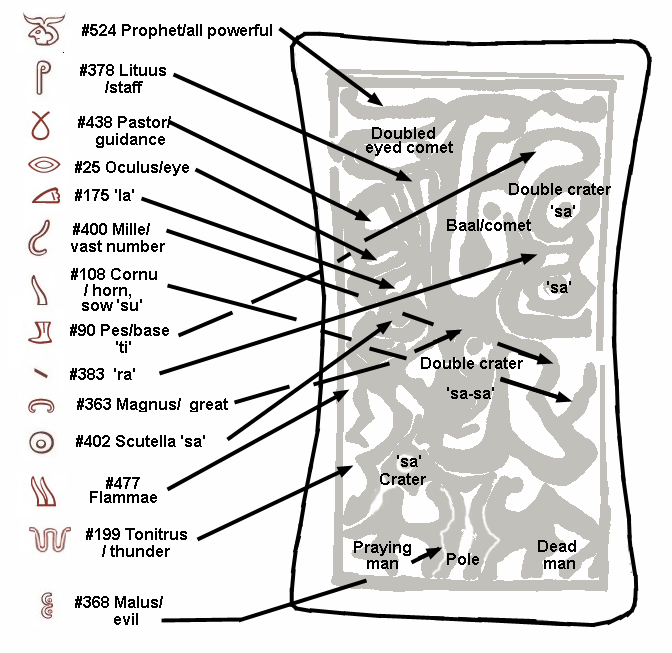
The Bainbridge is similar in design concept to the Cincinnati and Wilmington. It has sides bowed in as does the Cincinnati Tablet. All three have the feathers of the Prophet glyph giving us the correct orientation for reading it. The feathers were also present on the Lakin A Tablet. The Prophet glyph’s presence suggests the abstractness of the diagram is just a series of combined glyphs. With some effort the glyphs are identified as shown in the diagram below. It tells of a two eyed comet and the staff of guidance. It is where the ‘eye lays.’ The upended Pes/foot glyph on the right side gives us the idea of a base which is turned and the sound ‘ti.’ Two joined craters lie below it with the symbol for ‘ra’ between them forming the word ti-sa-ra-sa or tessarace which appeared in the Lakin A Tablet. A tessarace is the summit of a four sided pyramid. The north pole is the summit of a world divided into square tiles. The word can also be translated into Old English as ti-sa or tease, and ra-sa or raes which is a violent storm or a course. This suggests further meanings to the word tessarace. It describes a place that was harmed by a violent storm which is marked by a line.
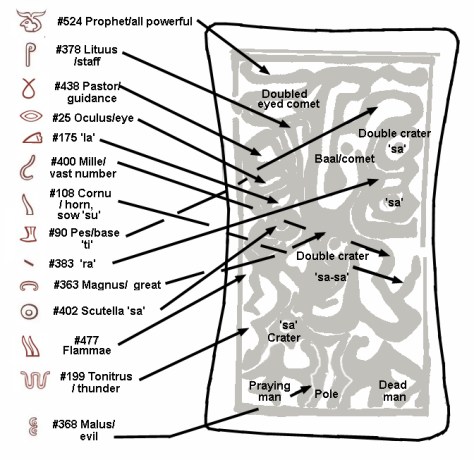
Glyph map of the Luwian/Hittite glyphs found on the Adena Tablet known as the Bainbridge from ancient Ohio glyph map

Glyph map of the Luwian/Hittite glyphs found on the Adena Tablet known as the Bainbridge from ancient Ohio.

Below this are two joined symbols. It describes ‘a vast number sown.’ In the center are two craters or ‘sa-sa’ suggesting the word ‘sess’ which means seat in Old English. The symbol for ‘great’ surrounds the highest of the two craters. On the left, three joined symbols suggest flaming-thunder-crater and below this is a praying man turned away from the center. To his back is the symbol for evil and in the center is the pole. The right side is a mirror image of the evil symbol. This symbol creates the legs of a man who is presumably dead since he seems decapitated. This would be appropriate since the message suggests the planet ‘lost its head’ or guiding north pole.
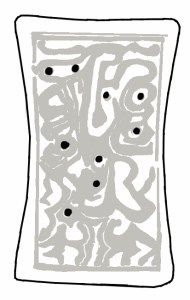
Numbers are indicated on the Bainbridge Tablet by the placement of the dots in the image.

Numbers are indicated on the Bainbridge Tablet by the placement of the dots in the image.

This message is not complete without imbedded numbers. The dots provide them. On the left are four dots. In the middle there are three and on the right are two for a sum of nine. So it can be said there are 7 on the left/center, 9 total, and 2 on the right which can be used to create the 792 seen on many tablets studied already. It refers to the diameter of the planet at 7920 miles. The center 3 and right 2 create 32 or the square of 5.65. If seen as 23 then it reminds us of the latitude at which the Arctic Circle ends. The number 432 can also be created and this reminds us of the radius of the Sun at 432 thousand miles.

The dimensions of the tablet provide more numbers: 2 7/8″ x 4 3/4″ x 2/3″ or 2.87″ x 4.72″ x .66″. The sum of the length and the width is the ever important number 7.6. The period of Halley’s Comet is 76 years. The width provides both 23 (from 2/3) and 66. The velocity of Earth is 66,600 mph.

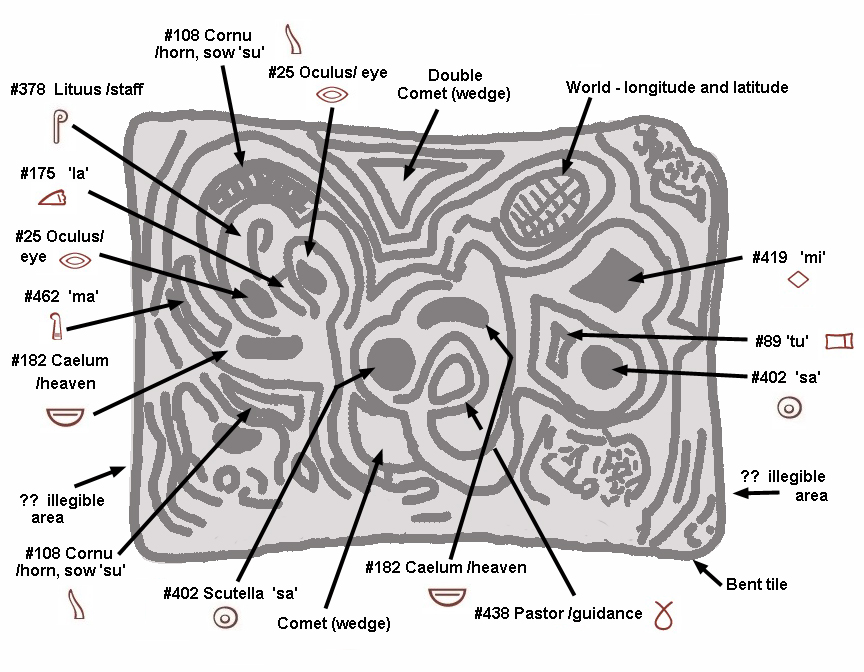
Turning now to the McKensie Tablet it is found it repeats the typical message.  Right side up can be determined by observing that two diamonds appear at the top of the Gaitskill Clay Tablet. One triangle begins the Metcalf Stone and diamonds are present on the Grave Creek Tablet. So the stone should be read as positioned in the image shown here.
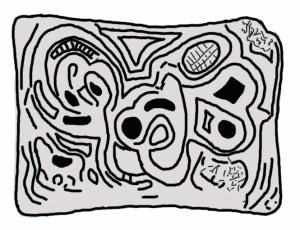
Mckenzie Mound sketch

The Adena tablet from ancient Ohio known as the Mckenzie Mound. The sketch is from a photo by Caldwell.

To the right is the circle with hash marks. Hash marks appeared on the Wilmington, and on the Gaitskill Stone Tablet. The Earth when divided by longitude and latitude appears to be overlain by such a grid. Another way to look at this circular glyph is that the hash marks are a separate glyph suggesting ‘ha or pa’ or the old words ‘heah and pea.’ Heah is high or a high power. The symbol also suggests an object such as corn which is composed of many pieces. Then the combination becomes a powerful comet of many pieces. The story then reads: ‘a powerful comet came to Earth.’

The left upper panels says literally ‘two eyes lay at the staff’ or two comets struck the north pole. Below this are two glyphs that suggest there are ‘ma’ which translates from Old English to ‘more.’ The two symbols suggest ‘there are more in heaven.’ Above this series of glyphs is the horn in 9 sections. The planet’s latitude is marked off in 90 degrees equator to pole. The bottom left corner suggests ‘sow’ but the rest of the corner is illegible.

Within the center is a Pastor symbol identical to the one seen on the Bainbridge Tablet just studied above. Next to it is a large ‘sa’ or crater. Above these two symbols is the symbol for heaven and below them is a wedge. This suggests the reading: ‘the crater from the heavenly comet guides.’

Mckenzie Tablet glyph map

The Adena Tablet from ancient Ohio known as the McKensie Tablet can be deciphered into Luwian/Hittite hieroglyphs from ancient Turkey.

The far right provides three glyphs: mi, tu and sa. The first suggests the Old English word ma for more or mighty, while the latter two are grouped together in the art suggesting tu-sa. The Old English word teosa meaning harm or the modern word tease is then formed. The phrase is then ‘a mighty harm.’

The overall layout of the stone suggests disorder in circular sweeping patterns. It imitates exactly what is observed in areas of comet collisions such as we see on the Moon’s surface. The Bainbridge Tablet also suggests disorder around circular crater marks. They may actually be attempts to depict the aftermath of such an impact with the planet just as the Berlin Tablet did.

If the McKensie Tablet is examined for numbers then several are found. The double triangle, center top, provides 2 triangles of 3 sides which is 23 or 32 = 5.65 squared. The center panel is grouped in such a way as to count out 1,1,2 as if to say 112 or twice 56. The right side gives 1 and 2 or 12. Some might say it gives 1,1, and 1 for 111. The square of this number is 12321. The left upper grouping gives 3 filled in figures and 3 carved out for 33. The overall measurements of the stone are 2.76″x 3.75″ x .394″. The square of the width is 7.6 recalling the period of Halley’s Comet. The sum of the length and width is 6.5. The sum 6.5 is 56 in reverse. The sum of all three measures is 6.90. The distance between two degrees of longitude at the equator is 69 miles.

The overall shape of both tablets is a tile with bent in sides. The story suggests the grid array of longitude – latitude shifted or perhaps twisted as the shape suggests. Most importantly, the two very round carved out circles suggest Two Balls or Bi-Baals. The pun ‘Holy Bible’ was noted in the Wilmington post.

The cumulative list of numbers from all tablets follows. Those in bold were also found on these tablets. 108, 111, 11111, 112, 12, 1212, 12321, 123454321, 14, 1414, 16, 17, 21, 212, 2121, 21212, 216, 2166, 222, 23, 23 32, 23.5, 24, 241, 2486, 26, 28, 3, 31, 32, 33, 333, 34, 3.8, 38, 4, 40, 43, 4.4, 44, 52, 54, 5.65, 56, 56.5, 56.5, 58, 6, 61, 64, 6.5, 65, 66, 66624, 67, 6.9, 7, 72, 76, 77, 777, 79, 792, 86, 8.8, 88, 9, 90, 912, 92, 93, 93.3, 7924 and 8642.

It can be concluded, despite the differences in the artist’s style, the message of the Bainbridge and McKensie Tablets is consistent with previously studied art. The Ramey Peet Tablet (next post) from Cahokia Mound indicates by repeating this now familiar message and style of numbering that this knowledge and iconography was not restricted to the areas of Georgia, Ohio, West Virginia and Egypt.

Back to the very beginning of series on Adena Tablets

Previous Post on Cincinnati Tablet

Posts on: Egyptian Art Comparison, Wilmington Tablet, Lakin A Tablet,

The Gaitskill Clay Tablet, Allen Tablet, Grave Creek, The Kiefer Tablet,

Wright, Lakin B and Meigs Tablets, Berlin Tablet, Gaitskill Stone Tablet,

The Low Tablet, The Waverly Tablet, Metcalf Stone, and pdf article on

Hudson Bay as a comet crater of recent origin.

Article by Duncan Caldwell at: https://www.researchgate.net/publication/277720624_A_New_Typological_Ordering_of_Adena_Tablets_Based_on_a_Deeper_Reading_of_the_McKensie_Tablet
The Adena Tablets of Ancient Ohio – The Cincinnati Tablet

© 2014 B. L. Freeborn, updated 2025

The Cincinnati Tablet is a beautiful work of art that has come to us through the centuries because of the wisdom of our ancient elders. They knew that in time we would forget the important message this tablet carefully depicts. The wise knew that if enough significant works of art were buried with them that long after their bones had turned to dust and their societies had vanished the mounds would attract the attention of future grave robbers. This predictable curiosity would drive them to dig and rediscover this important message left to us. It is as if the mounds were intended to function as valuable time capsules. Finding the pieces is the second to last step in the process. The last step is pondering and understanding them. We are presented with this important message. Can we read it?
Cincinnati Tablet

The Cincinnati Tablet from Skinner’s 1885 report.

This tablet was found in a mound not too distant from where it currently resides. It is displayed in the Cincinnati Museum Center at Union Station – poorly. It is not to be found with artifacts from the people of the area in the Natural History wing but in a dim lonely corner of the urban exhibits in the Cincinnati History Museum wing. The lighting is dismal. The location suggests it is to be forgotten. So indeed! Not understanding how beautifully this artist portrayed the ancient but still vitally important message, the curators have buried it in plain sight.

Comparing it to the Wilmington Tablet, it can be seen the basic layout is the same. The comet is the center piece with its two wings along the top. Within its center body are two nested comets. Each comet has one tail and two eyes. The flower images are seen in the Waverly Tablet and in studying that tablet it was suggested they have a dual meaning. They represent both people and flowers. They are ‘shot’ through the head. There are four flowers. At the bottom are mirrored comets once again. Between them is a dot in the negative. On each outer side there is a vertical bar. The two bars represent the two poles, true north and magnetic north, as we know it today.

Cincinnati Tablet

Cincinnati Tablet. Art from ancient Ohio as exhibited. Image darkened to add contrast.

Let us begin counting as done with other tablets. Prominently at the top 7 spaces are marked out (or 8 lines). At the bottom there are 6 spaces (or 7 lines). This creates the number 76 and as noted in previous posts, it suggests the period of Halley’s Comet which is 76 to 77 years. This confirms the topic is about comets. Combine the numbers as 77 and obtain another reference to the comet. Combine them as 86 and obtain a reference to the diameter of the Sun (864,000 miles). Combine them as 78 and obtain the diameter of Earth through the pole (7899 miles). Sum the 6, 7, 7 and 8 and obtain 28 or half of 56.

Even more eloquent, notice that there are actually 9 spaces at the top but only 7 within the hash marks and 2 outside. Create 792 easily from them and compare this to the diameter of the planet at 7920 miles. Similarly, count the bottom as 8, 6 and 2 or create 862 which reminds one of the diameter of the Sun.

Side view of Cincinnati Tablet

Side view of Cincinnati Tablet

The very edge of the top and bottom are scored with small marks. J. Ralston Skinner counted the marks and reported them in his 1885-1886 report on this stone. He noted 24 spaces/ 25 hash marks on the top and 23 spaces/ 24 hash marks on the bottom. The sum of these numbers is 96 and the average is 24. There are 24 hours in a day. The top has 23 spaces. There are 23.934 hours in a sidereal day. Combining 23 and 96 obtain 23.96 or very nearly this number.

Count out the dots. There are 16. The Earth travels 1.6 million miles in a day. There are 2 bars. The 2 and 16 combined creates 216. The diameter of the Moon is 2160 miles.

There are 8 dots in the upper third. There are 6 dots in the middle third. There are 4 dots in the center. There are 2 dots at the bottom. This creates the series 8642 or it refers to the diameter of the Sun at 864,336 miles.

The upper third has 3 dots left and right and 2 in the center. From the center out then is found 23. Reversing it is 32. The Arctic Circle ends at 23 degrees and 30 seconds. The tilt of the planet is this same value. The square of 5.65 is 32.

The center third provides 222. A square of sides 2222 has a diagonal equal to the constant pi (3.14) times 1000. The sum of 22 and 22 is 44. Divide the circumference of the planet by 44 and obtain 565 miles. Forty-four is found in the center bar as well. Count the 4 dots and notice there are 4 bump outs. Recall also a square with sides of 4 has a diagonal of 5.65.

Cincinnati Tablet Museum View. Image darkened for contrast.

Cincinnati Tablet Museum View. Image darkened for contrast.

The dots on each side number 6 which creates 66. The velocity of the planet is 66,600 miles per hour. In the center there are 4 dots. Below this is the one dot in the negative. This creates the number 5. Combine this with the 6 on each side and obtain 56 once again. Or count it out as 1 and 4 which reminds us of the fingers in the Gaitskill Clay Tablet. Combine them and create 14 and then recall there are 4 bumps in the center. 4 x 14 is 56.

The exterior dimensions of the stone and its shape provide numbers that appear familiar. It was measured in 1885 by Skinner to be 3.00″ x 5.00″ x 5/8 inch thick. The width of the narrow middle is 2.5 inches. The sum of these three numbers is 3 + 5 + .625 or 8.625 which recalls the diameter of the Sun. The diagonal of the piece is 5.831 inches. The distance Earth travels in a year is 584 million miles. The thickness expressed as 5/8 repeats this value. The circumference of the piece is 16. The Earth travels 1.6 million miles in a day. It is as if they used inches, also.

The curved portion on each side recalls the idea of a crater. They are 4.5 inches across and .25 inches deep. The area of the curve on each side is .563 inches. The ratio of the narrow width to the length is 2.5 to 5 or .5. The ratio of the width to the length is 3 to 5 or .6. The ratios are .5 and .6 or a reminder of 56 once again.

Cincinnati Tablet. Image before darkening for contrast.

Cincinnati Tablet. Image before darkening for contrast.

Overall, the tablet is extraordinary. It relates this ancient message to us with ease and symmetrical beauty. It tells us we did not crawl out of caves 10,000 years ago to create society as we know it. Indeed, it tells us great scientists once explored and measured the heavens. But the unimaginable happened.

Perhaps the Inch System of today was inherited from this distant prior time. The measure of length of a Hunab found at ancient Teotihuacan, Mexico is 41.66 inches. (1) Multiply this by the diameter of the Sun written as .864 and obtain a simple yard of 36 inches.

Yet to be reviewed are the mysterious (next in series) Bainbridge and McKensie Mound Tablets, the Ramey Peet Tablet from Cahokia Mound, the way too accurate Gridley Stone, the beautiful Ohio Adena Pipe now a Ohio State symbol, and the Hopewell Shaman – Bear. Many interesting posts are to come.

—–

(1) See Hugh Harleston, Jr. pg. 241-263 in “Mysteries of the Mexican Pyramids,” by Peter Tompkins, Harper & Row, Publishers, New York, 1976.

From Harleston, Hugh, Jr.  “A Mathematical Analysis of Teotihuacan.” Mexico City: XLI International Congress of Americanists. October 3, 1974.

———

Back to the very beginning of series on Adena Tablets

Previous Post on Egyptian Art Comparison

Posts on: Wilmington Tablet, Lakin A Tablet, The Gaitskill Clay Tablet,

Allen Tablet, Grave Creek, The Kiefer Tablet,

Wright, Lakin B and Meigs Tablets,

Berlin Tablet, Gaitskill Stone Tablet, The Low Tablet,

The Waverly Tablet,  Metcalf Stone,

and pdf article on

Hudson Bay as a comet crater of recent origin.

J. Ralston Skinner’s articles from 1886.

The Adena Tablets of Ancient Ohio – The Gaitskill Clay Tablet

© 2014 B. L. Freeborn

Art from ancient Ohio - Gaitskill Clay Tablet

Art from ancient Ohio – Gaitskill Clay Tablet

Art from ancient Ohio - Gaitskill Clay Tablet

Art from ancient Ohio – Gaitskill Clay Tablet. Clay copy.

Preserved from ancient Ohio is the Gaitskill Clay Tablet which gives us much to ponder. This stone has been described as having anthropomorphic and/or zoomorphic characteristics. Another author describes it as Avian with four world quarters. If we reflect on the open mouthed man who seemed to be crying ‘no’ in the Waverly Tablet and the angst of the Gaitskill Stone Tablet then it follows that what the artist is portraying is two hands held up as if to say, “Stop!” Above the hands appears two triangles which suggest this is another way of expressing the double eye of the comet Baal. Up and over on each side is the double tail of the comet. The two tails are similar in style to the feathers in the hat of the Prophet Glyph and the curved down feathers seen on the men in the Low Tablet. If the center line is taken as the pole then the reference to four quarters of the world is correct.

There are other details we might notice. In the lower quadrants notice the three lobed wings above the large circle that are like those in the Low Tablet. The Luwian Hieroglyph Symbol #78 Ala meaning ‘wing of army’ is similar. The wing of the Army of Baal would be the debris that preceded, followed and was created by the comet. The image shows multiple circles suggesting many craters of various sizes occurred.

Prophet Symbol

Prophet Symbol

Wing symbol meaning troops - Ala 78

Wing symbol meaning troops – Ala 78

In a prior post the name of the goddess Isis was discussed. It was suggested it means ‘ice-seat.’ At the base of the center pole on the tablet the lines fan out. Perhaps this symbolizes a mountain of ice or the mountain Isis at the seat of the North Pole. But the story these tablets relate is that the pole has a mirror image, a second location to which it moved. ‘Where?’ was the question asked by the Low and Waverly Tablets. Presumably the tablets answer the question. Perhaps this tablet will reveal the answer to us.

The quoted dimensions of the stone are 4.4″ x 2.95″ x .55″. The last number is .01 off from 56 suggesting this was the desired thickness. But these stones vary too much in thickness to be so exact so 4.4″ x 2.9″ x .6″ is a better way to describe it. The 4.4 we will see repeated in the stone and discussed later. The sum of these terms is 7.9 inches. The diagonal of the stone squared is 28 and twice this is 56.

The abstraction of the drawing is distracting to say the least. By counting the message becomes clearer. There are 8 large dot-circles. Of these, 6 are on the bottom. On the top there are 4 dots without outer circles and 2 remaining large circles. This gives us 8,6,4,2 which is a descending even series. When combined the familiar 86420 that is reminiscent of the diameter of the Sun at 864322 miles appears.

Those 6 bottom circles can be counted out as 3,3. The top circles as 12, 21 or perhaps it is 1212 or 2121. This all seems familiar and the abstraction begins to make sense. The fingers on each hand give 4 and 4 for 44. The thumb finger combination gives 1414 which we have seen before. Recall 4 x 14 is 56. The bottom fringe can be counted out as 5 upward nips and then the center plus the other side (assumed to be a mirror image) makes 6 for 56. This was found in the same manner on the center strip of the Low Tablet.

In the lower half the 3 wings to the left and 2 in the opposite direction makes 32 23. The 2, 3 pattern repeats in the two lower tails and the three circles. It repeats again on the left with two side tails and above it lies three lobes of the wing. Counting the 2 lower tails and the 2 side tails creates 22 which is half of 44.

In the top half move around the exterior of the hand and count 2 lower tails, 4 fingers, 1 thumb for 241. Also count 2 lower tails, 1 large circle, 2 dots for 212. The 5 fingers on the hands plus 2 tails creates 52 suggesting weeks in a year. The total sum is 7 for the days in a week.

The only number listed above that is new to our long list of numbers from the previous tablets is 44 but then again it is not so new. We already have 2486 suggesting the circumference of the Earth at 24881 miles and the very repetitive 56.5 listed. Divide the circumference of the planet by 565 and the term 44 appears.

Thus the abstraction is a rather clever way to relate numbers to a people who are both distant in place and time with no common language. It is clear from this list that these numbers and the story related involves the Earth and that someone had advanced scientific knowledge which they wished to share with someone of similar mind. That would be us.

The next tablet is equally abstract but rewarding to study.

Back to very first post on Adena Tablets

Previous Post on The Waverly Tablet

Posts on: Allen Tablet, Grave Creek, The Kiefer Tablet,

Wright, Lakin B and Meigs Tablets,

Berlin Tablet, Gaitskill Stone Tablet,

The Low Tablet, Metcalf Stone, and pdf article on

Hudson Bay as a comet crater of recent origin.

The Adena Tablets of Ancient Ohio – The Gaitskill Stone Tablet

© 2014 B. L. Freeborn, updated Sept. 2022

A stone tablet from ancient Kentucky. The Gaitskill Tablet.

A stone tablet from ancient Kentucky. The Gaitskill Tablet.

Gaitskill Stone Tablet

Gaitskill Stone Tablet shown upside down here so that the spider appears.

The Gaitskill Stone Tablet is assumed to be an image of a spider. The similarity to an insect is obvious with the legs and the large round abdomen. It was found in Mt. Sterling, Kentucky around 1920. It is dated to 500 BC to 200 AD.

Symbols 'wa' and "Magnus'

Symbols ‘wa’ and “Magnus’

209 i

Symbol for i.

In order to study it we have to turn it right side up and once we do we see some rather familiar features. The ‘wa’ (Luwian Symbol #439) is center bottom with its bold feature and two round circles. The loop in this glyph can also be interpreted as sound ‘i’ (glyph 209) and on each side of it are two ‘sa’ symbols or perhaps craters.

Ha or pa glyph #224.

Ha or pa glyph #224.

In previous posts it was suggested this is the north pole or polar axis from which all measures of longitude and latitude are taken today. Here depicted very clearly is just that. The pole stands atop a grid of hash marks 3 x 3 wide. This gives us 33 and 9. It also gives us 93.3. The hash mark symbol appears in the glyph repertoire as #224 with sound ‘ha’ or ‘pa’. Pa gives us the first syllable of both power and pole. Ha gives us ‘heah’ in Old English which means high. Both terms indicate importance and surely the seat of measurement is extremely important.

On top of the pole are three joined triangles which appear as scary teeth in one direction and a crown in reverse. This too appears in the Luwian glyph system as #231, Castrum, or ‘camp.’ This completes the message that this is the ‘home’ of the ‘po’ on ‘heah’. Despite sounding blatantly Anglo, it also sounds accurate.

Symbol Castrum means camp.

Symbol Castrum means camp.

Before moving on, the 33 we have seen before but the 93.3 is knew. It brings to mind that the average distance to the Sun is 93 million miles. It would be remiss not to note a few more numbers. Does the north pole not sit at 90 degrees north latitude? Is this pole not positioned on a grid? If we count out the two circles and three triangles to the crown there is a reappearance of the number 23 32. The Arctic Circle ends at 23 degrees 30 minutes. The two circles are once again suggesting two positions for the pole with its two circles on each side of the vertical. So we have one obviously where it belongs in the north but where are they saying the other was? Could the answer lie in the 3×3 grid?

But the image continues.

Once the image is rotated it loses its spider appearance but still has two faces. The upper face has angry eyebrows, two teardrops for eyes and a dot in the middle of the forehead as the Hindu’s wear. This reminds us of the Metcalf Stone with its initial symbol of a triangle. So here too we find the idea of one comet which split into two. If the expression is interpreted correctly, then it caused anger and weeping. The number 112 is easily found within this face again.

The overall exterior shape of this creature in stone has two straight bars on each side at the bottom. Above these are four flame or wing shapes. Two and four reminds us of the hours in a day. Topping this 24 pattern is the center round. If we begin with this center round as 1 and count around the image there are 12 wings. 1 and 12 once again appears and 112 = 2 x 56. If we begin at the bottom and count upwards then we find 2,4,1 or 241. The square of 241 is 58081 which is another number to add to our list which suggests the distance Earth travels in a year or 584 million miles. The hours in one day and hours of longitude around the earth is also 24!

If we begin at the center round and count in either direction then we form 1 and 4 to create 14, the number of days in a fortnight. At the bottom the four bars remind us that 14 x 4 = 56.

Symbol for flame.

Symbol for flame.

The last two things to be noted are the similarity to the Luwian glyphs for Flammae (flame) symbol #477 and Femina (woman) symbol #79 which is an oval. The eight exterior wings thus become flames around a central “woman” or place of origin. Taking this one step further, the straight lower bars taken across the figure become the glyph #384 in a shape similar to #388 which represents simply the number ‘two.’ In other words, the artist is describing a flaming comet which was really two.

This image utilizes so fully the hieroglyphs in use in Anatolia Turkey in 1200 BC that we must pause to consider the possibilities this creates:

  • The resemblance is purely coincidental.
  • It is from Turkey.
  • It was made in America by someone from Turkey.
  • It was made in America by someone taught /descended by someone from Turkey.
  • A third group of people created and inspired the art. They lived in Turkey in 1200 BC and Kentucky in 500 BC.
  • The symbols express a common language both continents shared.
  • North Americans traveled to Turkey and shared their language.
  • The Scottish Picts who used the symbols in 1200 AD and the Ancient Irish who used the symbols in 3000 BC were somehow related to both the Turkish of 1200 BC and the North American of 500 BC and 500 AD … and the Egyptians of 2500 BC.

Or…. there is really something that is missing from our history books.

We continue on by looking next at the Low Tablet

Back to very first post on Adena Tablets

Previous Post on The Berlin Tablet

Posts on: Allen Tablet, Grave Creek, The Kiefer Tablet,

Wright, Lakin B and Meigs TabletsMetcalf Stone, and pdf article on

Hudson Bay as a comet crater of recent origin.

The Adena Tablets of Ancient Ohio – The Wright, Lakin B and Meigs Tablets

© 2014 B. L. Freeborn

Art from Ancient Ohio- The Wright Tablet

Art from Ancient Kentucky- The Wright Tablet

A portion of the Wright Tablet is shown. It was found in Montgomery County, Kentucky and it appears so dramatically different from the other three tablets previously studied that they seem unrelated. Hence, other authors have described them as different in style and content. In due course we shall see that the difference is a result of artistic choice and the message is the same.

This tablet when viewed on its side as shown, looks deceptively like a bird with a vertical eye, beak, neck, and body. It also seems to be positioned above its nest. The deception is probably intentional to mislead the uninitiated. The initiate would see that the egg in the nest looks remarkably like an eye. The eye is surrounded by something that has a tail. In fact a comet also has an eye, is surrounded by matter and has a tail.

Caelum Glyph - Heaven

Caelum Glyph – Heaven

The bird head has a similar feature and the beak forms two tails. Indeed, this vertical eye looks remarkably like the Luwian Hieroglyph Caelum, symbol # 182, which means heaven. It has no associated sound. A comet can be described as a bird from heaven.

209 i

Glyph 209 for sound i

The line in the middle was represented in the Grave Creek Tablet as the center area with two rhomboids. We can see it as symbol #209 which has sound ‘i’. Attached to the bar is a circle with a dot in it which we associated previously with ‘sa’ from symbol #402 Scutella meaning shield. Sa-i or i-sa can be created by these two sounds. Eventually we will find both are appropriate. The first suggests ‘see’ and the second ‘ice.’

The first impression is that this tablet is devoid of numbers in contrast to the Kiefer Tablet. However, the ‘sa’ circle provides us with 1, the bar’s black hollow area is 1, and the two sides of the bar creates 2 or 112 appears once again. The bird’s head also provides 112. The area to the left of the vertical eye is shaped to create a dot, the eye forms 1 and the tail forms 2. The nest area also provides 112. The eye is 1, the tail is 1 and there are two lobes on the loop surrounding the eye. There appears to be twelve lobes on the exterior of the nest but the right edge is too worn to confirm this. If it is 12 then the ‘sa’ provides 1 and the 12 completes the number to create 112. Counting dots and circles across the image gives 1,1,1. Including the bird eye in the count gives 1,1,2. Recall 112 is 2 x 56.

This bird head symbol is identifiable in the Meigs County Tablet and Lakin B Tablet. The Lakin B Tablet is a photo from Ohio Archaeologist and the image on the right is from David Penny’s report. (See below.) The location of the Meigs tablet is unknown. The Lakin Tablet is part of The Everette W. Schwartz Family Collection. Both tablets consist of an eight panel layout except the Meigs squeezes in the double central image which will be dominant in the Cincinnati Tablet (future post). However, the artist preserved the 2 x 4 layout. The number 2,4,8 is apparent here and what is 248 but a reminder of the circumference of the planet at 24868 miles. Taking this one step further, by squeezing in the two extra panels the Meigs records the series 2,4,8,6 which makes the comparison stronger. Or it can be said it records 8,6,4,2 as was noted in the Grave Creek Tablet and it relates to the diameter of the Sun at 864,336 miles. There is no suggestion here that the artist or society was able to measure the planet or the Sun just that they were taught the numbers and their importance in the very same way the average person is today.

Lakin B on left and Meigs Tablet on right.

Lakin B on left and Meigs Tablet on right.

The Lakin B Tablet is actually from Point Pleasant, WV near Lakin. The tablet was found by Everette W. Schwartz. What is apparent is that the Lakin B appears to be instructional as if someone created the tablet to explain an event and we can almost hear s/he speaking to us. The Meigs (from Meigs County, Ohio) tablet upon close inspection seems to relate the same story but slightly more stylized and with hash marks in the bottom left indicating numbers were inherent to the story. If the image is accurate the number 792 is easily counted out. Counting the full set as 9 and then counting left to right to the largest mark is 7 leaving 2. The Kiefer Tablet noted 79-24 and which reminds one of the diameter of the planet.

Examination of the bottom left of the Lakin B reveals scallops on the figure that appear to count out nine with two on one side of the figure and seven on the bottom which may also create 792. Or indeed, there is no reason to exclude the number 279 which also relates to astronomical measures. The distance to the asteroid belt which lies beyond Mars and encircles the four inner planets is 2.79 Astronomical Units (ie. 2.79 Earth to Sun distances). Taking this useful set of numbers one step further, they also make 29.7 which is the longest period in days between full Moons and is the diameter of the Earth in reverse.

A good idea as to what story these tablets relate might be found by reviewing the easily read Metcalf Stone.

Next we follow the bird head and it takes us to the Berlin tablet.

Back to very first post on Adena Tablets

Next post on the Berlin Tablet

Previous Post on The Kiefer Tablet
Posts on: Allen Tablet, Grave Creek, and Metcalf Stone, and pdf article on

Hudson Bay as a comet crater of recent origin.

The Meaning of the Purse in Assyrian and Olmec Art

Copyright © 2014 by B.L. Freeborn

From time to time in the feedback section I receive on this blog it is evident that someone is searching for the answer to a particular question. A post I have written may come close to answering it and so they are referred here.

Assyrian Relief with Winged Genius, Walters Art Museum, Wikimedia

Assyrian Relief with Winged Genius, Walters Art Museum, Wikimedia

Last week someone was looking for the meaning of the purse in Assyrian art and so ended up at my post on the “Little Purse” which reveals an obvious link between the Assyrian and Olmec cultures. This is otherwise known as diffusionism.

So to answer the question directly, the purse indicates measurement in all forms. It is a square just as we see when we measure the globe in longitude and latitude. Each grid forms a square. We are further enlightened by the star on the wrist of the giant man. The pole star is central to measurement of the heavens. It is the point around which the heavens appear to turn which is emphasized in the Olmec version by the accented roundness of the man’s body.

It further indicates the measurement of weight. It hangs just as weights on a balance scale still do today.

Both men have one arm up and bent, and one arm down as we saw in the art of Ugarit and the statue related to Baal.

La Venta, Mexico, Olmec Monument 19, Photo by Audrey and George Delange, Wikimedia

La Venta, Mexico, Olmec Monument 19, Photo by Audrey and George Delange, Wikimedia

The giant holds a “pine cone” or the eye of a comet. This appears in the Olmec version as the ball with tail on the man’s shoulders behind his head. His body with the accented roundness of his shoulders and his clothes depict the round Earth complete with lines of latitude formed by the lines of his clothes. Indeed, the idea of a comet is again portrayed by this same round man within the serpent. He becomes the eye of a comet and the serpent is the coma.

The chest area forms a v which indicates a crater, or a broken Earth. This is doubly depicted. The curved headgear forms a crater as well. The crater was depicted in the Assyrian art as a cup held upon the hand of another giant. Both stories are depicting the details of a comet impact at the north pole, the place from which all  measurement is determined.

The arm bands of the Giant are broken indicating broken lines of latitude. His clothes depict longitude and latitude in the fringe that fans out or hangs straight. The double comet idea is further betrayed in this image by the two sword handles at his midriff.

This would be the story of Baal as we saw in the story of Newark Earthworks in Ohio. So we have a South American, North American and Middle East Version of the tale!

An actual ancient purse has been found! See it here.

The links will take the reader back to the pertinent posts.

Next up are new pictures of the Mystery Stone of New Hampshire This stone relates the Deluge Story which resulted from a double comet impact.

If you have a question not directly answered, post a comment.

Back to previous post – A Visual Tour of the Serpent Mound

Ahead to post – on Göbeckli Tepe post and the purses shown there.

Back to post – A Visual Tour of the Newark Earthworks

Ahead to more about the New Hampshire Mystery Stone

Ohh… Let It Not be True

By B.L. Freeborn © 2013

Burks drawing of Newark Earthworks

Burks drawing of Newark Earthworks

The story Newark Earthworks relates is the historic tale of Beltane. We begin in the upper left of the layout with the circle, a comet Baal, which impacts with Earth represented by a square. The union of male and female occurs. The square rotates, shatters and a translation occurs. The story continues at the bottom right. The Earth is reformed with a scar. The Old Testament uses the symbolic number 6 for the length of this re-creation of the world. The Earth absorbs Baal represented by the bird within the Great Circle with its crescent as the crater. The Earth’s relationship with the Sun is represented by the square. Earth’s orbit is slightly oval. The square tells us this with its slightly out of square shape. We take our measurement of length from the Sun’s diameter. A mile is 1/864,000 of the Sun’s diameter. We take our measurement of time from the Sun. There are 86,400 seconds in a day. The square’s area echoes this value. The Earth travels about the Sun at 66,624 miles an hour as depicted by the angle of the Great Circle’s neck at 66.6 degrees.

Does the Decalogue Stone depict Baal and the Earth? By B.L. Freeborn, 2013.

Does the Decalogue Stone depict Baal and the Earth? By B.L. Freeborn, 2013.

This is the dreadful message of forgotten Beltane and the great religion of Baal. The Baalist’s left us a message in Ohio.

Front Face of Newark Decalogue Stone

Their minds were full of geometry, numbers and long ago calculated celestial values. They traveled the planet in their angst, their woe, over this event that destroyed all mankind. They were the last of the educated survivors of a prior civilization and their determination to preserve what mankind had attained scientifically prior to Baal’s destruction is at the root of our civilization today. This is an amazing story. It is the cosmology that we will rediscover because “the truth will out.” And once we understand it, the miracle and fortitude of life upon this planet will seem all the more wondrous. We can fancy that this debate over the Decalogue Stones will not die easily because some of the magic of the incantations written upon them call to us still today. We can hope that the prayers put into the mounds as they were built protect us still from the return of Baal. These Angle builders have new modern names: Luwian, Adena, Hopewell, Celts, Irish, Picts, English, Cherokee and many others. We have forgotten who they were. We are rediscovering what they preserved for us. Shamans of long ago teach us our forgotten worldwide heritage. They wove the message into the Earth for us to find. They created simple, straightforward images. This is a warning to value what is truly important and that we too can be knocked back into the stone age. This is our history. It recalls the day a great civilization ended and a scattered few survived to repopulate the world.Side view of Great Circle

But we began with the debate over the Newark Decalogue Stones by questioning whether they are fake and if they are Jewish. Now we wonder if they are Baalist? Or are they Anglo? Were they left by visiting engineers? Did they belong to the High Shamans of the people who built the earthworks who were educated in surveying and of Baalist belief? We have explored these issues. It is time for a conclusion. Here are three images to help one form an opinion. The image above lies hidden in the Decalogue Stone. The next is Squier’s detail of the Great Circle and the last is from NASA. Their art reveals they had an excellent understanding of what transpired. They spelled it out for us in every manner possible. Can we grasp the horror of it all?

NASA image of crater

NASA image of crater

Forward to NEXT POST

Back to PREVIOUS POST

Back to TABLE OF CONTENTS

Plain English Please

By B.L. Freeborn © 2013

Sketch of Decalogue Stone of Newark, Ohio. By B.L. Freeborn.

Sketch of Decalogue Stone of Newark, Ohio. By B.L. Freeborn.

The explanation of the Oval at the Newark Earthworks in Ohio is simple but of exceptional debate. We need to ask what elements in the Beltane story, Newark Earthworks and the Newark Decalogue have we left out? We have discussed the possibility that the oval was once filled seasonally with water. We have discussed how the Decalogue Stone appears to be a little ark. We might recall that the Oval is the shape of the egg at the Great Serpent Mound. In that respect, keeping with the story then Baal may be the serpent and the Oval would be another representation of the Earth since in fact the planet is just sightly oval not round. We have discussed the finding of meteoric iron and crescent shapes and the idea that the Great Circle shows a sideways impact of a comet into the Earth. Could the Oval be a further description? It would have been nice if they had just wrote it out in plain Old English so we would not have to guess. Ahhh, did they?

Recall the overall layout gave us the idea of 23 32 or “keg Baal.”  But 23 degrees 30′ is in fact the limit of the Arctic and Antarctic circles. The center of these two circles are the poles which relates back to the maypole.

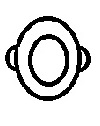
Newark Oval as drawn by D. WyrickWe might ask what else the Ancients tried to portray here. All three maps of the site, Burks’, Squier’s and Wyrick’s, depict the oval with a U shaped appendage to the west. There are also several strange paths with bump-outs to the west. Is it possible that this large oval and projections are letters or words? It is possible that the east side of the oval had a similar appendage as on the west that has worn away with time and creek flooding. This would make the Oval similar in concept to the Luwian Hieroglyph shown below. This glyph is unnamed but is associated with the sound “la.” 1

Luwian symbol #445.

Luwian symbol #445.

This form of writing called Luwian or Hittite Hieroglyphs is from the area of Hattusa in present day region of Anatola, Turkey and northern Syria. Evidence that this writing dates from third and early second millennia BC exists. There is no evidence of its use after 7th century BC per academia.2 Its use has been previously demonstrated at Loughcrew, Ireland3 which is believed by some to be much older than the 5500 year old Knowth Tomb, Ireland where several examples have been demonstrated.4 An example of Luwian Hieroglyphics will be shown at the conclusion of this series from a much later period.

Oval with Hieroglyphic Words notedIt would seem this symbol of a circle with two ears is not the only Hieroglyph to be found at Newark. Since Wyrick’s map is believed to be the most accurate, the Oval portion of his map is redrawn here for our study. A comparison of the simple geometric figures with Luwian Hieroglyphs produces a translation as we see in this image.5 Three words are written out. The main oval is Symbol number 445 with sound “la.” Attached at the bottom is the line pronounced “ra,” Symbol number 383. Off the side of Ra is a hump or Symbol number 209 or 210 and sound “i” or “ia” which gives the word: La- Ra- I.

The middle set of lines with the circle and dot is Scutella 402 (Latin for shield) pronounced “sa”. The line beneath is “ra,” Symbol number 383. This forms the word Sa-Ra.

The third word is a combination of the hump out “i” and “ra” to form I-Ra.

We need a translation of “Larai Sare Ira.” How fortunate! This is written in English, Old English that is! 6 7

Larai provides these possibilities: lær = empty; læran = to teach (to fill the mind of someone who is empty); lar = lore, history; lareow = teacher; leorian = to vanish, die, become empty; lyre = hurt, lure; and leger = lair, lying, grave.

Sa-Ra provides: sar = to sear, or sare = sore. And I-Ra could be irre or ierre which means fierce, angry or ire.

The sentence then becomes “Ire sore lair” or in modern terms “An angry sore, an emptiness.” This provides us with a meaning for the Oval. It represents the place where we might presume the event of Bael-teon occurred or where the comet they are referring to as Baal impacted.

Is this sore in southern Ohio? Is it the .8 mile crater that forms the hills into strange sheared plains? Would this event motivate people from half way around the world to seek it out? Not likely. The construction so close to the creek so the Oval can be filled with water suggests they are referring to a watery grave and to have drawn the attention of the ancient world it must have been a significantly larger impact. What event do we find described world-wide that everyone scoffs at?

Forward to NEXT POST

Back to PREVIOUS POST

Back to TABLE OF CONTENTS

___________________

References/ Footnotes:

  1. Freeborn, B.L., “Luwian Hieroglyph Reinterpretation,” 2013. See:  https://noahsage.com/2013/07/10/luwian-hieroglyph-reinterpretation/
  2. Wikipedia article: Anatolian Hieroglyphs. See: http://en.wikipedia.org/wiki/Anatolian_hieroglyphs
  3. Freeborn, B.L. “A Loughcrew Petroglyph Translation,” 2013. See:   https://noahsage.com/2013/07/05/a-loughcrew-neolithic-petroglyph-translation/
  4. Freeborn, B.L., “A Simple and Elegant Neolithic Oops,” 2013. See:  https://noahsage.com/2013/07/01/a-simple-and-elegant-neolithic-oops/
  5. Anders, Gunter, “Luwian Symbols.”  See: http://www.hethport.uni-wuerzburg.de/luwglyph/Signlist.pdf
  6. Hall, J.R. Clark , “A Concise Anglo-Saxon Dictionary.” Toronto: University of Toronto, 1894.
  7. “The American Heritage Dictionary of the English Language,” Boston: Houghton Mifflin Company, 1976.
  8. Gordon, Cyrus, “Forgotten Scripts,” New York: Dorset Press, 1987.