Ancient Riddles to Test Our Wits: Secrets from West Africa

© 2017 B. L. Freeborn

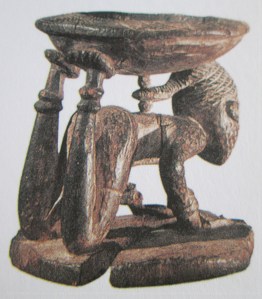
Ifa divination bowl of the Yoruba people.

West African Ifa Divination bowl of the Yoruba people formerly of the Friede Collection. Photo credit below.

This figure is from the Friede collection formerly of New York. It is a vessel used for Ifa divination amongst the Yoruba people of West Africa. The bowl holds palm nuts used by the diviner.

Now let us look closer at this very unique piece of art and we will recognize some very familiar symbols.

Recall the symbols in the Da Vinci Last Supper seen in the previous post.

Find the symbols suggested by the italic phrases below in the image.

A double comet came as two balls.

It put a large crater upon the world’s back

when it brought the world to its knees.

It bent the mountains down that covered the head of the world.

It split the world asunder creating a two footed foundation

for the world: the north pole and the magnetic pole.

——————————————————————————–

(Image from World Mythology, Editor Roy Willis, New York: Metro Books, 2006, pg. 275.)

Back to Last Post —- Ahead to Next Post

Ancient Riddles to Test Our Wits: The Purse from Assyria

© 2017 B. L. Freeborn, updated Sept. 2022

The object that appears to be a purse found in the art of the Olmecs of Mesoamerica and in ancient Assyria in the Middle East was discussed previously in posts on the Odd Little Purse and Its Meaning. Also see this Göbeckli Tepe post.

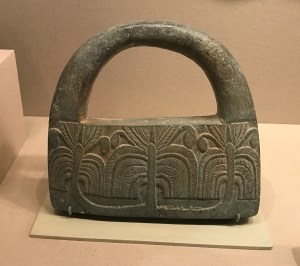
Assyrian Purse

A stone carved weight from Assyria located in the Metropolitan Museum of Art, NYC.

Now, one has been found! In the New York City Metropolitan Museum of Art’s Assyrian Collection there is an intricately carved stone purse about a foot in width. It is decorated with the tree of life motif that is so prevalent in art from the period.

The museum description reads that it was probably used as a weight or counter balance for a scale. Indeed, in the photo one can see that the upper left side of the handle seems worn from use as if it had been hung on a hook repeatedly. Next to this stone purse was another of similar design but smaller with a broken handle.

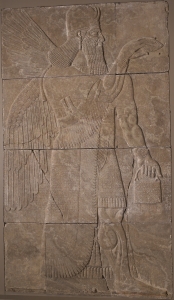
Assyrian Purse in relief

Assyrian Relief with Winged Genius, Walters Art Museum, Wikimedia

This independent confirmation by the museum that it was a weight reinforces ideas presented in other posts. Because of its central position in these beautiful works of art, such as the Assyrian Relief shown here, it must be intrinsic to the story they relate.

Could they actually be depicting a comet coming to the center of the ‘weight of the world’, or the then massive northern ice sheets, where the ‘tree of life’, now known as the magnetic north pole, emanates?

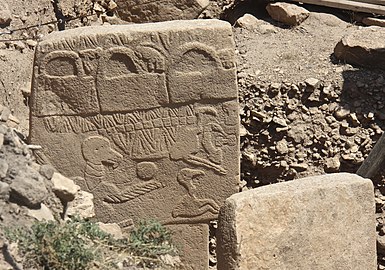
This iconography also appears at Gobekli Tepe. (Image from Wikipedia.) On Pillar 43, three purses appear in a row with vultures below them. One appears to be tossing a ball. ?!?

385px-vulture_stone2c_gobekli_tepe2c_sanliurfa2c_south-east_anatolia2c_turkey

Back to Previous Post  —-  Ahead to Next Post

Ancient Riddles to Test Our Wits: Ancient or Modern Copies?

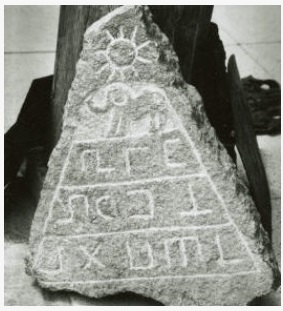
Elephant Tablet found during construction of Cuenca Airport, Ecuador

Elephant Tablet found during construction of Cuenca Airport, Ecuador

© 2016 B. L. Freeborn, updated August 2022

This piece from the Crespi Collection found during construction of the Airport in Cuenca, Ecuador is obviously related to the three stones shown below. An image of the Cuenca stele was published in a book by Barry Fell in 1976. The other three are from Burrow’s Cave which was reportedly found in 1982. In a previous post this stone was translated. Can it be determined if the other three are copies of this stone and if the copies were made relatively recently?

Using transliteration into Paleo-Hebrew circa 200 to 100 BC and Hebrew Letters as derived by J. Huston McCulloch in his study of the Newark Decalogue Stone from Ohio, the Elephant Tablets are translated with the aid of the Anglo-Saxon Language.

These copies of the elephant stone are believed to be from Burrows Cave which means their authenticity is in question.

These copies of the elephant stele are believed to be from Burrow’s Cave which means their authenticity is in question.

Compare the detail in the elephant and Sun. The Sun should appear as a dual reference to Baal’s crater as an origin. The Cuenca shows two eyes and lines radiating from a central O. The trunk of the elephant does not show the all important crater shape in any of the other copies. The back of the mammoth does not appear broken and in the eyebrow shape of Hudson Bay. If it was copied from the Cuenca Stele then the ‘copier’ was far removed from the significance of the detail in it.

The overall presentation on circular and chipped tile shapes is consistent with the story of Baal. However, the stones on the left and right appear freshly machined. And finally, the inscriptions in line 1 and 2 are different than the Cuenca.

The letter ‘th’ in the first line is not reversed as in the Cuenca example which suggests two possibilities. The first is both lines are to be read left to right. The second possibility is the copier was unaware of why the ‘th’ was reversed in the first line and corrected it. The lifespan of the copier cannot be determined by this difference just that he might have thought it was an error in the original. The middle stone’s N (center of first line) is truer to the Paleo-Hebrew style. But it also appears to be an L which then gives the word BL or Baal when read right left.

Lastly, note the facing C’s in the middle line of all four. These were seen in other tablets from Ohio and in art from Knowth, Ireland. Previously, using Luwian glyphs the meaning Great Origin or Mighty Crater was derived from this pattern. It also leads one to another translation of the middle line. If the ‘Th’ stands alone to represent ‘the’ and the C is the Luwian symbol for ‘great’. This then reads ‘The Great cave of Baal’ which is totally plausible and in line with ancient wit to use two languages/alphabets within a text (as academics still do today) and two meanings within the same line.

The overall problem remains though. Because the image of the Cuenca stele was freely available, did Burrow’s make the other three by copying it with minor changes? Barry Fell himself stated the first image published of the stele had an incorrect letter. That mistake appears in the Burrow’s Cave steles.

Old and real? New and fake?

Or copies of secreted away originals?

_________

Back to first post on Elephant Tablet          Ahead to    Next Post

Back to Newberry Tablet beginning or its conclusion.

Paleo-Hebrew at oocities.org

____________________

See full article on the alphabet by J. Huston McCulloch at:

http://www.econ.ohio-state.edu/jhm/arch/decalog.html

Ancient Riddles to Test Our Wits: The Mammoth at the Top of the World

Elephant Tablet found during construction of Cuenca Airport, Ecuador

Elephant Tablet found during construction of Cuenca Airport, Ecuador

© 2016 B. L. Freeborn, Updated August 2022

This piece from the Crespi Collection was found during construction of the Airport in Cuenca, Ecuador. By identifying the letters as Paleo-Hebrew (Phoenician) circa 200 to 100 BC and Hebrew Letters as derived by J. Huston McCulloch in his study of the Newark Decalogue Stone from Ohio, the Elephant Tablet is translated. The language used to aid with the translation is Anglo-Saxon. A study of the stele when read in Boustrophedon style (back and forth) provides these words: bad, death, beat, cave or pole, dwell, lame, bucket, An, dish, change, origin, peck, cave or pole, eye, Baal, and area.

So perhaps they suggest…

The back of the mammoths was broken –

It was a bad death. It beat at the pole. There is a bucket where An dwelt. It is a dish where it changed (?) the origin (?). It pecked at the pole at the eye. Baal was there.

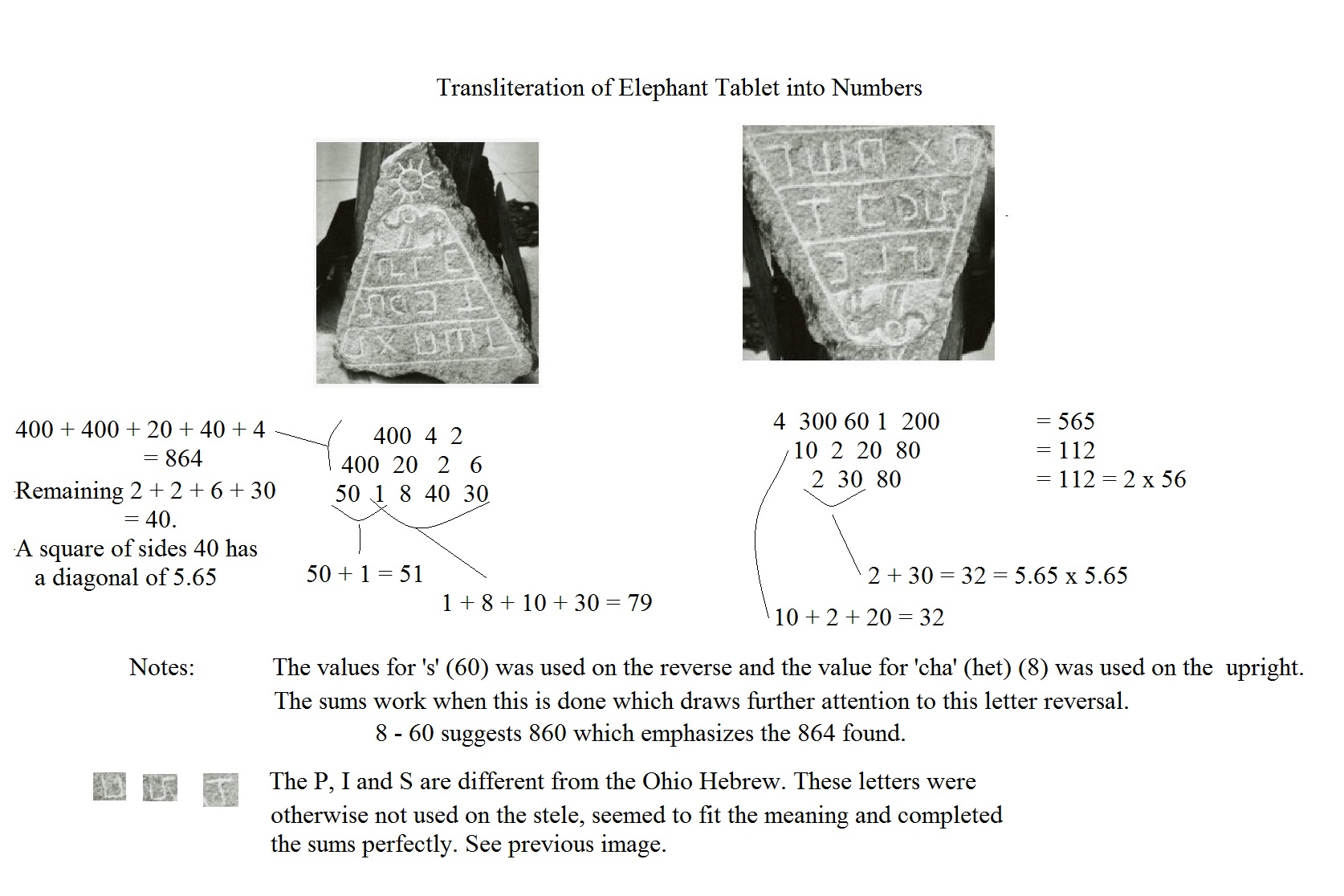
The letters can be converted to numbers as shown in the next image and the sums as shown can be found:

This number study reveals the all important 565. The numbers that comprise the word Yahweh by way of gematria are 565 10.

The number 79 was found and one can also easily find 792 or 7920 by using the 20 and 2 in the line above. The diameter of Earth is 7920 miles.

The 864 refers to the number of seconds in a day and to the seconds of longitude of the Earth or 86,400.

The 51 created by the letters AN then remains. There is this interesting fact. Cuenca sits nearly on the equator. By traveling 79 degrees longitude to the east and 51.51 degrees north of it one finds London and Greenwich, England the prime meridian. ??!!! ??

There is at least one other 56.5 that can be found. Because the letter noted as ‘sa’ or ‘a bucket’ is a pictogram the stele is composed of eleven letters and three pictures or 113 which is 2 x 56.5.

The most important idea here is that these numbers have been imbedded in ancient documents for millennia which lends credence to the Ohio Hebrew being valid and thence, the Newark Stones.

Continues in the next post with a comparison to other elephant stones ……………

____________________

See full article on the alphabet by J. Huston McCulloch at:

http://www.econ.ohio-state.edu/jhm/arch/decalog.html

Paleo-Hebrew at oocities.org

______

Back to Newberry Tablet beginning or its  conclusion.

It Rained Arrows from the Sky

Largest “float copper”. A mere 28.2 tons. Or is this a piece of the Comet Baal? Photo by Lucy Hough

© 2016 B. L. Freeborn

The last post about Hudson Bay as a comet crater was an excerpt from the full article, “A Planet Most Miraculous: The Mechanics of Earth’s Rotating Crust,” which is about the Earth’s unique construction.

A comet that leaves a crater 1000 x 400 miles long must leave remnants behind which is exactly what we see in these images.

This comet was the likely source for the vast amount of pure copper mined out of Michigan thousands of years ago. It also explains the origin of the tradition of copper rings found in ancient American burials and even in European history as seen in the story Beowulf.

The copper shown here is a mere 28.2 tons and the museum piece is 34 tons.

Cape York Meteorite from an impact 10,000 years ago found in 1894.

See more at:

http://www.amnh.org/explore/news-blogs/on-exhibit-posts/meteor-meteorite-asteroid-what-s-the-difference

and at this link:

http://www.awesomemitten.com/float_copper/

To next post.

Previous post on Ancient Map of Hudson Bay

Hudson Bay as a Comet Crater

© 2016 B. L. Freeborn

This is an excerpt from the full article: “A Planet Most Miraculous: The Mechanic’s of Earth’s Rotating Crust.”

Hudson Bay showing the arcs of the bay.

Hudson Bay showing the arcs of the bay.

It is possible to draw four large round circles in Hudson Bay. The largest scales to a diameter of 400 miles. The second largest scales to 230 miles. Hudson Bay is very shallow. Yet it was once compressed down 900 feet deeper than it is by the mass of the former ice sheet. The large appendage to the bay in the south is extremely shallow. References differ on the bay’s depth from 111 feet deep in the east to 768 to the northwest. Variations aside, this is a very shallow body of water when the size of it is considered.

This causes a problem if one wants to prove these are large craters. They are just not deep enough to be craters of this diametrical proportion. For example, Barringer Crater, Arizona is 4000 feet wide and 570 feet deep. Look at the other contraindications. Besides its shallowness, there is no impact ejecta. There may be central uplift in the bay as islands but for the size of it, and the age as required to have brought about the end of the “ice age”, there is no deep basin. There is no high well delineated edge as can be seen in the Pingualuit crater which is supposed to be vastly old by comparison. It does not seem possible that this is a crater. Yet it can be argued that it is.

Delving a bit further, it is known that there is a “large region of below-average gravity” in the area. The anomaly has not been explained. Suggested theories include the weight of the Laurentide Ice Sheet has influenced the area. Another theory suggests that convection in the underlying mantle may be a contributing factor. The 230 mile diameter arc to the southeast is known as the Nastapoka Arc of the bay. The geologists’ consensus explanation calls it an “arcuate boundary of tectonic origin.” In other words they think that millions of years ago the Earth folded in a perfect arc. Another theory, less popular, allows a Precambrian extraterrestrial impact. However, geologists do not feel there is any credible evidence for such an impact crater. There is no evidence from regional magnetic, Bouguer gravity, or geologic studies. That statement directly contradicts the “large region of below-average gravity” with which the paragraph started. (Wikipedia)

Hudson Bay crater formation, 14,000 years BP.

Formation of a crater within the two mile thick ice sheet that once overlaid Canada which resulted in Hudson Bay.

So, how does one explain Hudson Bay is a very recent comet crater 1000 miles by 300 to 400 miles across? Once again, let us just look at what we have. We have a nearly perfect arc in an area that is on average 330 feet deep. This same area was once overlain by an ice sheet two miles thick in certain parts. Two miles thick is 10,560 feet of hard frozen, compacted, heavy ice. This means that if we took a cross section of Hudson Bay when the ice sheet was there and scooped a crater out of it that only dips into the ground 330 feet, the crater was theoretically 10,890 feet deep with little imagination.  The bottom of the crater only remains then as the Nastapoka Arc which implies the upper rim, now long melted, was substantially larger in diameter. The ejecta was simply ice, and billions of tons of it which was spewed as far as Siberia to engulf herds of grazing mammoths. It was thrown as far as Scandinavia to leave glaciers there. There was no dust cloud that enveloped the Earth for decades, because water does not create dust. It creates rain. The elongated shape from the northwest to southeast then is either the sideways impact of a comet striking the surface at an angle or the successive impact of several portions of one comet. A sideways impact will add more torque to the reaction of the Earth and aid in turning the outer layers of the planet. The enumerable other craters that dot the northern latitudes may have occurred at the same time or during later events which totally negates their vast ages.

Successive crater formation as comet strikes Ice Sheet (future bay area) and blast material ricochets to form other impact sites.

Successive crater formation as comet strikes Ice Sheet (future bay area) and blast material ricochet to form other impact sites.

The picture becomes clearer when we comprehend the velocity with which these mammoth projectiles struck the planet. They could not just strike and stick like an arrow in a target. They shattered on impact and bounced in very much the same manner as a stone skips across a lake, except in this case their velocity was unimaginably high. We see directly below Hudson Bay the five great lakes and upon close inspection we see several sections of each lake exhibit the same round cut out pattern as the Nastapoka Arc of Hudson Bay. Once impacting and forming the Great Lakes the debris shattered even further.  A rebound impact could not entirely expend the comets’ energy. The debris kept moving albeit at a slower yet still extremely high velocity. It fanned out to the west, southwest, south, east and southeast blanketing and smashing millions of square miles. The impacting debris formed what are called Carolina Bays. The name originates from the thousands of long elliptical, shallow structures that appear throughout the Carolinas. As Kelly and Dachille explained in 1953, they were formed by massive melting icebergs. In other words, they were debris from the shattered ice cap.

Overlapping polar circles creates a vesica shape where the thickest ice on the planet is found.

Overlapping polar circles creates a vesica shape where the thickest ice on the planet is found.

Indeed, almost the entire old polar ice cap was displaced from the bitter cold of the Arctic Circle. The ice that was outside the first circle was now -outside of the arctic circle- and prone to melting. We call these areas glaciers and their melting is what we call the ‘End of the Ice Age.’ It is proposed that the glaciers extended into Ohio, not because the weather patterns had changed allowing the Earth to cool but because this area was within the Arctic Circle when the ice formed. During this same period of time, half of Antarctica was dry land and ice free because it was outside the Antarctic Circle. The Earth had gone through a long period of stability and created these extremely large and thick ice layers at the then poles within the first circle. The sea level had dropped and man had happily moved out onto the vast plains left behind by the receding ocean. It was safe. It was beautiful and they were blessed, for a long while.

Continue reading …..full article posted here.

Possible remnants of the comet are seen in the next post.

See the Ancient Map of Hudson Bay in the Previous post

Ancient Map of Hudson Bay

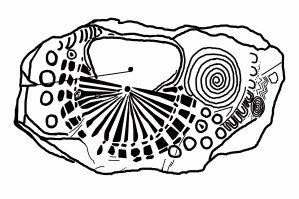
Knowth Kerbstone 15. Sketch by B.L. Freeborn.

Knowth Kerbstone 15. Sketch by B.L. Freeborn.

© 2016 B. L. Freeborn

How cool would it be if a map from when the glaciers still covered Canada existed? It would show the Laurentide Ice Sheet and the lake that would eventually become Hudson Bay. Would it look just like this 5000 year old artwork from Knowth, Ireland known as Kerbstone 15?

The map shows the North Pole and its rays fanning out. The symbol on the right suggests the inscription tells of the world turning.

The line from the center towards the notch-out on the left is a line drawn from its center (magnetic north for the time period) towards Knowth, Ireland.

The monument of Knowth when seen from the air shows a small round mound overlapping the main structure or a comet impacting the planet.

See more at:

http://www.knowth.com/knowth-kerbstone15.htm

http://www.megalithicireland.com/Knowth.htm

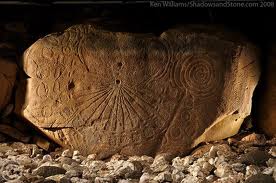
Knowth Kerbston 15. Photo by Ken Williams.

Knowth Kerbston 15. Photo by Ken Williams.

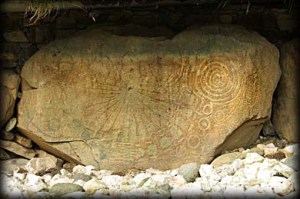
Knowth Kerbstone 15. Photo by Megalithic Ireland.

Knowth Kerbstone 15. Photo by Megalithic Ireland.

Next Post
Previous Post

Ancient Riddles to Test Our Wits: Crespi’s Prince

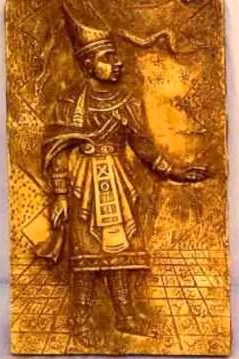
Gold Tile from Crespi Collection

Partial view of gold tile from Crespi Collection

Darker view of gold tile from Crespi Collection

Darker view of gold tile from Crespi Collection

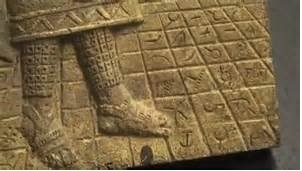
Close up of lettering at feet on Crespi tile

Close up of lettering at feet on tile from Crespi Collection

© 2016 B. L. Freeborn

In this piece from the Crespi Collection find the words in italic:

The two falling worms did warm and split asunder

the great ice-ice mountains of Isis.

They bore two holes through and carved a great dip in the tiles.

The crater, melted deep and mighty, makes a crown for the head of the two footed Earth.

The two feet, magnetic and north, lay the tiles which spell the story.

X marks the tie at the pole. This O of a crater marks the center.

What is left is the curve of the crater. It is the rightful whose cover dropped low.

The point struck at the neck and the face did turn.

This then is how the Earth was clothed.

___________

Compare the above to this Egyptian work of art depicting Horus.

Horus-offering-symbols-life-ankh

Egyptian God Horus wearing a similar hat as depicted in the Crespi Gold Plate from Ecuador. The X and O on the belt appear as the ankh mid-image.

_______________
Read more about Father Crespi and see more art:

“The Crespi Ancient Artifact Collection of Cuenca Ecuador”

Previous Post  —–  Next Post

The Newberry Tablet Reveals….

© 2015 B. L. Freeborn, Sept. 2022
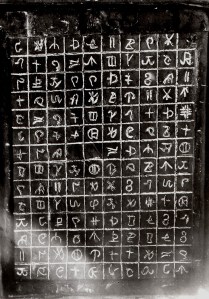
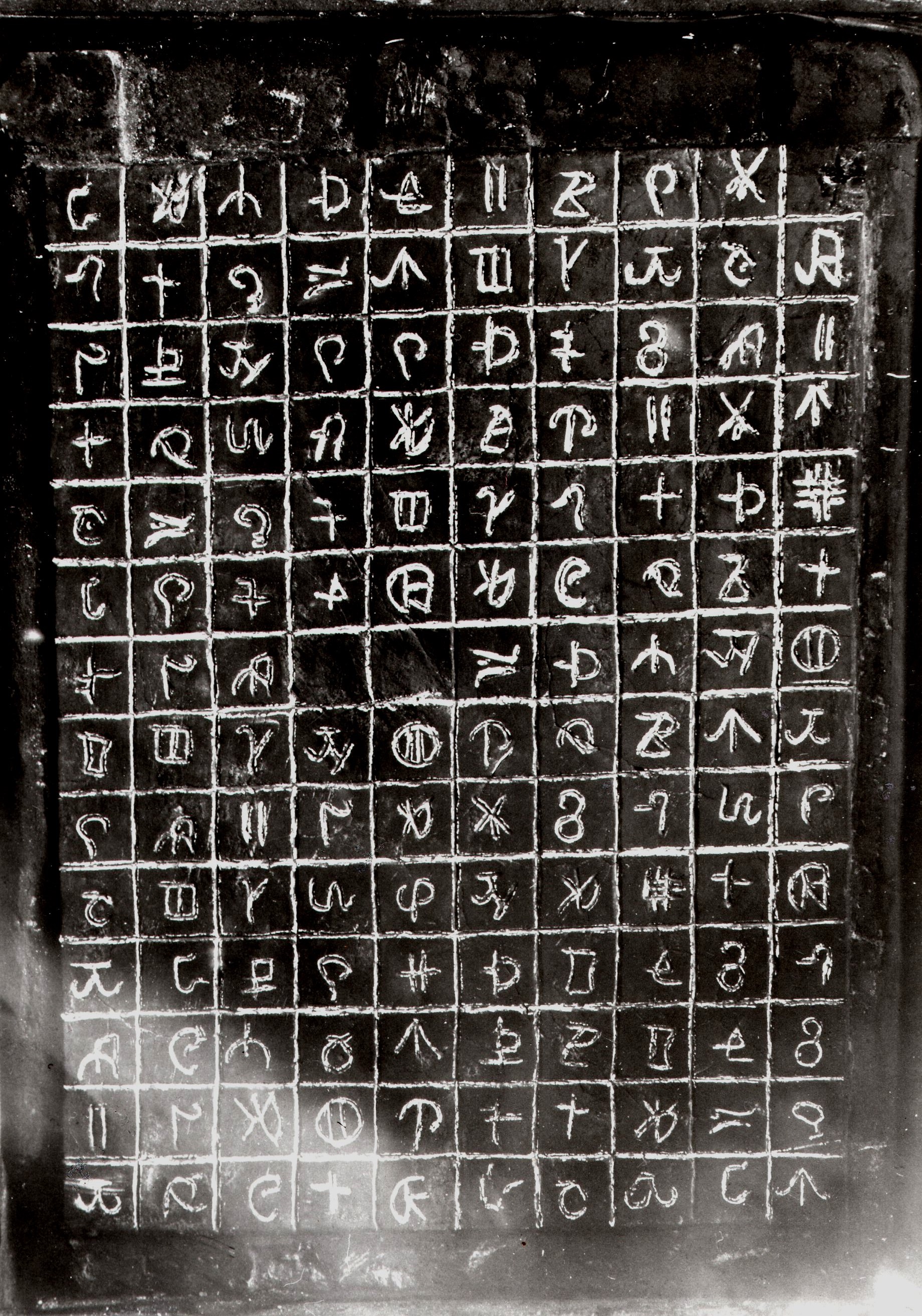
Smithsonian Photo of Newberry Tablet, compliments of Roger Jewell

Smithsonian Photo of Newberry Tablet, compliments of Roger Jewell

To the first post on the tablet – To the previous post on the tablet.

In the last posts we looked at the overall layout of the Newberry Tablet and many symbols. The list has grown and the reading is completed here.

The symbol identification thus far has suggested the topic of the tablet is a double comet collision and its crater was to be a point of reference for future measurements. The remaining symbols should support this story.

The last of the study comprises 15 symbols. The remaining symbols are left for the reader to identify. There is one symbol that resembles the ‘Q’ of the Paleo-Hebrew alphabet. It is suggested it represents cue or to line up, or quay, the place where ships line up. Since cows walk in a line and the Old English word for cow, spelled cu, is very similar; the symbol perhaps means to line up and/or skin, an important by product of cows.

The symbol similar to a rectangle is found in the Luwian symbol list #89 and has sound value ‘tu.’ This is very similar to the word tow and is so noted.

The symbol that is a square divided in half is always followed by the symbol that looks like a ‘Y’. Both symbols are extremely similar to the ‘ch’ and ‘vav’ of the Paleo-Hebrew Alphabet. Substituting the sounds ‘ch’ and ‘w’ into the table find the word ‘chew’ repeated four times. This word is also an original Old English word.

The circle with a hook on top is found in the Luwian Glyph list at #435 with sound ‘a’ and is noted in the table as crater/hook.

The symbol that looks like a large curling ‘e’ most likely means ‘turn’ since the Adena Tablets and the New Hampshire Mystery Stone included this idea. It is so noted in the image.

The symbol that is the cup with a dot in the middle and a small stroke at the top is translated by understanding that in Luwian Hieroglyphs the small stroke added to another symbol is an ‘r’. This gives us an eye-r-cup or perhaps ‘ire cup’ and is so noted in the table.
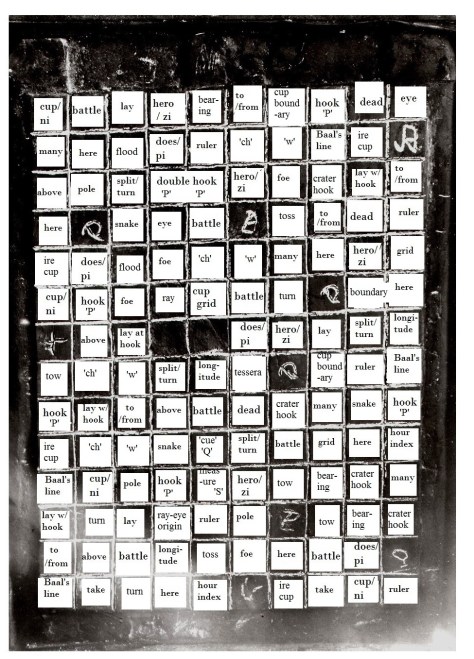
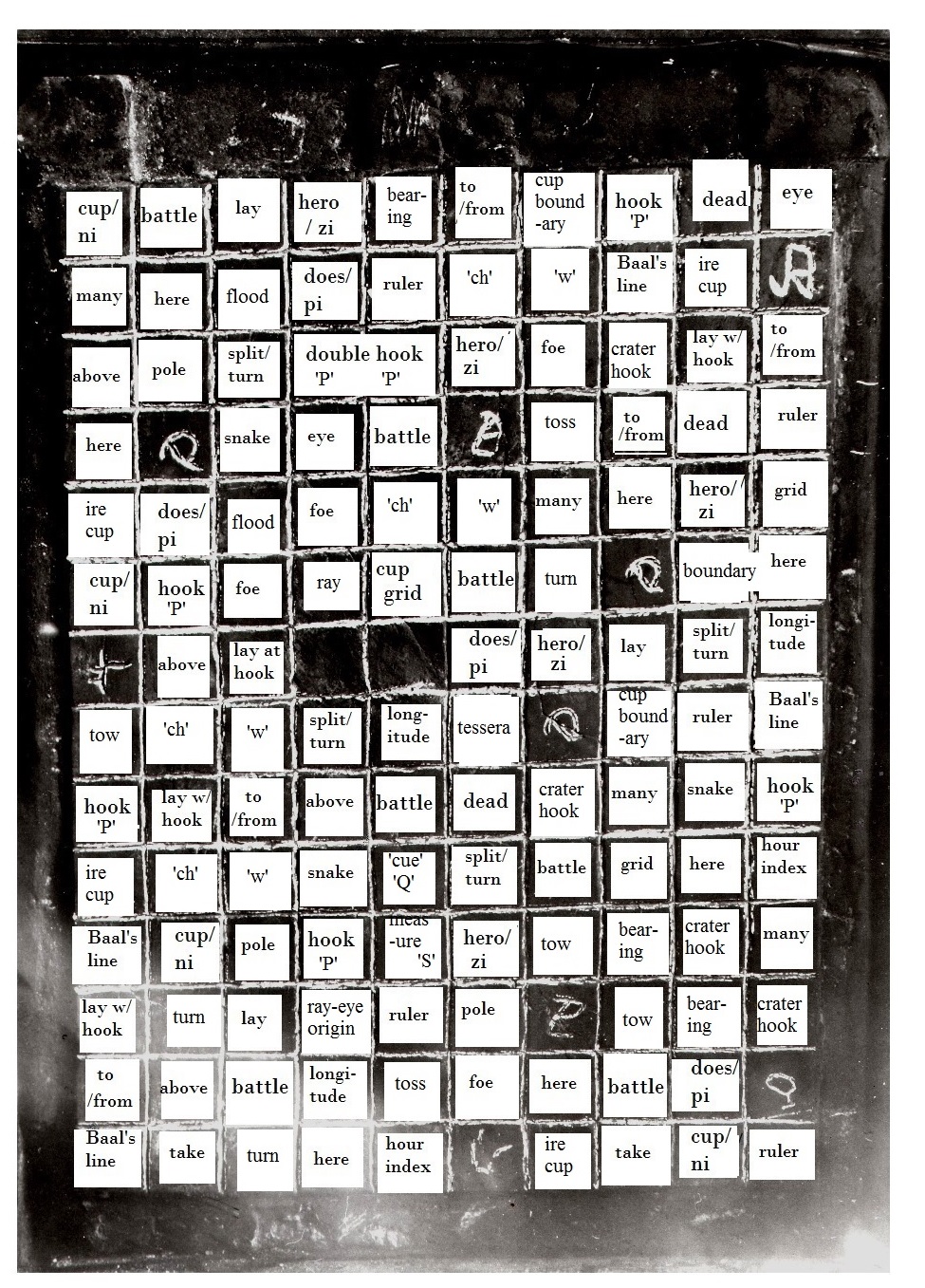
Newberry symbols replaced with proposed meanings. See images below and text for more information.

It took some time to identify the symbol first row, fourth from the right and the symbol in the sixth row second from the right as being related to each other. The latter is found in the Luwian glyph list at #506. It is also found in Assyrian art and Olmec art described in a previous post as the odd little purse. The glyph list notes it as having sound ‘hana.’ In Old English this word means boundary stone. The symbol in the first row combines it with a ‘cup’ so that the distorted ‘B’ shape is created. They are noted in the chart as boundary and cup/boundary.

The symbol in the second row third from the left is similar to a reversed ‘e’ with an extra mark below it. In fact it appears to be an ear. In Old English the word ‘ear’ besides meaning ear means wave or flood. The association no doubt arises because of the whirlpool design of the ear. It is noted as ‘flood’ in the table.

Since many of the symbols are similar to Paleo-Hebrew perhaps the cup that is upside down and upon an upstroke is the letter ‘ts’. The words ‘toss’ or ‘tease’ is essentially defined by this sound. The similar symbol that combines the former symbol with a short stroke is then ‘ts’ and ‘r’ and is actually closer to the Paleo-Hebrew ‘ts’. This then sounds out the word ts-r or tesserae and is so noted in the table. This word means a small square tile.

The hook or staff studied in previous posts can now be associated with Paleo-Hebrew ‘P’ which begins such words as pea, power, pole, and point. The ‘P’ has been added to the table.

The symbol in the first row fifth from the left that appears to be a triangular ‘e’ with a large side stroke reminds one of the Paleo-Hebrew ‘B’ with the Luwian ‘r’ added. This gives the word b-r which suggests the word bear as in direction and it is noted in the table as bearing.
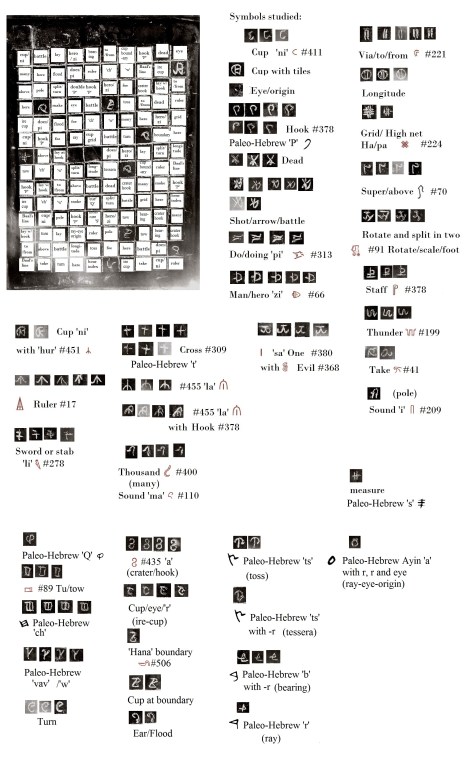
The Newberry Tablet's translation.

The Newberry Tablet’s translation.

The triangle with the stem suggests the Paleo-Hebrew ‘R’. It might have a side stroke as seen in the ‘bearing’ symbol. It is noted in the chart as ‘ray.’

The last symbol identified here is the circle with the two side strokes like antennae and the dot in the middle. The Paleo-Hebrew letter Ayin or ‘A’ is a circle. The dot supplies eye or sound ‘i’ and the two strokes give two r’s. So then we have r for ray, an eye, and a-r. The latter suggests the Old English word ‘or’ which means origin. It is noted in the table as ray-eye-origin.

So then, the table provides short readable sentences. The first line perhaps reads: The battle at the cup where lays the noble bearing is the to/from boundary. The cup is the dead pole and the eye.

Continue to line two and read: Many here caused the flood. It was the powerful ruler that was chewed. It is Baal’s line at the angry wandering cup …(unknown term).

In other words they say: There was a comet impact. It is the crater at magnetic north. Here is the reference boundary for longitude. The crater is the former north pole and the eye of the comet.

Many comets here caused a flood. It was the north pole that was destroyed. It is the longitude of the double comet’s (Baal’s) crater that….

The remainder of the table can be studied at one’s leisure.

Enjoy your New Year! Happy Holidays!

On to more riddles!!
The Message of the Newbery Tablet – Part 4

© 2015 B. L. Freeborn, updated Sept. 2022

Smithsonian Photo of Newberry Tablet, compliments of Roger Jewell

Smithsonian Photo of Newberry Tablet, compliments of Roger Jewell

To the first post on the tablet – To the previous post on the tablet.

In the last posts we looked at the overall layout of the Newberry Tablet and many symbols. The list has grown and we push to completion of this project by looking at twelve symbols in this post.

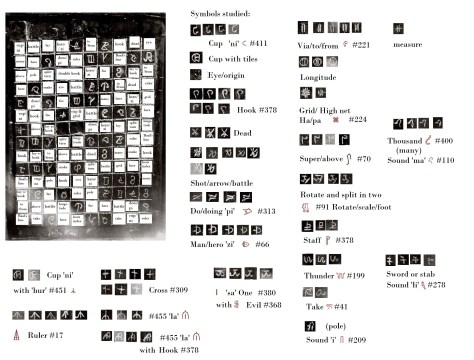
The symbol identification thus far has suggested the topic of the tablet is a double comet collision and its crater as a point of reference for measurements. Hopefully the remaining symbols support and complete the story. Note the parallel line symbol in the first row and the cross hatching symbol that ends the fifth. Note the circle with two lines through it that ends the seventh. These suggest that the double comet arcs of Hudson Bay are to represent a reference point for longitude and latitude. Signs associated with this concept are studied here as well as another two groups of signs.

The second and third groups require an understanding of the symbols as pictographs that would have meaning even today. The first symbol in the third row down uses an upstroke to elevate a cup symbol. Next to it is a symbol that can be described as a P on a line. Perhaps the upstroke means above or heavenly, and the horizontal line simply represents – on the surface of the Earth. With these ideas the study continues.

We begin with the parallel lines in the first line and suggest it means to/from which is found in the glyph list at #221 except they used curved lines. Keep in mind that the two parallel lines may simply mean two or equal distance. They may also suggest lines of measure.

The circle with the set of parallel lines continues the idea and perhaps means specifically either longitude and latitude or both and/or the measurement of such.

Similar to this is the two lines with the horizontal mark found in the center of the fourth line from the bottom which suggests either two or perhaps measure and is so noted below.

The cross hatching symbol suggests a grid or the longitude/latitude net of the Earth.

Although not identical the symbol compared to the Luwian glyph meaning ‘above’ is similar to the symbol found at 3,1. Compare it to the symbols for ‘ma’ #110 and ‘thousand’ #400 and the second symbol from the table found at 2,1. (See diagram below.) The word ‘ma’ in Old English means ‘more.’

Interestingly, Luwian glyph #91 is said to mean rotate/scale/foot. It is compared to the glyph found in the third row, third position and is shown below. It appears to be two shoes and a hook suggesting rotation. Note they are located at grid positions 3,3; 8,4; 10,6 and most notably 7,9. The 33 and 79 stand out immediately as the 33 degree latitude change of the pole and the diameter of the Earth at 7920 miles. The location of Hudson Bay is just west of the 79 degrees. But the other two numbers even in reverse are not of much importance. However! If one counts their position from the opposing corner (bottom right) then the two positions 7,7 and 5,6 are counted out. The latitude of Hudson Bay is 56 and the return period of Halley’s Comet is 76 to 77 years. This then correlates well with the proposed topic of the tablet and to the idea of scale, rotation and foot as found in the Luwian glyph #91.

The staff is found in glyph #378. The associated symbol was used three times on the tablet and suggests a staff stuck in the ground. The symbol is found at 3,2; 11,3; and 12,6. The symbol next to the bottom P appears to be a slanted version so it may also be the same symbol but is not so noted here.

Glyph #199 is said to mean ‘thunder’ and is very close to the symbol found at 4,3.

Glyph #41 means ‘take’ and is close to the symbol in the table at 14,2 and mirrored at 14,8.

Glyph #209  with sound ‘i’ appears to be the same as shown in the table and is taken to mean pole or eye. It is found notably at position 4,4. The circumference of the planet divided by 44 is 565 miles.

The reader should examine this ‘i’ symbol closely and note there is a small horizontal stroke on the left upstroke. This may not be accidental. In the Luwian glyph system of writing this small stroke represents the sound ‘r’ and if the two sounds are combined we arrive at the word ‘ire’ which means today what it did in Old English except previously it additionally meant to wander. So this adds that now the ‘eye’ has ‘wandered angrily.’

Lastly, the symbol that looks like a backwards F is taken to be a sword or knife that stabs the ground and the idea repeats in the glyphs as seen in #278.

For your reference the Luwian Glyph list can be found linked here:

The associated words have been filled in and the tablet’s ideas are unfolding  in this very complicated riddle and blending of ideas with Earth related numbers.

The next post compares this script to cave art found in Europe.  The last of the symbols that can be identified in the Newberry Tablet are found when the decipherment continues.

Newberry Tablet decipherment continues here.

.