The Vinland Map: Hidden Secrets – Part II

B.L. Freeborn © December 2025

This is a continuation of the previous post. If you have not read it, you may want to at this link.

Vinland Map. Photo by Yale Univversity.

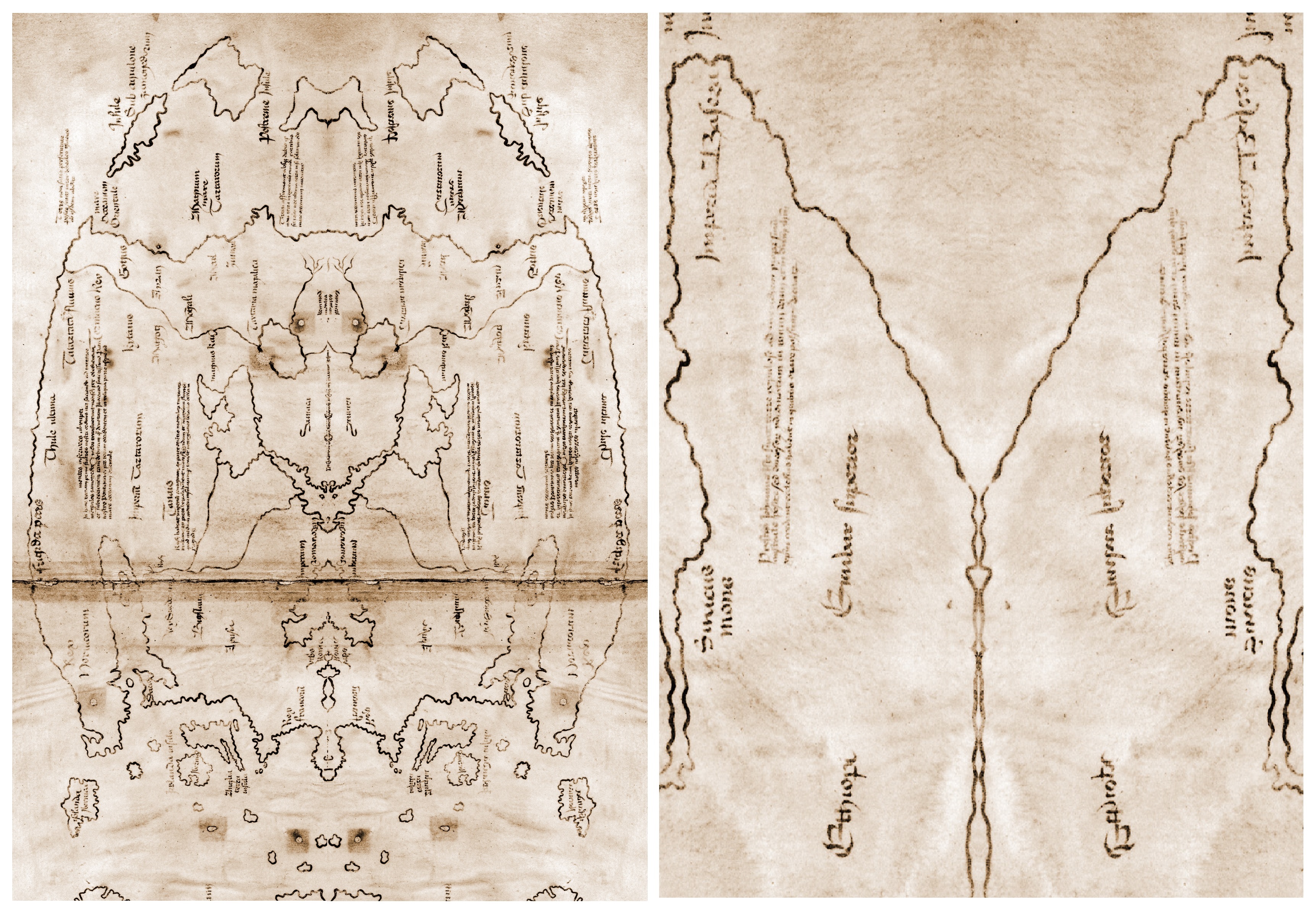
The secrets hidden in the Vinland Map (image) are many. Hopefully you have had time to discover Oystein’s signature. Just in case you have not, it is shown at the end of this post.

Now you should be able to surmise two things. Some things on this map are shown with incredible accuracy and other things are laughable. Having found OM you know why.

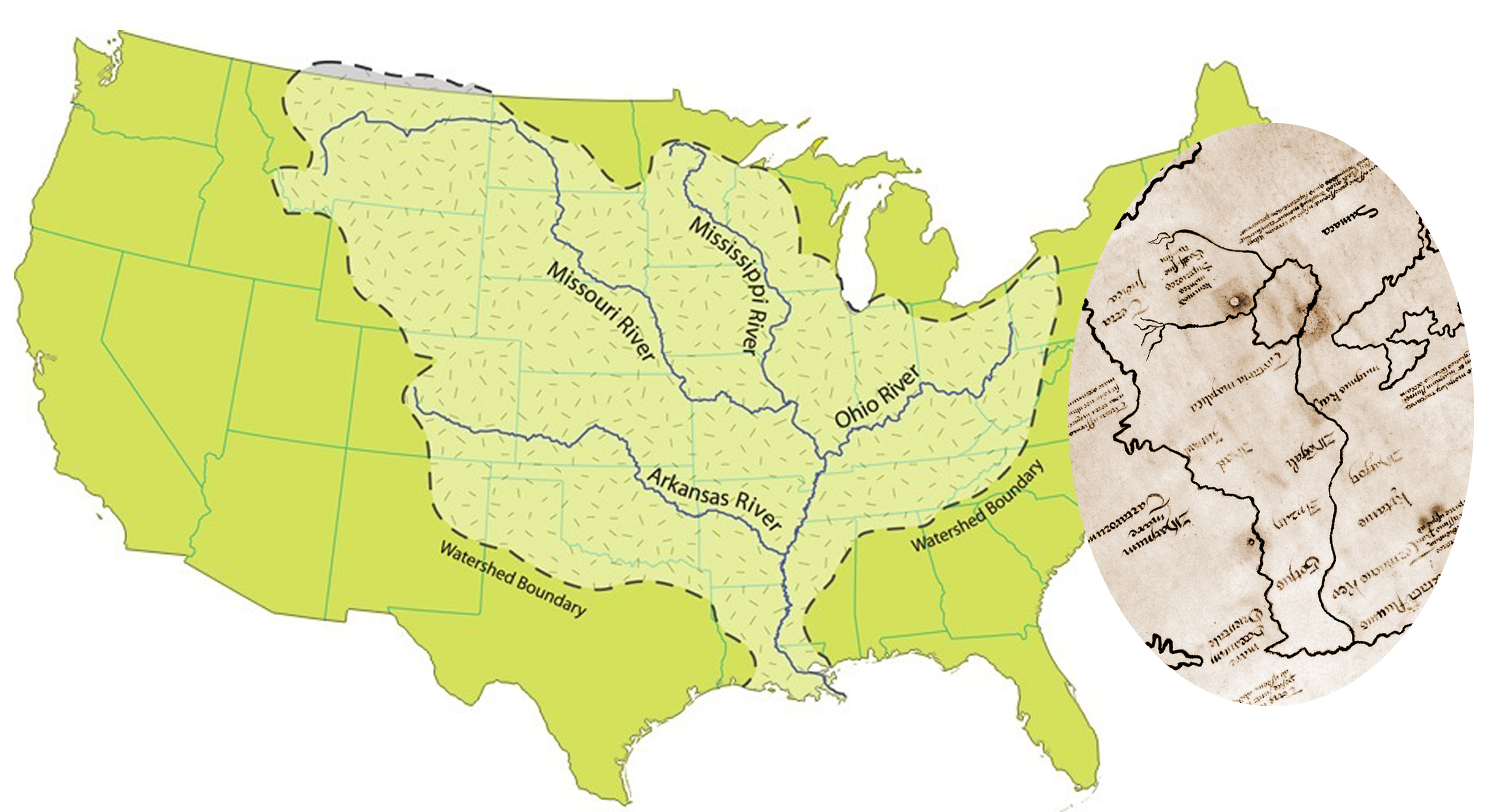
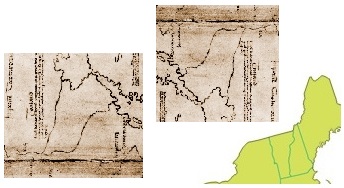
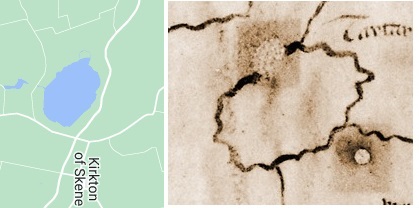
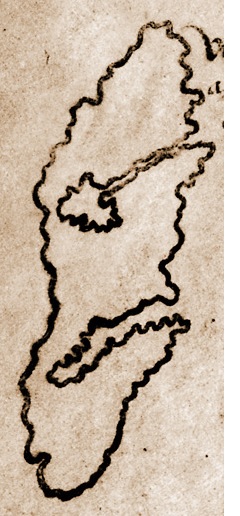
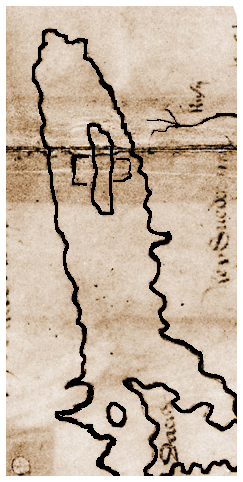
What is superbly depicted on this strange map? Obviously, the depiction of Greenland is near perfect. How about the entire eastern seaboard from New Foundland to Cuba? How about the depiction of the Mississippi River? Then there is the depiction of the St. Lawrence Seaway. There is even a lovely picture of Niagara Falls in the 12th century before Goat Island was separated from the shore. OM or more properly, King Oystein Magnusson, included his beloved lake in Scotland where he was born. He also hinted at the location of his son’s grave and the monument he placed on it. This is the Rök rune stone in Sweden. There is also a rudimentary and awful depiction of Hudson Bay in a tiny Vinland in the upper left corner.

East coast shown on Vinland Map.

Mississippi River shown on Vinland Map

St. Lawrence Seaway noted in Vinland Map

Loch of Skene, Scotland shown on Vinland Map

Niagara Falls shown on Vinland Map before Goat Island

Hudson Bay in a tiny Vinland.

Rok rune stone. Son’s grave in Sweden.

It is almost as if it was designed so that when King Sigurd’s spies got their hands on it, Sigurd would be gravely disappointed. The only thing to be plundered was a large island of ice. He would not be able to see an entire continent was up for grabs and all the murdering he could do. That would wait until Columbus.

The nay sayers will not be deterred though. To them this map is still a fake. There must be more here or they will have their way and what a tragic loss that would be. There is more. As said before, it is a virtual treasure map.

Here is the next task. Find the extra fold line. Now one must ask why would someone make a beautiful and perfect copy of a map to pass off as an antiquity and make oodles of money but ruin it by folding it where there was no obvious reason or need?!?

Stranger still they had the foresight to fold it in the right place to see… Yes. What else is there to see? Where is this line?

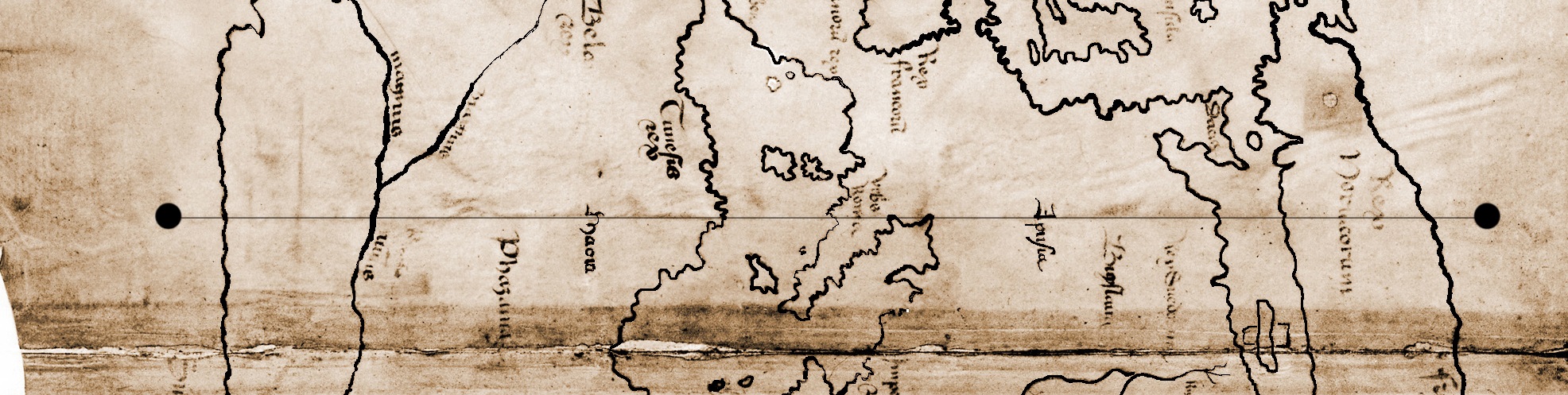
Find the line first. It is just to the left of the fold/damage line running through the first letters of ‘Apusia’ and ‘Maori.’ The first is supposed to refer to Prussia and the second was never fixed to a location. One should be able to see immediately that an anagram begins: ‘A map …usia ori.’ If one looks at this long enough, with the hundreds of other anagrams to be found, one realizes it says ‘A map (of) O. Use IA (for) RI.’ The IA refers to the last letters of the words Apusia and Maori and RI to the place to be depicted.

Fold line on map through Apusia and Maori.

There are other anagrams to be found in these few letters but they do not produce like some of the other legends. In the letters of Greenland, spelled as Gronelada, there are more than thirty in basic Anglo-Saxon words. That is another point to note. We may hazard to guess that Oystein used basic English because he was sure Sigurd and friends would not be able to read it.

So, the fold line that appears through the two words is misplaced by a quarter inch. When the actual map is assembled this does not seem to make that big of a difference.

To be continued! Next post in about a week.

Last Post – Next Post

The Vinland Map maker’s signature. The map and it’s mirror image form the letters O and M.

Similar articles by same author:

*Easter Tables

** For numeric background see:

**Freeborn, B.L., Validating North American Runic Inscriptions, noahsage.com, November 2022. PDF only.

Freeborn, B.L., The Vinland Map Ciphers, noahsage.com, December 2025. Book only see post.

Freeborn, B.L., The Vinland Map Ciphers Addendum, noahsage.com, December 2025. PDF only.

Freeborn, B.L., Ancient Riddles to Test Our Wits: The Secret Chamber, noahsage.com, January 2016. Post here.

Freeborn, B.L., Another Riddle in Stone from Canada, noahsage.com, August 2025. Post here.

Freeborn, B.L., Deciphering the Spirit Pond, Nomans Land and Narragansett Runic Inscriptions, noahsage.com, November 2022. Amulet post. Map stone postPDF only.

Freeborn, B.L., Et in Arcadia Ego – OUOSVAVV DM – Deciphered, noahsage.com, December 2022. Post here.

Freeborn, B.L., Kensington Rune Stone: A New Translation, noahsage.com, February 2023. Post here.

Freeborn, B.L., Rök runestone of Sweden, noahsage.com, April 2023. Post here.

Freeborn, B.L., Runic Riddles: Time Capsules, noahsage.com, December 2022. Post here.

Freeborn, B.L. The Long Debated Bourne Stone, noahsage.com, January 2023. Post here.

Freeborn, B.L., The Nomans Land – Leif Eriksson Inscription, noahsage.com, December 2022. Post here.

Freeborn, B.L., The Narragansett Inscription: A Translation with its Date of Dedication, Author and Inscriber, noahsage.com, October 2022. Post here.

Freeborn, B.L., The Newport Tower: Finding the Date of Dedication, its Designer and Builder, noahsage.com, October 2022. Post here.

Freeborn, B.L., The Wawa Stone and Its Viking Ship, noahsage.com, August 2025. Post here.

Freeborn, B.L., Rok Rune Stone and its ciphers, noahsage.com, November 2024. Post here.


The Wawa Stone and its Viking Ship

B.L. Freeborn © August 2025, Updated September 2025                     (Full article PDF here.)

The Wawa Runestone is an excellent topic for study. It is located in Wawa, Ontario above Lake Superior. More information and photos are available at OCARE, Ontario Centre for Archaelogical Research & Education.

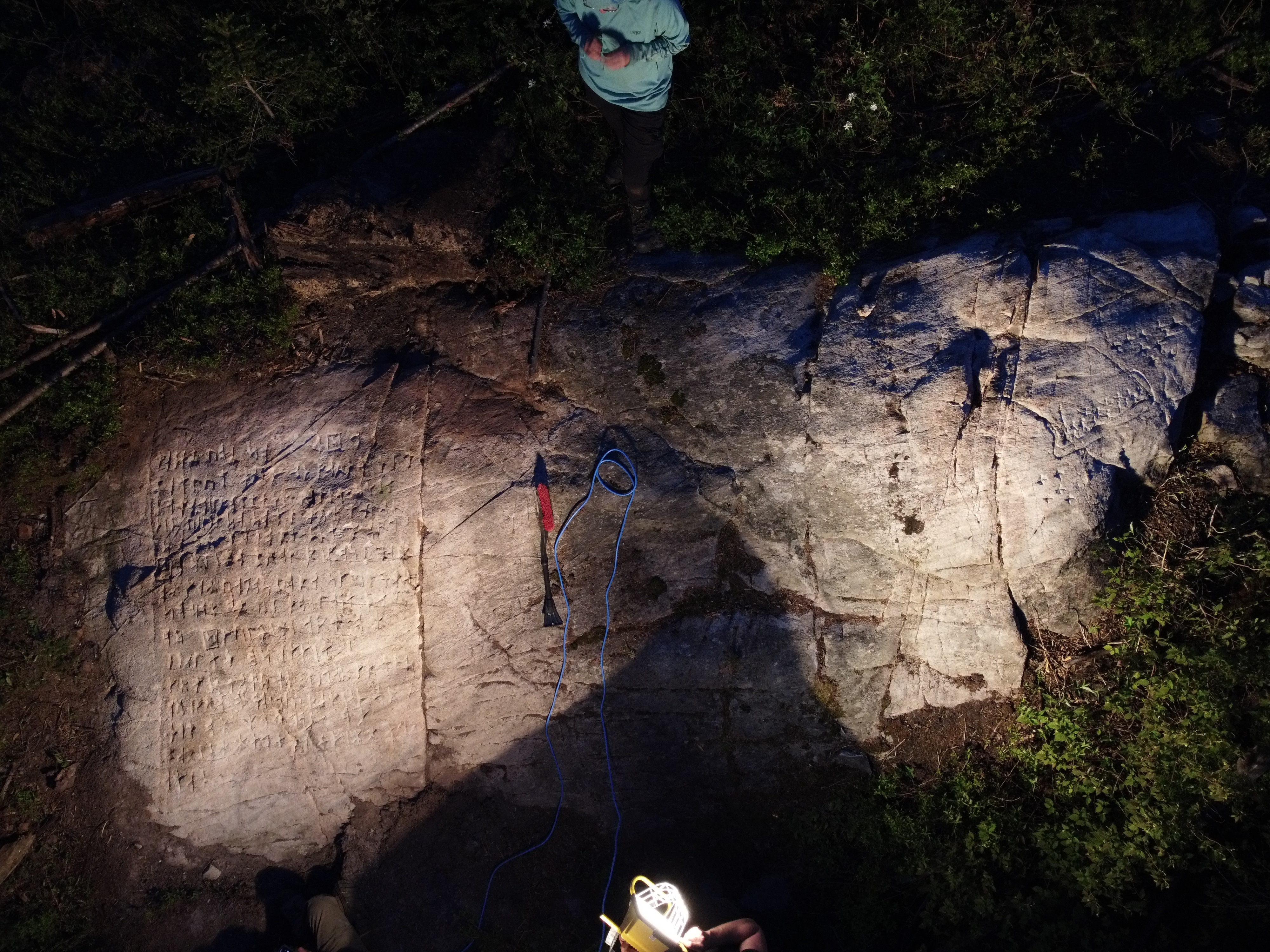
Image from OCARE.

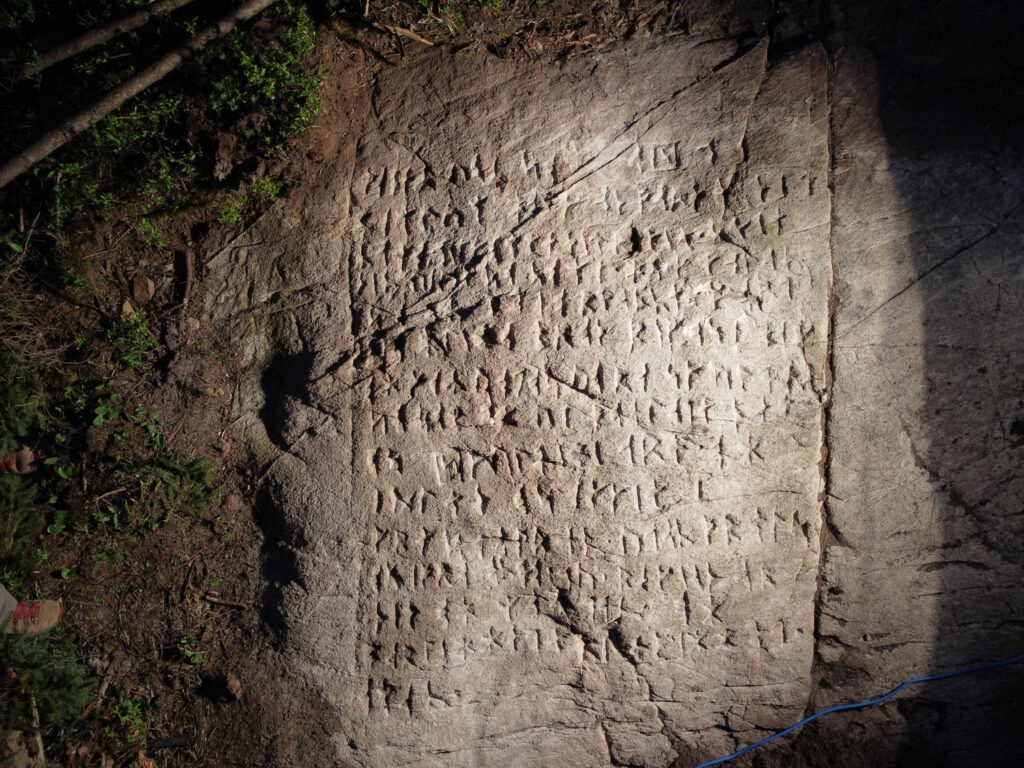
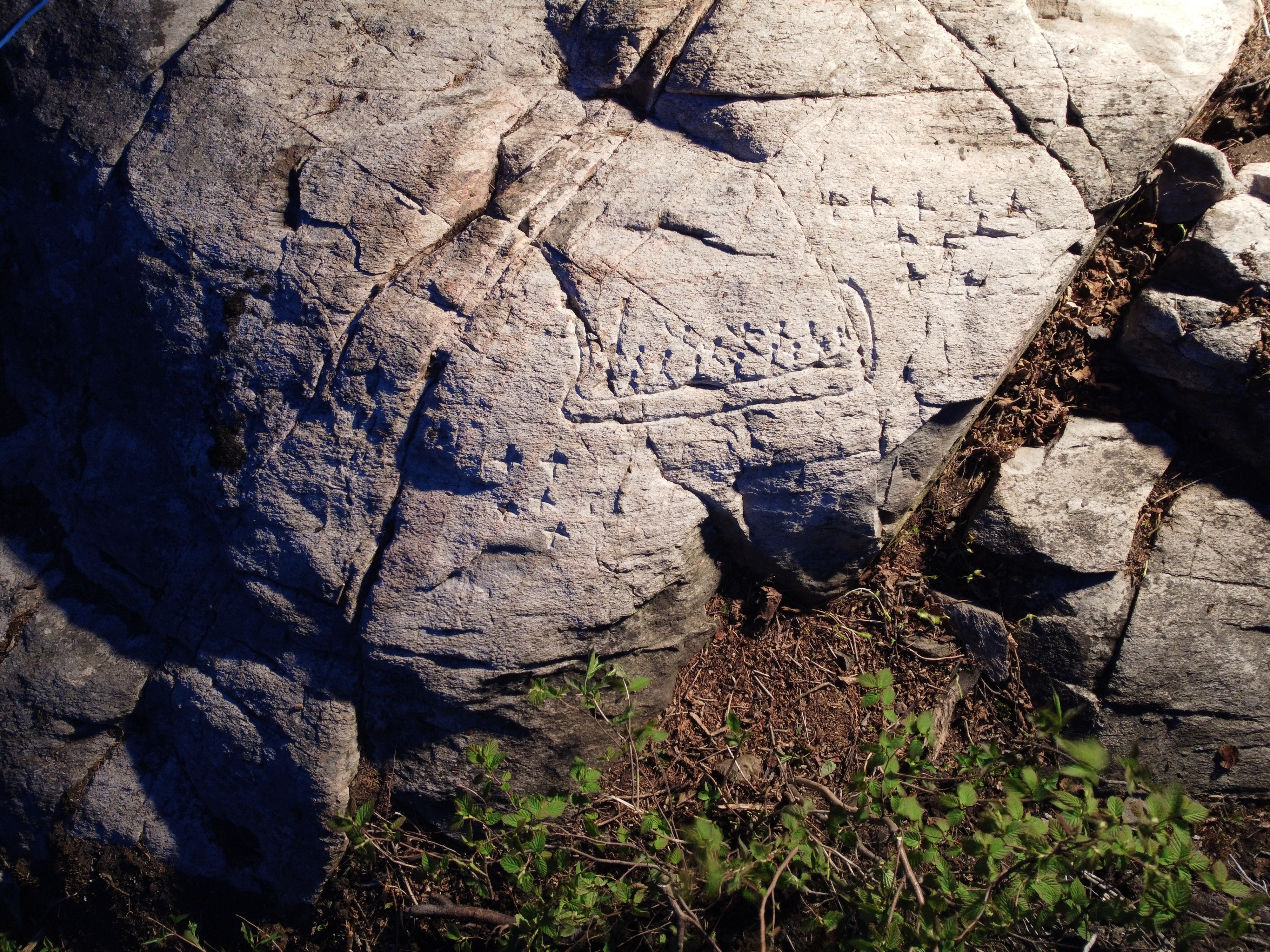
The runestone is composed of two parts. There is an extensive inscription in runes on the left and higher up on the rock to the right is a ship in a Viking style. Dr. Henrik Williams was first to study the inscription and will be publishing a paper on the topic. In the meantime, a video is available where he discusses the stone with David Pompeani. (YouTube link here.) In that discussion, he states that often a runic inscription has no relation to the art presented and that the two parts may have been done by different people. That seems to be true here. Indeed, the reader can see easily that the long inscription was done with a sharper, finer tool while the ship was done with a more blunt tool and a much stronger arm. Dr. Williams has identified the inscription as a protestant version of the Lord’s Prayer in modern Swedish. The inscriber did not date the inscription which leaves room for some discussion. It is believed to be of 17th to 19th century origin.

Image from OCARE – Long inscription on left side of Wawa Stone.

As far as the right side with the Viking ship, Dr. Williams could not comment on it, nor did he know the meaning of the X’s. Many would presume these X’s are burial crosses but that implies Christianity, and the Vikings were not necessarily Christian despite their supposed conversion. People converted at knife point are seldom true believers. What then did the artist intend to convey with the crosses? There are no runes present to give any further clues.

Image from OCARE – Ship on right.

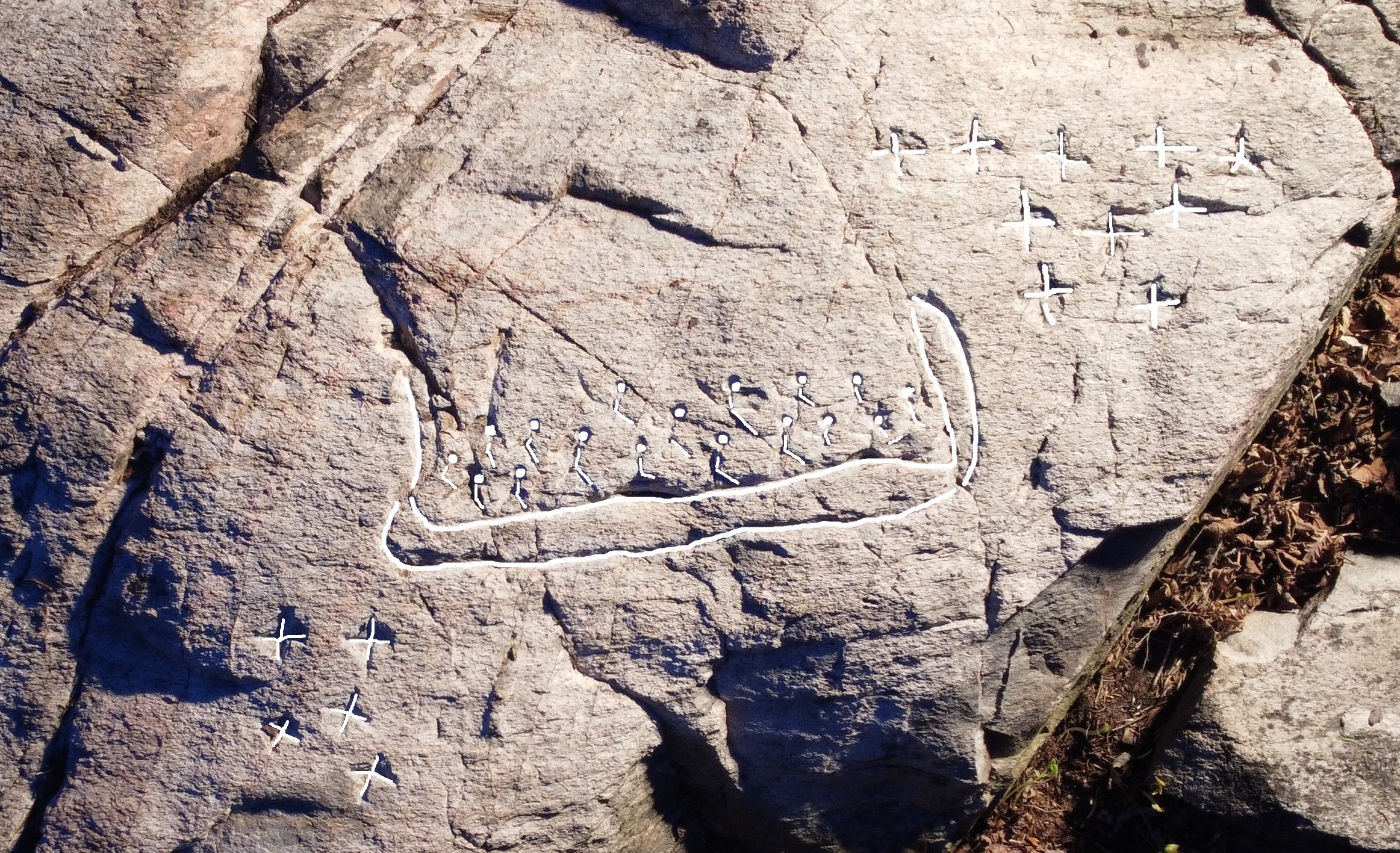
Let this not deter us from further study. Notice the artist has presented us with two groups of crosses separated by the ship which implies the number of X’s has some significance. There are five on the left and ten on the right. The number of people shown in the ship appears to be seventeen but others count sixteen. This gives 17, 10 and 5 which is hardly enlightening. However, on closer inspection one notices that the 5 X’s are so arranged to provide two groups of 3 and 2. This grouping then provides 5,3,2. (See image below.)

Closer inspection of the group of ten on the right provides 5 X’s in the first horizontal line, 3 in the next and 2 in the last so that 5,3,2 repeats. This is significant. The Perpetual Easter Calendar/Table was used in the Catholic Church from early times and was still in use long after the Viking era ended. Since calendars were not available, a device was invented similar to a slide rule that allowed the user to determine on what day of the week the first Sunday would fall for each year (known as the Dominical or Day Letter). It repeats every 532 years. (See PDF – Easter Table.) The artist may not have known his letters/runes but he knew his numbers. By providing the 532 in each group of X’s the artist makes it clear there is a date here.

Men and X’s highlighted in white.

To obtain a date from the Table one needs a Line Number #, Golden Number (numbers within the table) and the Dominical Letter/Day Letter (DL) which runs along the top. A proper dating should repeat the date in someway in a more straight forward manner. Presumably, this is the purpose of the X’s.

If one uses the numbers 5, 10 and 17 as provided by the groupings there is no match within the table. However, if the X’s were to announce a date is present, then the 17 men must imply the date in some way. Perhaps it is 1017,1117,1217, etc. But which century?

Year 1217 is on Line #3 with Golden Number (GN) 2 and Dominical Letter (DL) #1. These numbers are provided easily by the three groups of numbers, two of which are X’s and one of which is men. This makes this date a strong possibility. However, it is more likely they refer to year 1123. The Spirit Pond Stones speak of Henricus who was the Bishop in the Vinland Map. He traveled to Vinland circa 1116 and died presumably in 1123, based on church records for his replacement.

The number 23 is easily found in more than one way by the positioning of the X’s. The year 1123 has Table numbers: Line #19, GN 3 and DL # 7. The value 19 is not represented but the right hand grouping of X’s can be easily separated into 3 and 7.

Other dates were studied with mixed results. One might say that the artist did not mean for us to use the calendar to derive the date. But the artist certainly used the number 532 to alert us to the presence of dates.

Both 1117 and 1123 are strongly supported by the art. Indeed, they are both supported by the Spirit Pond Stones (link to study), the Feather Stone of northeast Canada (link here) and 1117 is supported by a runestone found in the Newport Tower (link to study). Both of these dates refer to the arrival and departure of Bishop Henricus in Vinland as mentioned in the Vinland Map (to be discussed in a future article).  According to both the Spirit Pond Long Inscription Stone and the Vinland Map, he explored up the St. Lawrence and down into Hudson Bay. The proximity of Wawa to Hudson Bay should be noted. The 1117 and 1123 would then be commemorative dates. They mark the beginning of exploration of northern North America by the Vikings. Continued exploration should have followed which explains who may have carved this ship and suggests when.

The unknown artist commemorates
Henricus and his Viking sailors’ exploration
in 1117-1123.

Sadly, virtually everything found in North America that might indicate any European explorer from the dawn of time tread here before Columbus has been declared a fake, destroyed or intentionally forgotten. One such notable work that discusses this topic is “The Rediscovery of Lost America” by Arlington Mallery and Mary Roberts Harrison, 1979. This work has also been denigrated but if one takes the time to read his references, then his work speaks volumes.

What then happened to the Vikings / Norse / Normans who came to America? Why has history forgotten them? There is a simple answer. If these people were anti-Catholic, then it would have been essential to keep the continent and their colonies a secret. If they lived very simple lives in longhouses and communities, then they left little behind. If they remained in contact, on the sly, with northern Europe, then the Black Death came with the sailors and wiped them out in the late 1300’s as well as any memory of them that existed in Northern Europe.

PREVIOUS POST   –   NEXT POST ON THE FEATHER STONE

Similar Articles by the Same Author in PDF and Post:

*Easter Tables

** For numeric background see:

**Freeborn, B.L., Validating North American Runic Inscriptions, noahsage.com, November 2022. PDF only.

Freeborn, B.L., The Vinland Map Ciphers, noahsage.com, December 2025. Book only see post.

Freeborn, B.L., The Vinland Map Ciphers Addendum, noahsage.com, December 2025. PDF only.

Freeborn, B.L., Ancient Riddles to Test Our Wits: The Secret Chamber, noahsage.com, January 2016. Post here.

Freeborn, B.L., Another Riddle in Stone from Canada, noahsage.com, August 2025. Post here.

Freeborn, B.L., Deciphering the Spirit Pond, Nomans Land and Narragansett Runic Inscriptions, noahsage.com, November 2022. Amulet post. Map stone postPDF only.

Freeborn, B.L., Et in Arcadia Ego – OUOSVAVV DM – Deciphered, noahsage.com, December 2022. Post here.

Freeborn, B.L., Kensington Rune Stone: A New Translation, noahsage.com, February 2023. Post here.

Freeborn, B.L., Rök runestone of Sweden, noahsage.com, April 2023. Post here.

Freeborn, B.L., Runic Riddles: Time Capsules, noahsage.com, December 2022. Post here.

Freeborn, B.L. The Long Debated Bourne Stone, noahsage.com, January 2023. Post here.

Freeborn, B.L., The Nomans Land – Leif Eriksson Inscription, noahsage.com, December 2022. Post here.

Freeborn, B.L., The Narragansett Inscription: A Translation with its Date of Dedication, Author and Inscriber, noahsage.com, October 2022. Post here.

Freeborn, B.L., The Newport Tower: Finding the Date of Dedication, its Designer and Builder, noahsage.com, October 2022. Post here.

Freeborn, B.L., The Wawa Stone and Its Viking Ship, noahsage.com, August 2025. Post here.

Freeborn, B.L., Rok Rune Stone and its ciphers, noahsage.com, November 2024. Post here.


Göbekli Tepe’s Odd Little Purses – A New Interpretation

B.L. Freeborn © December, 2024

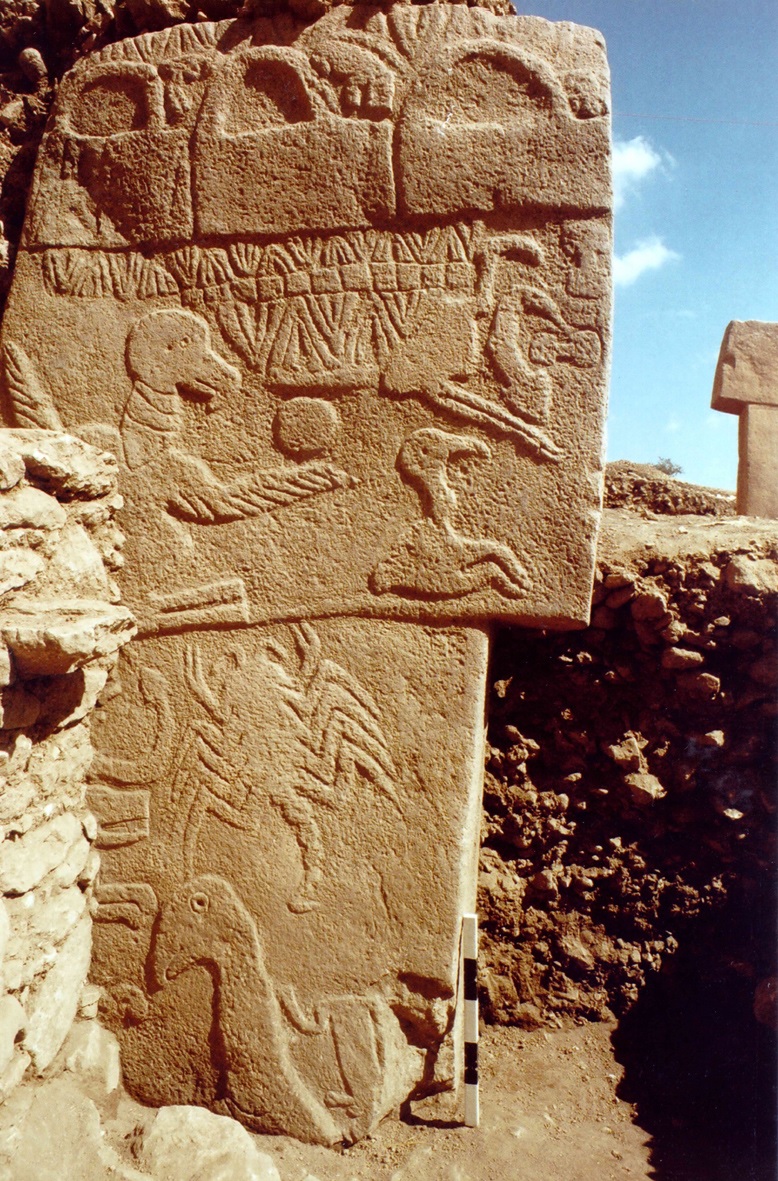
A different interpretation of Göbekli Tepe’s Pillar art is attempted here. We begin with the most notable and that is Pillar 43.

PILLAR 43
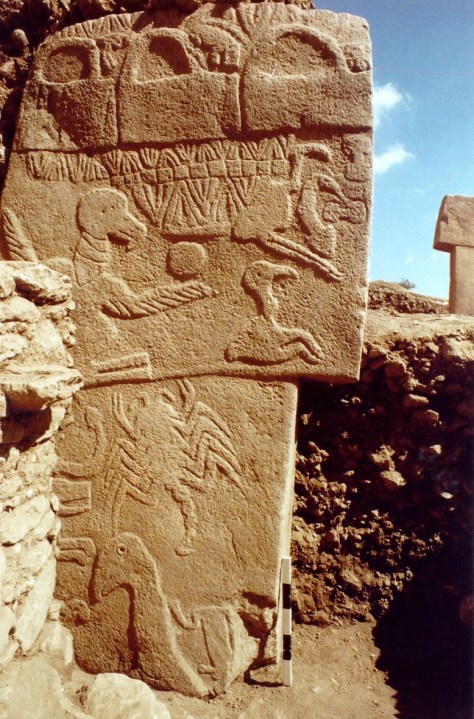
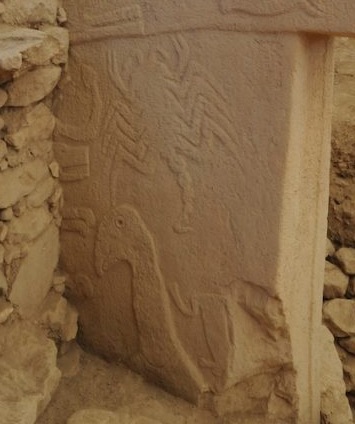
Image from: Tepe Telegrams https://www.dainst.blog/the-tepe-telegrams/2016/10/14/of-animals-and-a-headless-man-gobekli-tepe-pillar-43/  (Photo: DAI, Göbekli Tepe Archive, Lee Clare)
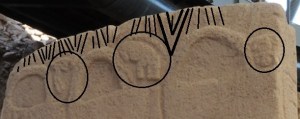
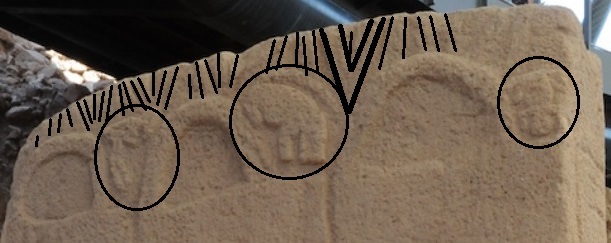
The top of the pillar has some degradation so that the information there is lost. The up down arrows have been described by other authors as a hedge fence. Saying it is a boundary suggests a similar idea.

Notice the large arrow between the second and third arch. Notice that there are arrows along the left top but they stop just to the right of the large arrow.

Notice the three circled animals. The first appears to be a bird that has landed, the second appears to be a burrowing animal, and the last appears to be a frog.

So that one might read this as:

Arrow strikes the boundary like a bird and comes to rest. It burrows in and ‘it’ leaps leaving an empty space.

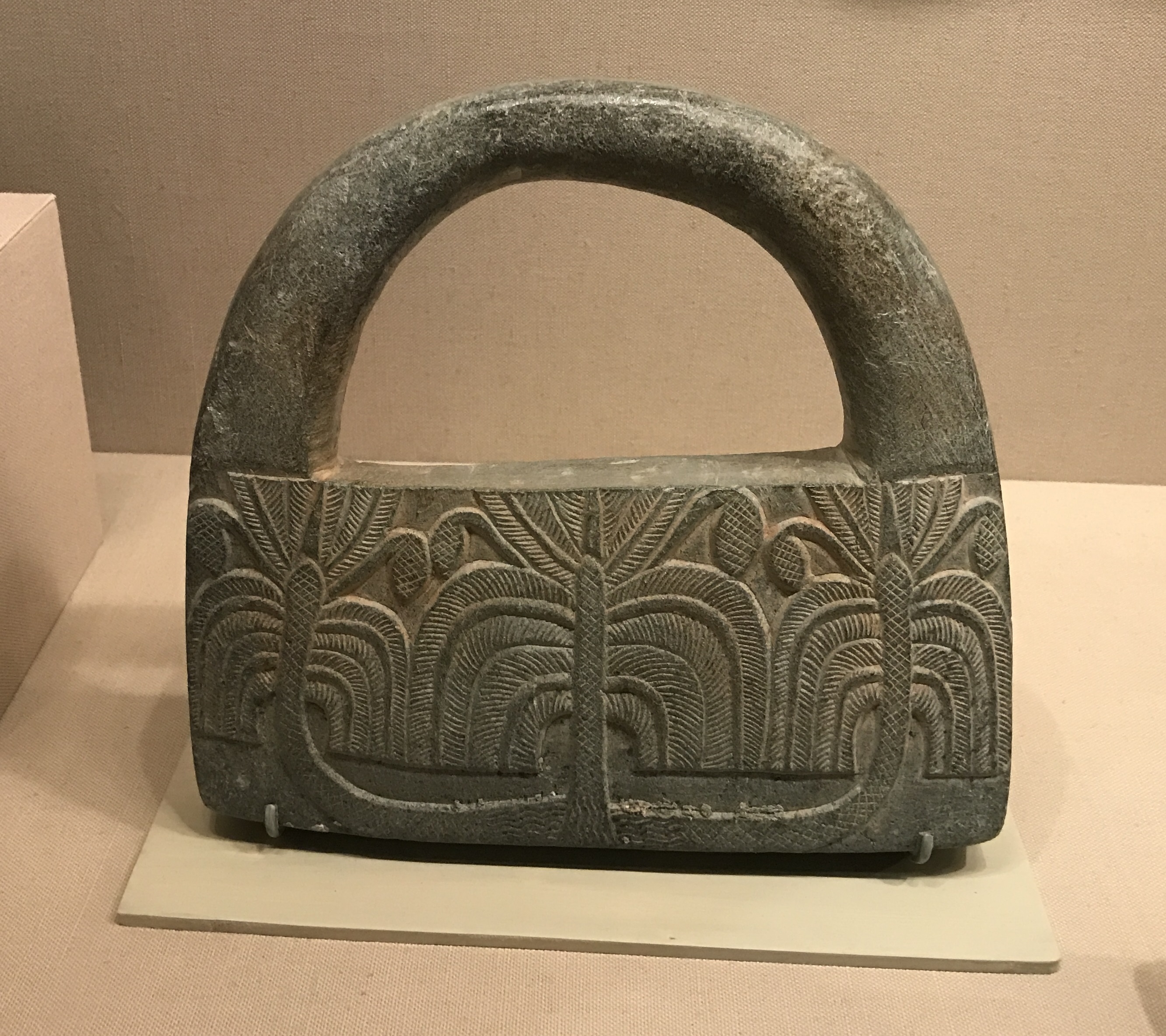
Next appears three arched structures that have been described as houses. It is suggested here that they are symbols of ‘weights’ used as counterweights on a beam balance. See the image below of just such a weight in the Metropolitan Museum of Art in New York City.
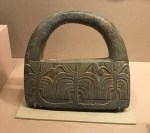
A stone carved weight from Assyria located in the Metropolitan Museum of Art, NYC.

The shifted shape of the three weights suggest ‘sliding.’ If the weights represent the center of measurement or balance, then the ‘sliding’ suggests that the center of balance of the Earth ‘slid.’ If the center of balance of the Earth is the axis or North/South pole, then the image suggests there was a pole shift.

The three weights in a row form three arches. Furthermore, the arrow strikes between the second and third. One might then say this forms the number 32 which means little to us, but one might note that 5.65 x 5.65 equals 32. This number 5.65 reminds one of the numerical values associated with the name of God ‘Yahweh’ in Hebrew. It is spelled with four letters and when converted to numbers it is 5,6,5,10 or perhaps 565/10 or …. 56.5.
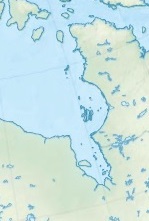
It just so happens that the bottom of Hudson Bay which has a three arch shapes towards the east is at about 56.5̊ North latitude. Could these three arches be a reference to Hudson Bay?

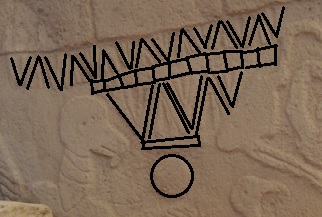
Below the three weights is another hedge fence composed of up and down arrows. There are 8 pointing down and 7 pointing up. Notice that 8 x 7 = 56. This sounds familiar.

Just below the hedge is a series of squares. There are 5 slightly smaller followed by 6 for the sum total of 11. The six are emphasized by the last three arrows above. The 5 and 6 of course recall 56 again. Look at this one more time and note the 11 boxes and 3 arrows can imply 113 which is 56.5 x 2.
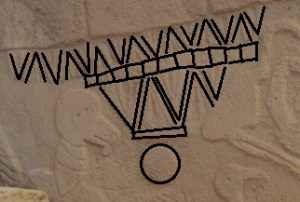
Take this one step further. If the multiplication is followed then 7 x 11 is 77 and 77 is the return period of Halley’s comet. (The builders need not have personally known how to calculate this value. The knowledge could have been passed to them in the same manner as we learn it today.)

Similarly, there are only 11 arrows above the squares. To the left are 4 arrows without squares under them. Multiply and find… 11 x 4 = 44. Then 44 x 56.5 = 2486 which suggests the circumference of Earth at 24868 miles.

Below the squares is a repeat of 3 large arrows down and 2 large up which creates 56 in more than one way. 3 + 2 = 5. 3 x 2 = 6 ⇒ ⇒ 56. And as a series 3,2 forms 32 which is the square of 5.65 as seen previously.

Below this is a bar and below that a circle. The bar perhaps represents the pole or axis of Earth turned sideways. The circle suggests both a round ball or projectile. It might also represent a crater. The old word for this is pock as in ‘pock mark’.

Altogether then, there are 15 arrows in the first hedge, 11 squares, 5 arrows in the second hedge for a sum of 31 objects. By adding the bar we have 32 again ⇒ 5.65². Then add the ball and we have 33. If one travels 33̊ south of the north pole at 90̊, one will arrive at 57̊. This is 56.5 rounded up.

Notice the significance of 33 and 3 in our ‘modern’ day religions. Jesus died on a cross with two thieves. There were 3 altogether on the crosses and 2 were thieves ⇒ 32 ⇒ 5.65².

Jesus died when he was 33. He rose again on the 3rd day.

The Biblical flood lasted for 40 days and 40 nights. A square of sides 40 units has a diagonal 56.5 units long.

It would seem, these numbers were significant enough to be carried forward for millennia and encrypted in stories of importance.

As a complete small image, the arrows and squares appear to form a sort of triangle tail projecting upwards from the ball as if to emphasize – this is a comet.
The remaining images on the top square are looked at next. Note that there are 3 birds, 2 without wings open ⇒ 32. The large winged bird is seated as if it landed. The ball is near it’s beak. Does this imply it pecked a hole?
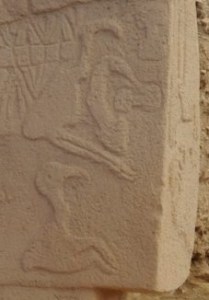
The other two smaller birds are seated to the right. Next to the upper bird is a phallic symbol suggesting penetration. At its top is a bird head shape pointing towards an I shape in the horizontal. Above it is another I shape but it is vertical. Perhaps this suggests that as it penetrated it turned the I from vertical to horizontal.
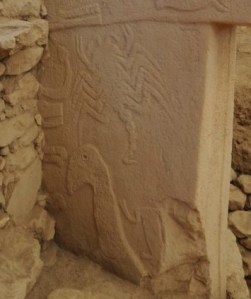
 

The lower part is a rectangular shape. It tells a similar story. Beginning at the bottom. A bird pecks a hole. It burrows in (boar animal) after it penetrates and it turns. It walks south (the crab) with four legs in a mountain shape pattern. There are 4 legs each side or 44. It has two claws which suggest two comets striking the head. They also imply 2 + 2 or 4. Counting both the legs and claws we have 444 again. The tail is composed of 5 round shapes plus a bend so that we might say 5 then 6 or 56. As before 444 x 56 = 24864 suggesting the circumference of Earth at 24860 miles. The same story is summarized at the bottom by a shape that represents a decapitated Earth. The phallus and ball suggests the pole was turned to the side by the ball.

In reality, the North Pole is the place from which we take longitude/latitude measurements. The Magnetic Pole is where we take magnetic headings from. Until this century, the magnetic pole was lower down in Canada and has moved about in a northward fashion until it now circles the true north pole. The text suggests that it was shifted south to 56̊ by the impact of a comet.

Now one must ask if there are any other images at Göbekli Tepe that indicate a comet hit? Yes, there is. Pillar 33 provides a beautiful picture.

PILLAR 33
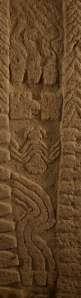
Image from: Tepe Telegrams at  https://www.dainst.blog/the-tepe-telegrams/2016/08/16/emblematic-signs-on-the-iconography-of-animals-at-gobekli-tepe/

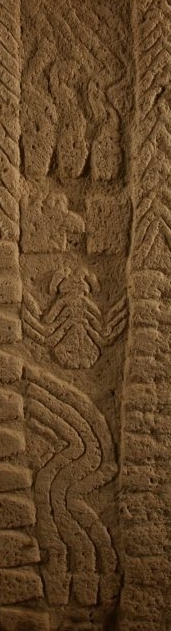
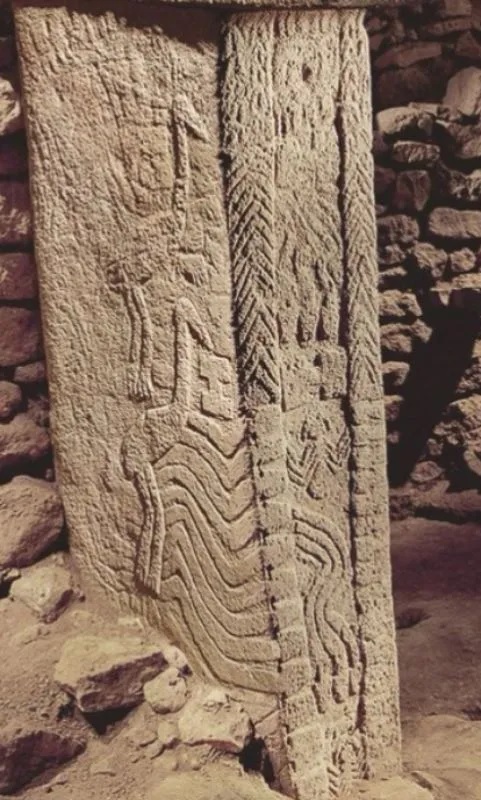
The side face shows 3 snakes (or are these comets?) striking the horizontal I shape seen before. Below it is the crab but now his legs form 3 valleys instead of mountains. Below it the snakes repeat again. One side of the image is framed with 12 snake heads. The other side is framed by I’s that are difficult to count, perhaps 13 to 15. The bodies of the lower 3 snakes join with 2 heads on the side. This gives 32 again or 5.65².
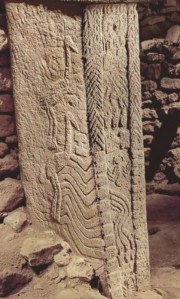
 

Image from: https://ankh-fdn.medium.com/g%C3%B6bleki-tepe-decoded-pillar-33-and-the-advent-of-summer-a91fd87ebd69

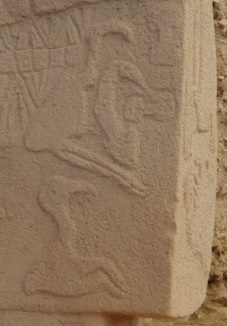
Viewing the pillar so that adjoining sides can be seen gives more information. On the left, 2 birds are found. One is pecking at the vertical I. Below this there are the bodies of 9 snakes. They terminate at the bird’s 2 long legs. Or perhaps these snake bodies are the bird’s wings? The rest of the art is not readable from the images. However, these few things speak volumes. The 9 and 2 are essential to the telling of this story. One must know to subtract 9 – 2 to obtain 7. This then provides 79.2 which is the longitude of the island at the bottom of Hudson Bay. The island is known today as Belcher Island and this sounds remarkably like ‘Baal-chair’ or ‘Bel-chair.’ We might guess that this was once the location of magnetic north. It also suggests this is somehow related to the religion of Baal or Bel.

Certainly, these people did not traverse there themselves. It is also highly unlikely they measured these locations themselves. One might also exclaim that 79.2̊ longitude is measured off the Greenwich meridian and that zero point is from ‘current’ not ancient times. But is it?

Recall it was stated that the Biblical flood lasted for 40 days and 40 nights. A square of sides 40 units has a diagonal 56.5 units long. Furthermore, a square of sides 56 units has a diagonal of 79.2.

Of course it should be noted that Noah lived to the grand age of 950 years. The inclination is to see how many months this is, since that age is improbable. Then 950 / 12 = …….. 79.2. Yes!

Even more interesting is the diameter of Earth is 7920 miles.

It is almost as if someone traveled there, fixed the longitude of Belchair Island at 79.2 degrees West and traveled back eastward until they reached 0̊. This implies the zero point was not chosen first but it was a result of choosing that island and fixing that number to it (79.2) because of its relationship to the diameter of the Earth. This suggests that the Greenwich meridian is of very ancient origin. **See below.

It should also be pointed out that the name of the lower round circular arc in Hudson Bay is Nastapoka Arc and this is astoundingly Anglo-Saxon sounding. ‘Nes’ means to survive. ‘Tap’ means tap or impact. ‘Pok’ means pock or in this case round scar such as a crater. So then, the word is ‘surviving tap crater.’ Could it be that the ancient people explored the region after the apocalypse (a-poc-calypse) and discovered the reason for the flood? Would that have been a triple comet strike into the TWO MILE THICK ice sheet that instantly melted creating a worldwide flood?

It is easy then to suggest these pillars are telling the story of the apocalypse. It suggests it was a comet impact and a magnetic pole shift. Other cultures use different images to tell the same story. This moves the date of the flood back to about 10,000 years ago which coincides with global temperature changes. We call it the end of the ice age.

In conclusion, we might conjecture that the religion of the builder’s of Göbekli Tepe is one of long duration. We call it today the religion of Baal but know little of it. Yet, in modern day religions, there are still bits and pieces of it as shown above.

Other posts on Odd Little Purses:

Previous Post: Rök Rune Stone and its ciphers

Next Post

For further information on numbers see: ** below.

Similar Articles by the Same Author in PDF and Post:

*Easter Tables

** For numeric background see:

**Freeborn, B.L., Validating North American Runic Inscriptions, noahsage.com, November 2022. PDF only.

Freeborn, B.L., The Vinland Map Ciphers, noahsage.com, December 2025. Book only see post.

Freeborn, B.L., The Vinland Map Ciphers Addendum, noahsage.com, December 2025. PDF only.

Freeborn, B.L., Ancient Riddles to Test Our Wits: The Secret Chamber, noahsage.com, January 2016. Post here.

Freeborn, B.L., Another Riddle in Stone from Canada, noahsage.com, August 2025. Post here.

Freeborn, B.L., Deciphering the Spirit Pond, Nomans Land and Narragansett Runic Inscriptions, noahsage.com, November 2022. Amulet post. Map stone postPDF only.

Freeborn, B.L., Et in Arcadia Ego – OUOSVAVV DM – Deciphered, noahsage.com, December 2022. Post here.

Freeborn, B.L., Kensington Rune Stone: A New Translation, noahsage.com, February 2023. Post here.

Freeborn, B.L., Rök runestone of Sweden, noahsage.com, April 2023. Post here.

Freeborn, B.L., Runic Riddles: Time Capsules, noahsage.com, December 2022. Post here.

Freeborn, B.L. The Long Debated Bourne Stone, noahsage.com, January 2023. Post here.

Freeborn, B.L., The Nomans Land – Leif Eriksson Inscription, noahsage.com, December 2022. Post here.

Freeborn, B.L., The Narragansett Inscription: A Translation with its Date of Dedication, Author and Inscriber, noahsage.com, October 2022. Post here.

Freeborn, B.L., The Newport Tower: Finding the Date of Dedication, its Designer and Builder, noahsage.com, October 2022. Post here.

Freeborn, B.L., The Wawa Stone and Its Viking Ship, noahsage.com, August 2025. Post here.

Freeborn, B.L., Rok Rune Stone and its ciphers, noahsage.com, November 2024. Post here.
Runic Riddles: Time Capsules

B.L. Freeborn © December 2022               (PDF version here.)

Runic riddles are riddles written in runes. Runes are alphabets that were in use in northern Europe, Britain and other northern areas. They were used for centuries but died out and banned with the coming of Christianity.

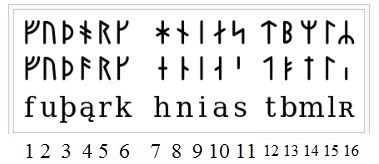
There are a certain group of inscriptions from this period that are either difficult to interpret, very short, have unexplained symbols, use bindrunes (letters stuck together), and/ or are unusual for some reason. Here is an example from Norway (Lomen No. 2; Norges Inscrifter Med De Yngre Runer, Vol.1, Pg. 216) deemed to be a magic incantation. It is simply a riddle. The solution is at the end of the post.

These unusual ones are where the riddles hide. Primarily they were created for amusement, in the same manner as crosswords are today. Besides providing unique puzzles for people to solve, they often contained phrases and ‘secret messages’ that we find strange or incomprehensible today. They are little windows into a bygone era before the cleansing of facts by ‘modern’ teachers, internet myths, and the Catholic church. The latter worked especially hard via genocide and threats to stamp out Paganism. Throw the Black death into the picture which killed half the population of these areas and it is not surprising that the information these riddles reveal seems …. surprising to say the least.

Sadly, the numbers of inscriptions still in existence are declining with each passing year. They were once abundant. Many now only exist in photos. The few remaining tell us something of importance.

Many preserve the concepts of Baal and Paganism. This religion can be traced back 12000 years. The remaining practitioners faced with the power of the Catholic Church found a way to preserve some hints of it in these riddles. Others tell us of extraordinary journeys. They reveal an important part of our lost knowledge.

The following posts bring a few of these riddles to you. Others are available as pdfs at the bottom of the posts.

Hopefully, they are both enjoyable and educational to you.

Solution:

This is called a magic formula – ISTIL form. The number of duplicated runes varies. This one uses triplicates and to match the three makes bindrunes of the six initial runes. The transliteration of the three bindrunes and duplicated runes is RT UÆ KN III SSS TTT III LLL. This is an anagram for ‘stlis’ in Latin which means ‘quarrel’ or ’cause’ and/or ‘tellus’ meaning Earth or region. This implies a ‘global difficulty.’

The three bindrunes and the triplicates suggest 3. This is equal to Th (or D) rune. Simplify and add the Th:    Th    R T U Æ K N    I S T I L. As numbers this is: 3   5 12 2 4 6 8     9 11 12 9 15.

The group ISTIL has four notable values. 9,11,12 sum to 32✓; then 9,15 sum to 24✓; then 12,9,15 sum to 36✓; and the total is 56.✓ All of these numbers are important. (For checked ✓ number meanings see below**. See next table for rune/number equivalents.)

The first group containing the bindrunes has no meaningful sums except for the total with the 3 (Th) included which is 40. A square of sides 40 has 56.56 as a diagonal. This repeats the ISTIL sum. The group does have the significant series 4 6 8 which in reverse is 864.✓

From Wikipedia

There are several elements of the riddle missing. The author and year are often stated and the number 792 (always present) is missing. This is long enough to contain both. Mongé derived the name KanutR from the first six runes. His solution is different than what is presented here. (Landsverk, Ancient…, pg. 127-138) However, by inspection the name Thorniut is found. (The Æ includes the sound O. Also, the I rune can be an E.) The only letter missing is an I and a K is left over. There are two I’s in the last group, so this implies letter sharing. If the K shifts to the last group notice this list of small abbreviated words can be formed: KIL (kill); I TIL (I tell); I LIS (I lies); S (south); I TI LI S (I tie lie South). When taken altogether the following is suggested:

I Thorniut tell. The I tie lies South where it was killed in the global upheaval.

This is a typical Baalist statement, including the name of the author, but the number 792 is still missing so the solution is incomplete. If Thorniut is converted to numbers as given (without the I) one finds: 3 4 5 8 2 12. Now the following sums are noted: 3,4 sums to 7; then 4,5 sums to 9; then 3,4,5,8 sums to 20 so that we now have 7920.✓

The year would complete the picture. Some indication of the year and three other numbers is sought: the Golden Number (GN), the Day Letter (DL) and the Line #. These numbers are used to find dates on the Perpetual Easter Table (here). A complete discussion of this is found in any of Landsverk’s books listed below.

The letters as bindrunes were anagrammed for a reason so returning to those runes/numbers we have: 5 12 2 4 6 8. These can somewhat change order since there is no way to tell which rune of the bindrune should go first ie. 12 5 4 2 8 6 etc. Note the 1224 looks like a year and in fact, Line # 4 in the attached chart begins with that year. The 4 is present in the series. But year 1224 has GN 9 which is not present in this group. Since 3 is prominently noted by the triplicates, if taken to mean GN 3 then on this 4th line, year 1237 is indicated. It has day letter 4. The sum of this series of numbers is 37 confirming the date.

Other dates for similar reasons can be found. But after much searching 1237 seemed to have the most in its favor. Mongé dated this to 3 March 1199 using just the 3’s. There is good reason to accept his date except that all versions of Istil riddles repeating 3 times would then imply the same date. The reader is free to search for other plausible dates using the attached Easter Table.

I Thorniut tell in the year 1237. The I tie lies South where it was killed in the global upheaval.

Earlier Riddle Posts      Next Post

Similar Articles by the Same Author in PDF and Post:

*Easter Tables

** For numeric background see:

**Freeborn, B.L., Validating North American Runic Inscriptions, noahsage.com, November 2022. PDF only.

Freeborn, B.L., The Vinland Map Ciphers, noahsage.com, December 2025. Book only see post.

Freeborn, B.L., The Vinland Map Ciphers Addendum, noahsage.com, December 2025. PDF only.

Freeborn, B.L., Ancient Riddles to Test Our Wits: The Secret Chamber, noahsage.com, January 2016. Post here.

Freeborn, B.L., Another Riddle in Stone from Canada, noahsage.com, August 2025. Post here.

Freeborn, B.L., Deciphering the Spirit Pond, Nomans Land and Narragansett Runic Inscriptions, noahsage.com, November 2022. Amulet post. Map stone postPDF only.

Freeborn, B.L., Et in Arcadia Ego – OUOSVAVV DM – Deciphered, noahsage.com, December 2022. Post here.

Freeborn, B.L., Kensington Rune Stone: A New Translation, noahsage.com, February 2023. Post here.

Freeborn, B.L., Rök runestone of Sweden, noahsage.com, April 2023. Post here.

Freeborn, B.L., Runic Riddles: Time Capsules, noahsage.com, December 2022. Post here.

Freeborn, B.L. The Long Debated Bourne Stone, noahsage.com, January 2023. Post here.

Freeborn, B.L., The Nomans Land – Leif Eriksson Inscription, noahsage.com, December 2022. Post here.

Freeborn, B.L., The Narragansett Inscription: A Translation with its Date of Dedication, Author and Inscriber, noahsage.com, October 2022. Post here.

Freeborn, B.L., The Newport Tower: Finding the Date of Dedication, its Designer and Builder, noahsage.com, October 2022. Post here.

Freeborn, B.L., The Wawa Stone and Its Viking Ship, noahsage.com, August 2025. Post here.

Freeborn, B.L., Rok Rune Stone and its ciphers, noahsage.com, November 2024. Post here.
Book References:

Landsverk, O.G., Runic Records of the Norsemen in America, Erik J. Friis, Publisher, Rushford, MN, 1974.

Landsverk, O.G., Ancient Norse Messages, Norseman Press, Glendale, California, 1969.

Mongé, Alf & O.G. Landsverk, Norse Medieval Cryptography in Runic Carvings, Norseman Press, Glendale, California, 1967.

Syversen, Earl, Norse Runic Inscriptions: with their Long-forgotten Cryptography, The Vine Hill Press, Sebastopol, California, 1979.

Derogatory article by Aslak Liestol of Alf Mongé’s work: http://collections.mnhs.org/MNHistoryMagazine/articles/41/v41i01p034-042.pdf  and….

…Landsverk responded to these comments in Ancient Norse Messages pg. 126-129; and often in Runic Records of the Norsemen in America.

Making Words in Indo-European

© 2019 B. L. Freeborn

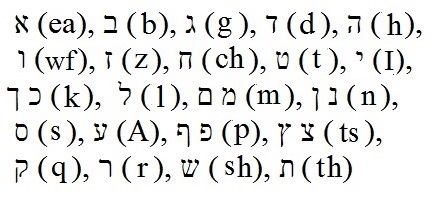
It has been suggested in prior posts that the alphabet is the basis of the Indo-European Language. The Hebrew Alphabet is one of the oldest alphabets and was used for this study. (See below.) Each letter already had a sound and a number associated to it. In this study a concept was attached. These symbols then comprise the Indo-European language.

To complete the exercise, let us put it to the test by examining some old Anglo-Saxon words and others. Using the concept list at the bottom observe how it may be used with the following words:

Sun… a combination of s-u-n: continuous-ongoing-yet varying. This aptly describes the sun.

From Anglo-Saxon (Old English): nes which means to survive. It is comprised of n-s: varying yet ongoing.

From Old English nest. It is comprised of n-s-t: varying yet ongoing place.

From Old English os means mouth. In Latin it means bone. It is comprised of o-s: ongoing and continuous.

From Greek chaos means abyss. Today it means confusion. It is comprised of ch-a-o-s: changing-source-ongoing-continuous.

From Old English yth means flood. It is comprised of i-th: eye – of greatest importance. Suggesting the source of the flood.

From Old English toss. It is essentially comprised of ts: to harm by tossing.

From Old English ra means to raid. Comprised of r: explosion/spreading.

From Old English raesc meaning shower. It is comprised of r-sh: explosion/spreading – of the smallest.

Compare to ras meaning to search out. Today it means erase. Comprised of r-z: explosion/spreading – sever.

Compare to raes meaning to rush, attack. Comprised of r-s: explosion/spreading – continuous.

From Old English sar means sore. Comprised of z – r: sever – spread.

From Old English seare means cunning. Comprised of s-r: continuous – spreading.

From Old English net. Comprised of n-t: varying – places of union/ties.

From Old English mag meaning may. Comprised of m-A: more – allowed.

From Old English ag means to gain or take. Comprised of a-g: source-action.

From Old English ah means to gain or take. Comprised of a-h: source-on high.

Now examine the word magnet. Note the contraction of may-ag-net as defined above.

From Old English thoth means yet, that, then at that time. Comprised of th-th: important-extreme.

From Greek tessarace means summit of a four sided tetrahedron. Note the contraction of toss-seare-raes or tossing that continued from an attack.

And the last word for the day…

The seventh word in the Torah (in Latin letters) is ts-r-ea-h which means in Hebrew (when read left to right) the Earth. Note the contraction of toss-seare-ra-ah or a tossing that continued as it raided and gained control.

This all leaves one very much to consider……..!

Significant ideas of the Indo-European Language:

‘a’ source, ‘b’ to be bisected, ‘g’ action, rotation,

Key to the Hebrew Letters and the Latin Letter that will serve to substitute for it in this study due to font issues.

‘d’ a division or state,‘h’ on high, ‘u’,’o’,’wf’ ongoing,

‘z’ to sever, severeness, ‘ch’ to change,

‘t’ a place of union, linear action, ‘I’,’y’ the eye or center,

‘k’ the impact crater and its properties,

‘L’ to lie where it fell, to lay out, to be in a line,

‘m’ more, might, measure of, ‘n’ negation, to reverse in direction yet continue,

‘s’ continuous state of being, unbroken, ‘A’ assigned, custom law,

‘p’ power in the small or great, ‘ts’ to harm by tossing, teasing, twisting, action that harms,

‘q’ magnetic pole and force,

‘r’ behavior of an explosion,

‘sh’ becoming infinitely small or transparent, ephemeral

and ‘th’ denotes importance and order of events.

Last postNext post

Back to the first post on this topic


The Indo-European Language at its Earliest

© 2019 B. L. Freeborn

It was suggested previously that the alphabet as preserved in the Hebrew Script represents the original Indo-European Language and that each letter represents a sound, number and idea.

In the last posts ea, b, g ; d, h, wf were studied. In this post z, ch and t are examined.

They represent numbers 7, 8 and 9 respectively. The Hebrew Letters are as seen in the image below.

The ‘z’ sound represents the number seven. It separates the days into weeks. It was used historically in other ways such as the jubilee which was the fiftieth year following 7 x 7 years.

Consider that it suggests the idea: to sever and severeness.

The next letter ‘ch’ has value 8. Numerically it can be associated with 2 x 2 x 2,

or 2 + 2 + 2 + 2, or a number which grows incrementally.

Consider it suggests the idea: to change. We find it used in such common words as chatter, chemistry and chew.

The next letter ‘t’ has value 9. It is the last number before 10 and in base 10 (the system we use) it is the highest digit before the numbers repeat again. It is a stopping point, a tie, not a division as in ‘d’.

Consider that it suggests the idea: a place of union, linear action.

Key to the Hebrew Letters and the Latin Letter that will serve to substitute for it in this study due to font issues.

From Anglo-Saxon note these examples using these letters:

sa = bucket, sig = to sink (sun), syfre = sober;

cheow = to chew; che = change, shift, cine = chine, fissure;

tieg = tie, bind, ta = rod, spread, toe, tima = time.

Note the meaning of the words as they are found in series as provided by the alphabet’s order. Continuing where we left off:

wf-z or fys = feeze, drive away

z-ch or secg = ‘sedge’, reed, sword, warrior

ch-t or ‘chette’ = chatter from raescettan = crackle, creak.

Before we had these significant ideas: ‘a’ source, ‘b’ to be bisected, ‘g’ action, rotation, ‘d’ a division or state,‘h’ on high, and ‘wf’ ongoing. Each is represented by a short sound.

Now we have these ideas: ‘z’ to sever, severeness, ‘ch’ to change, and ‘t’ a place of union, linear action.

Last postNext post

First Post in this series

Ye Old Language of the Ancients

© 2019 B. L. Freeborn

“The only thing we have to fear is fear itself.” – FDR

All the words in this famous quote by President Roosevelt are Anglo-Saxon and could be understood by people speaking the language a thousand years ago or more.

Note these interesting little riddles made from Anglo-Saxon words. (If the meaning of the word has changed with time, the old meaning is in parentheses.)

Are these not rather descriptive sentences of a comet impact with the planet?

Tap tip top.

Pat put (out eyes) of pate (happy one) into pits and pots.

Mece (sword) and myce (more) make muck of meek.

It came and its cyme (aftermath) is a cumb (valley) and cama (collar).

Pin (torture) pun (poke hole through) into a pan (dish) and pen.

Tack (a nail) take and tuc (punish).

The hale hill was hele (concealed) into a hell.

This book is about the baking, bucking, bickering becca (pike) on the back from where it becks (streams).

Back to last post  —   Back to first post on Indo-European Language  — On to next post

What Strange Secret Lies Hidden Here?

Elephant Tablet found during construction of Cuenca Airport, Ecuador

Elephant Tablet found during construction of Cuenca Airport, Ecuador

© 2018 B. L. Freeborn

In prior posts the idea that ancient art describes the events of a great comet impact and an associated crustal displacement was discussed. Support from ancient records then turned to the written word and in particular to the Hebrew alphabet as a method for reconstructing the Indo-European Language.

The Hebrew Alphabet was discussed in these posts previously under the title “A Little Mystery Hidden in the Hebrew Alphabet.”

There are two things that are distinct about the Hebrew alphabet. Five of the twenty-two letters are associated with a pair called an end-cap because they are used at the end of Hebrew words. This makes a total of twenty-seven symbols. Secondly, the alphabet is called an abjed which means it has no vowels.

Additionally, each letter is also a number. The numbers associated with them are 1, 2, 3, 4, 5, 6, 7, 8, 9, 10, 20, 30, 40, 50, 60, 70 , 80, 90, 100, 200, 300 and 400. Some numbering schemes assign the higher numbers 500 etc. to the end cap letters.

The letters will be replaced by the Latin letters shown in the image for font convenience sake:

Key to the Hebrew Letters and the Latin Letter that will serve to substitute for it in this study due to font issues.

Imagine that all texts were originally written on clay tablets (or worse yet carved in stone) and someone had to collect the clay, make the tablets, write the tablets, bake the tablets and pity the poor soul who had to haul them from place to place. It is easy to conclude lengthy documents required great economy of lettering to facilitate this process and minimize the massive bulk.

With this in mind, in this reconstruction of the Indo-European language, each letter becomes an entire word or more precisely an idea. In contrast to tradition the ‘ea’, the first letter, will be taken to be a short ‘a’ or short ‘e.’ The letter Ayin, marked ‘A’, will be the long ‘a’ of English. The ‘I’ will be  a long ‘I’ or ‘Y’; and the ‘wf’ will be the four Latin letters: O, U, F and W. The multi-purpose ‘wf’ was either used to confuse the novice or was originally some word/sound forgotten with time but probably along the line of wouf or fouw. It is often associated with the sound ‘v’ as well which provides 5 sounds for the 6th letter and recreates the 5-6 noted in prior posts as being important. However, this study shows that over time the B took on the role for the ‘V’ sound of ‘wf’.

Also, contrary to custom each letter typically considered a consonant will automatically be assumed to be followed by a short ‘a’ or ‘e’ so that ‘b’ becomes ‘ba’ or ‘be,’ and ‘d’ becomes ‘da’ or ‘de’, etc.,  The difference between short ‘a’ and ‘e’ is of little importance since their actual pronunciation varies greatly with locality and time. In total contrast to the idea that this alphabet is vowel-less note this means there are certainly four ‘vowels’ depicted by symbols and one assumed to be present if one of the other four is not used.

These assumptions convert the Hebrew abjed alphabet to one with consonants and vowels much more like the modern Latin alphabet. The beauty of this is it removes the necessity of writing every ‘e’ which is still the most common letter used today and thereby substantially reduces the weight of each document written in clay. This is a worthy goal for book maker and reader alike.

Very soon we begin slowly defining the words associated with the individual letters to arrive at the twenty-two basic words/concepts of the Indo-European Language. After that, many two and three letter words will be explored which will notably expand the vocabulary before some interesting ancient words are examined.

Back to the beginning of this article.

Back to last post.

Next post on another kerb stone. Next post on alphabet.

Mayans, Magnetism and Upending World Views

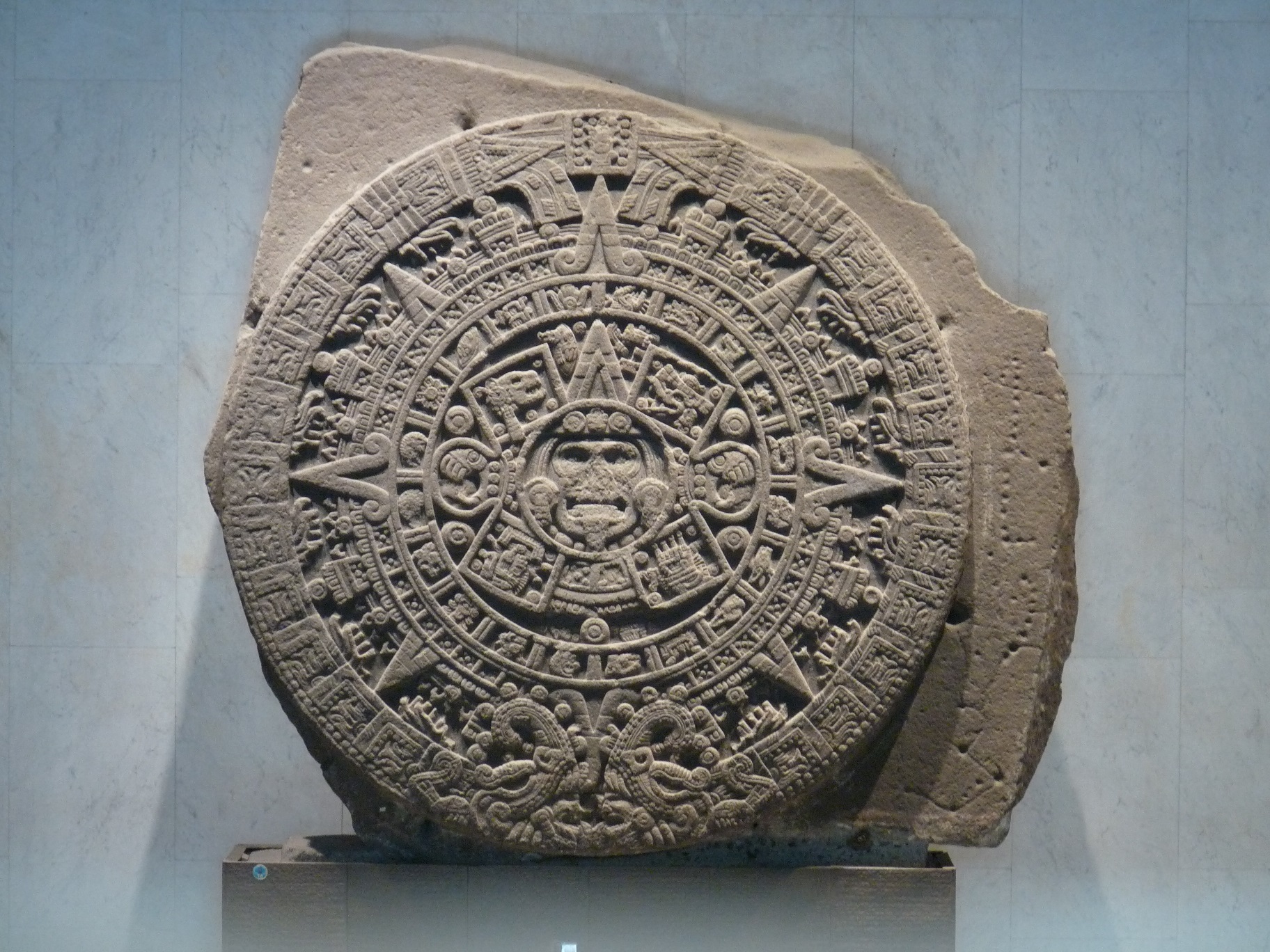
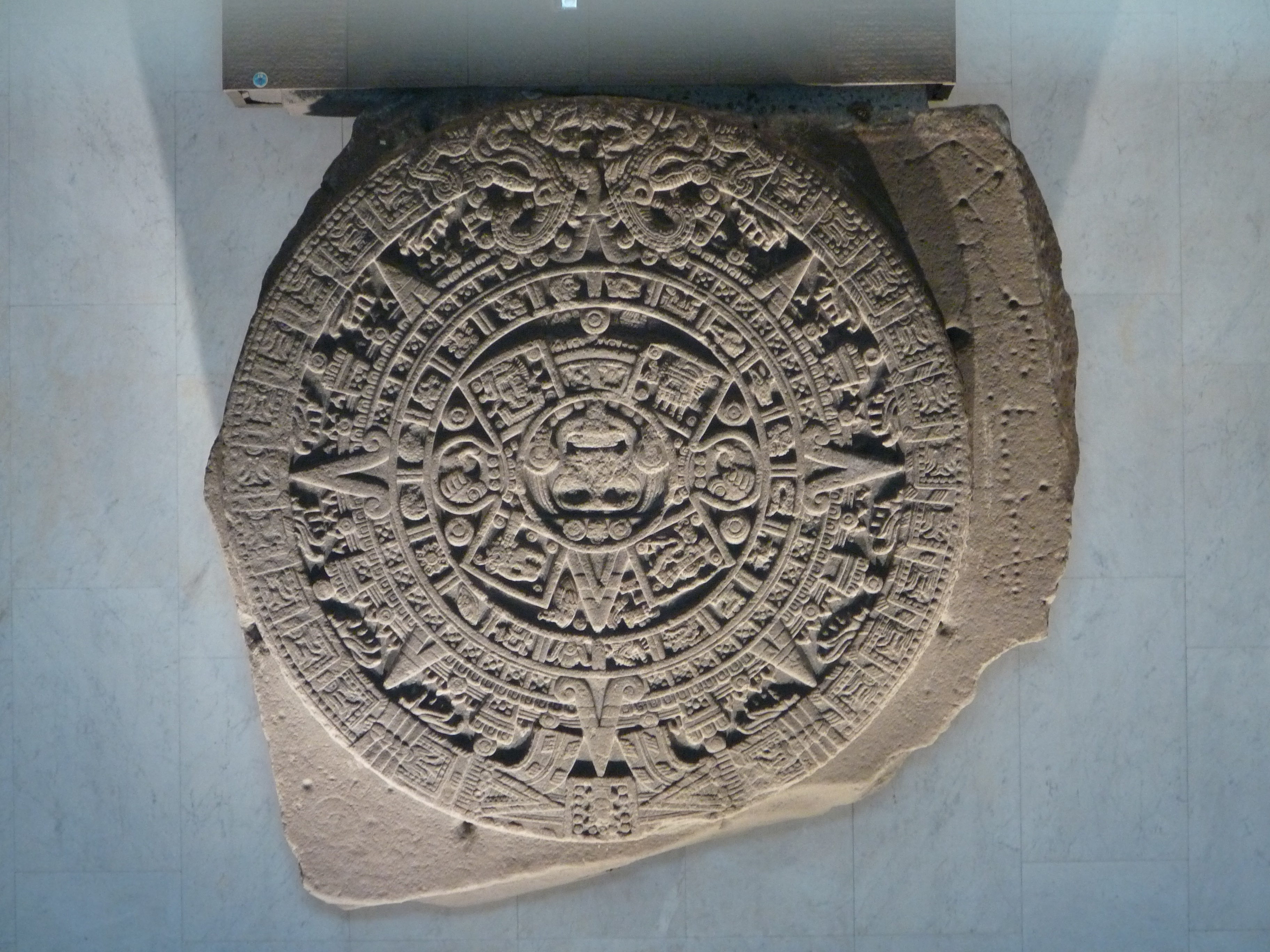
Mayan Calendar

Photo by El Comandante CC-By-SA 3.0 IMAGE National Museum of Anthropology, Mexico City

© 2017 B. L. Freeborn

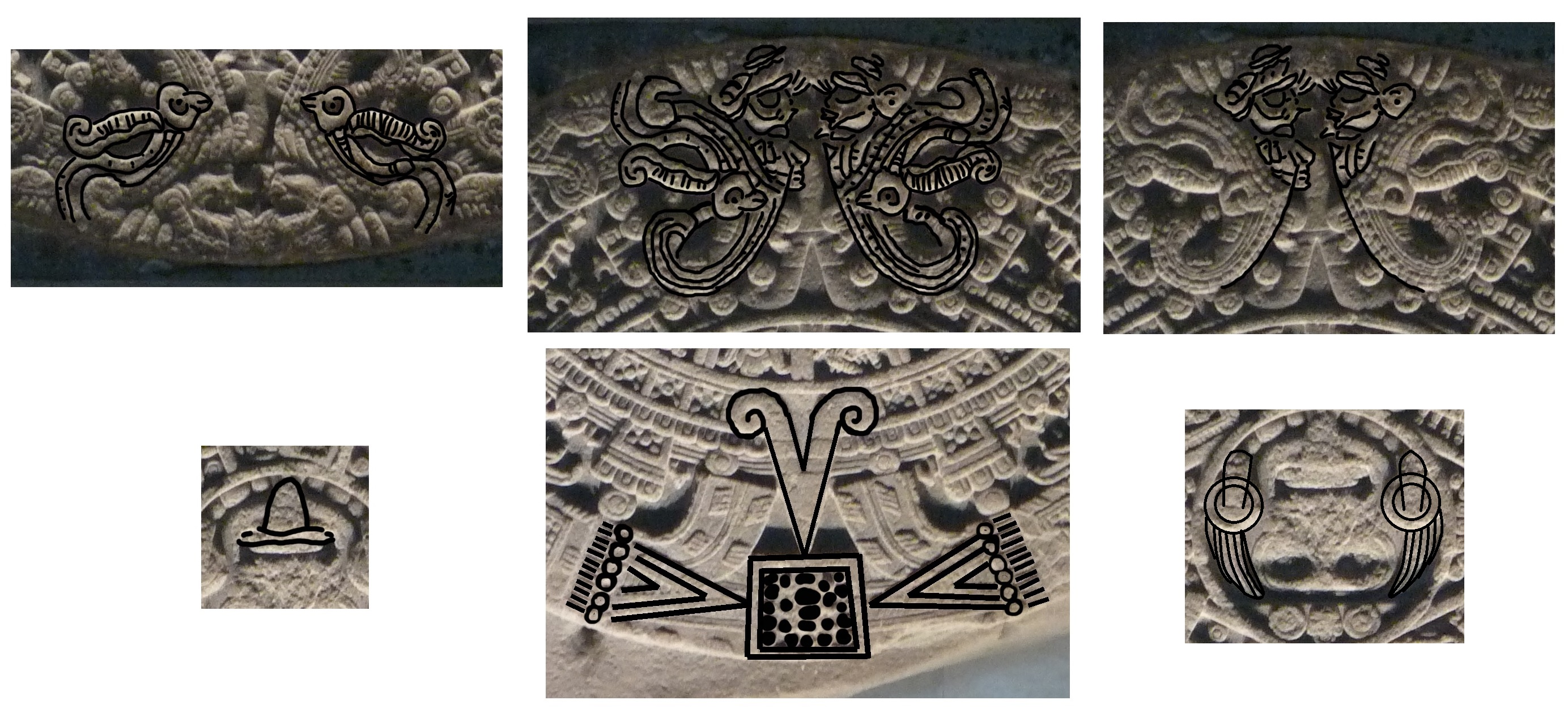
For sometime we have been looking at riddles hidden in ancient art. Continuing along that line we look at the Mayan Calendar and upend it to see what it might be hiding.

Upend it and find the following….

Not in the East, nor in the West, nor in the South but …
To the North came the two beaked birds
like flying snakes, Quetzalcoatl they may be…
They came like lovers ready to kiss…
The two comets went into their craters with their tails …
They put out the eye of Earth…
They made the high brows…
They flattened the nose at the center of the world…
And it went in at this angle…
The icebergs flew into the waters at the mouth of the world….
There were two huge craters…
It was surrounded by mighty planks,
remnants of what the icy headlands had been…
All around was dabbled with craters…..
It was surrounded by waves and flames….
The cities and temples were overcome by waves like claws…
It carved a new world order into stone as it pushed north south…
It turned it all over…
So began the world.

Recall that some time ago the paper “A Planet Most Miraculous: The Mechanics of Earth’s Rotating Crust” was published here. In this post we saw what the Mayan Calendar might be trying to show us by turning it over. In the same way we will overturn the world view of magnetism and learn how it played a role in saving the Earth.

Back to Previous Post…………..Ahead to Next Post

Ancient Riddles to Test Our Wits: Indus Script

© 2017 B. L. Freeborn

Indus Valley Seal A.

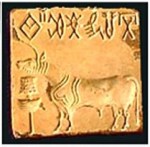
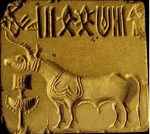
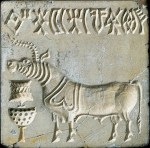
Another ancient riddle presents itself in the Indus Valley seals written in a script which has defied translation. We are in a unique position to make a few inroads into this mystery. A search of Indus Valley Seals shows that the bull at the manger was a common motif so it is worthy of analysis. The message on each of these three seals is obviously different yet the symbolism is remarkably familiar.

Find in the image ….

Indus Valley Seal B.

Ba’al is like a bull.

The serpent like comets were like horns upon a bull.

Upon the covering of the mighty one they left marks like eyebrows.

The pole moved lower.

Indus Valley Seal C.

Now there is a cup on it.

Around it and in it are many cup marks.

The pole of measures now lies above it.

It came to the pole to eat.

——————————-

The familiar symbolism assures us that these images refer to the double comet impact which formed the Nastapoka Arc and Hudson Bay amidst the mighty two mile thick ice sheet..

Observe the first two glyphs on Seal A are very nearly Hebrew  (M) and (I). The double square is also reminiscent of the Metcalf Stone’s first symbol or a dagger.

The third symbol suggests the up/down triangles noted in the previous post and seen in Da Vinci’s art, the Grave Creek Stone and other places. By connecting them to the oblong circle it further suggests the idea of the mountain that became a deep round abyss.

Like in the Grave Creek Stone some of the glyphs are elevated on a peak or delta which make the two glyphs in the center of Seal B appear to be fish but they probably suggest the ‘crater above’ or the ‘crater that delineates.’

Note the symbol immediately to the right of these looks like a comet entering a crater suggesting the idea of an impact.

The two parallel lines are seen on the Newberry Tablet and suggest longitude and/or latitude lines.

On Seal C the Hebrew letter for (Sh) is also elevated and the glyph is reminiscent of the menorah. The symbol third from the right, also elevated, appears to be a mountain that has been shot. Immediately to the right is a glyph like dual flames reminding one of Ba’al which literally means both fires.

Further still, many of the symbols are nearly identical to Luwian Hieroglyphs.

Perhaps with these few clues someone will be able to translate the script…..!!!

Previous Post….. Next Post