Göbekli Tepe’s Odd Little Purses – A New Interpretation

B.L. Freeborn © December, 2024

A different interpretation of Göbekli Tepe’s Pillar art is attempted here. We begin with the most notable and that is Pillar 43.

PILLAR 43
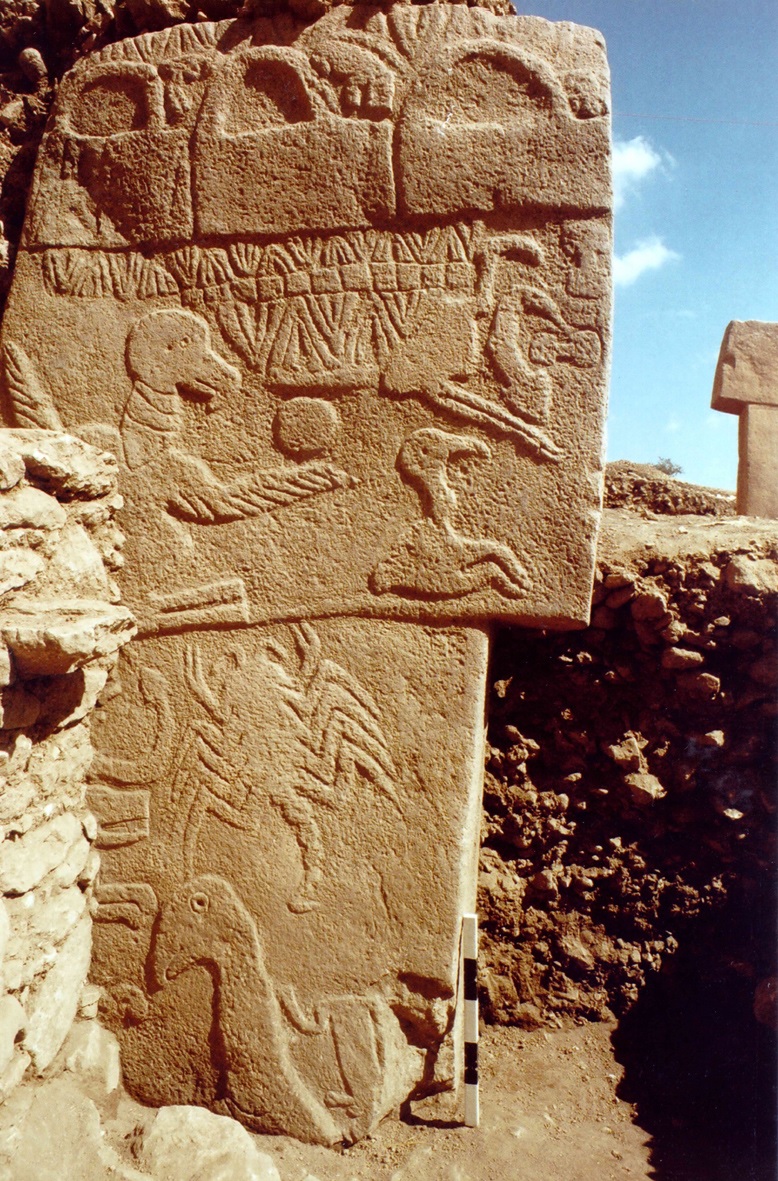
Image from: Tepe Telegrams https://www.dainst.blog/the-tepe-telegrams/2016/10/14/of-animals-and-a-headless-man-gobekli-tepe-pillar-43/  (Photo: DAI, Göbekli Tepe Archive, Lee Clare)
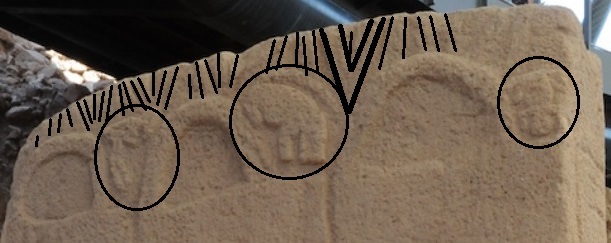
The top of the pillar has some degradation so that the information there is lost. The up down arrows have been described by other authors as a hedge fence. Saying it is a boundary suggests a similar idea.

Notice the large arrow between the second and third arch. Notice that there are arrows along the left top but they stop just to the right of the large arrow.

Notice the three circled animals. The first appears to be a bird that has landed, the second appears to be a burrowing animal, and the last appears to be a frog.

So that one might read this as:

Arrow strikes the boundary like a bird and comes to rest. It burrows in and ‘it’ leaps leaving an empty space.

Next appears three arched structures that have been described as houses. It is suggested here that they are symbols of ‘weights’ used as counterweights on a beam balance. See the image below of just such a weight in the Metropolitan Museum of Art in New York City.
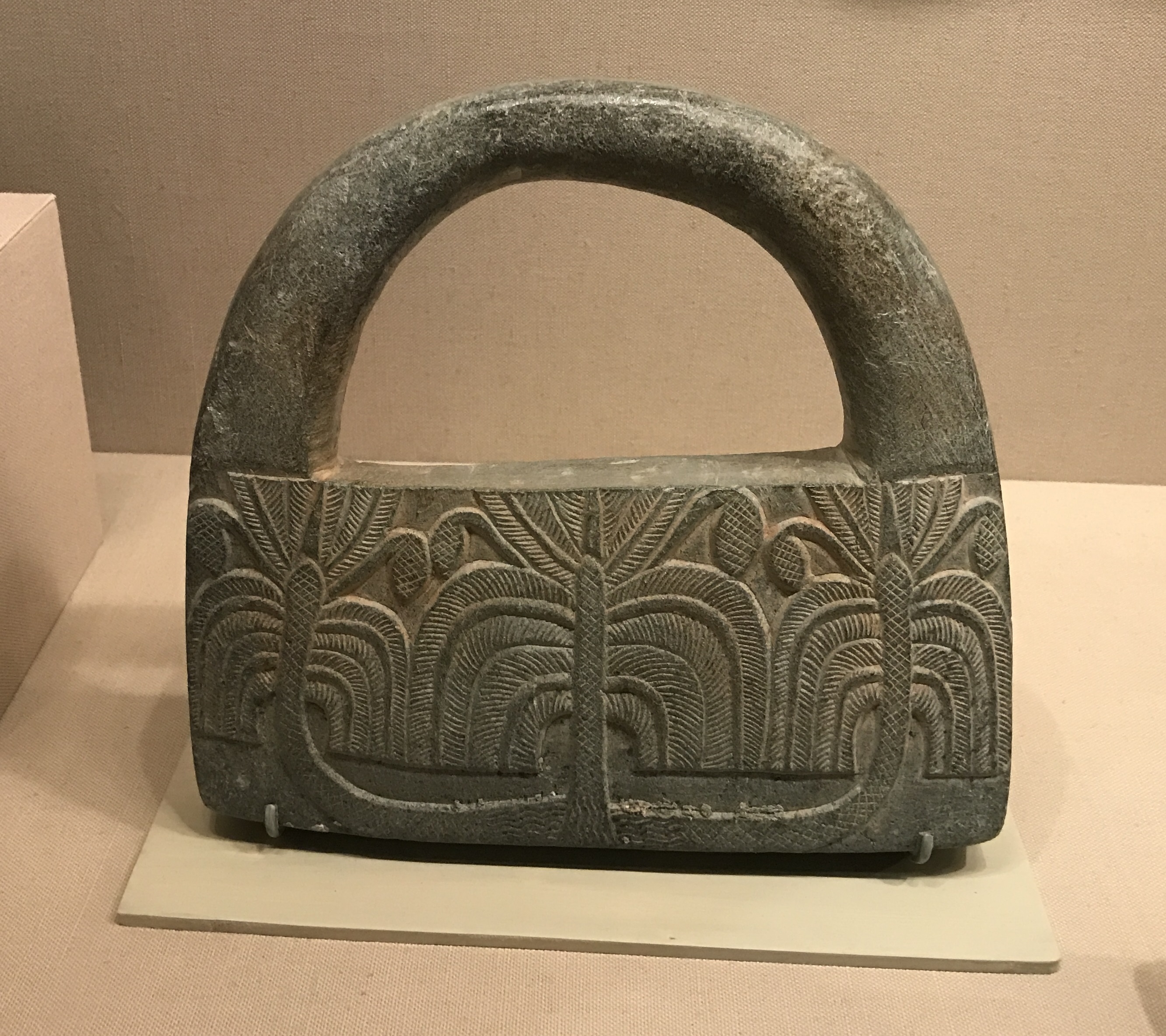
A stone carved weight from Assyria located in the Metropolitan Museum of Art, NYC.

The shifted shape of the three weights suggest ‘sliding.’ If the weights represent the center of measurement or balance, then the ‘sliding’ suggests that the center of balance of the Earth ‘slid.’ If the center of balance of the Earth is the axis or North/South pole, then the image suggests there was a pole shift.

The three weights in a row form three arches. Furthermore, the arrow strikes between the second and third. One might then say this forms the number 32 which means little to us, but one might note that 5.65 x 5.65 equals 32. This number 5.65 reminds one of the numerical values associated with the name of God ‘Yahweh’ in Hebrew. It is spelled with four letters and when converted to numbers it is 5,6,5,10 or perhaps 565/10 or …. 56.5.
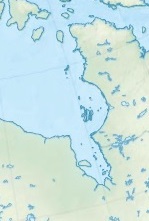
It just so happens that the bottom of Hudson Bay which has a three arch shapes towards the east is at about 56.5̊ North latitude. Could these three arches be a reference to Hudson Bay?

Below the three weights is another hedge fence composed of up and down arrows. There are 8 pointing down and 7 pointing up. Notice that 8 x 7 = 56. This sounds familiar.

Just below the hedge is a series of squares. There are 5 slightly smaller followed by 6 for the sum total of 11. The six are emphasized by the last three arrows above. The 5 and 6 of course recall 56 again. Look at this one more time and note the 11 boxes and 3 arrows can imply 113 which is 56.5 x 2.
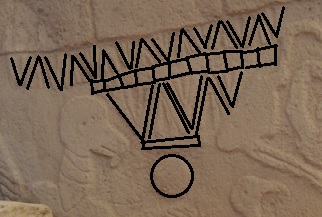
Take this one step further. If the multiplication is followed then 7 x 11 is 77 and 77 is the return period of Halley’s comet. (The builders need not have personally known how to calculate this value. The knowledge could have been passed to them in the same manner as we learn it today.)

Similarly, there are only 11 arrows above the squares. To the left are 4 arrows without squares under them. Multiply and find… 11 x 4 = 44. Then 44 x 56.5 = 2486 which suggests the circumference of Earth at 24868 miles.

Below the squares is a repeat of 3 large arrows down and 2 large up which creates 56 in more than one way. 3 + 2 = 5. 3 x 2 = 6 ⇒ ⇒ 56. And as a series 3,2 forms 32 which is the square of 5.65 as seen previously.

Below this is a bar and below that a circle. The bar perhaps represents the pole or axis of Earth turned sideways. The circle suggests both a round ball or projectile. It might also represent a crater. The old word for this is pock as in ‘pock mark’.

Altogether then, there are 15 arrows in the first hedge, 11 squares, 5 arrows in the second hedge for a sum of 31 objects. By adding the bar we have 32 again ⇒ 5.65². Then add the ball and we have 33. If one travels 33̊ south of the north pole at 90̊, one will arrive at 57̊. This is 56.5 rounded up.

Notice the significance of 33 and 3 in our ‘modern’ day religions. Jesus died on a cross with two thieves. There were 3 altogether on the crosses and 2 were thieves ⇒ 32 ⇒ 5.65².

Jesus died when he was 33. He rose again on the 3rd day.

The Biblical flood lasted for 40 days and 40 nights. A square of sides 40 units has a diagonal 56.5 units long.

It would seem, these numbers were significant enough to be carried forward for millennia and encrypted in stories of importance.

As a complete small image, the arrows and squares appear to form a sort of triangle tail projecting upwards from the ball as if to emphasize – this is a comet.

The remaining images on the top square are looked at next. Note that there are 3 birds, 2 without wings open ⇒ 32. The large winged bird is seated as if it landed. The ball is near it’s beak. Does this imply it pecked a hole?
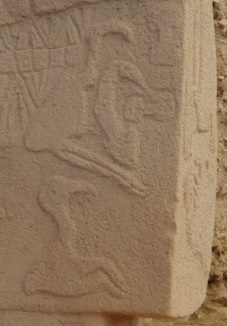
The other two smaller birds are seated to the right. Next to the upper bird is a phallic symbol suggesting penetration. At its top is a bird head shape pointing towards an I shape in the horizontal. Above it is another I shape but it is vertical. Perhaps this suggests that as it penetrated it turned the I from vertical to horizontal.
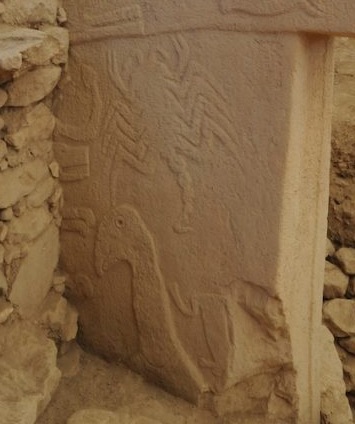
 

The lower part is a rectangular shape. It tells a similar story. Beginning at the bottom. A bird pecks a hole. It burrows in (boar animal) after it penetrates and it turns. It walks south (the crab) with four legs in a mountain shape pattern. There are 4 legs each side or 44. It has two claws which suggest two comets striking the head. They also imply 2 + 2 or 4. Counting both the legs and claws we have 444 again. The tail is composed of 5 round shapes plus a bend so that we might say 5 then 6 or 56. As before 444 x 56 = 24864 suggesting the circumference of Earth at 24860 miles. The same story is summarized at the bottom by a shape that represents a decapitated Earth. The phallus and ball suggests the pole was turned to the side by the ball.

In reality, the North Pole is the place from which we take longitude/latitude measurements. The Magnetic Pole is where we take magnetic headings from. Until this century, the magnetic pole was lower down in Canada and has moved about in a northward fashion until it now circles the true north pole. The text suggests that it was shifted south to 56̊ by the impact of a comet.

Now one must ask if there are any other images at Göbekli Tepe that indicate a comet hit? Yes, there is. Pillar 33 provides a beautiful picture.

PILLAR 33
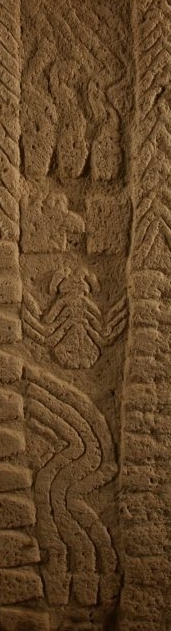
Image from: Tepe Telegrams at  https://www.dainst.blog/the-tepe-telegrams/2016/08/16/emblematic-signs-on-the-iconography-of-animals-at-gobekli-tepe/

The side face shows 3 snakes (or are these comets?) striking the horizontal I shape seen before. Below it is the crab but now his legs form 3 valleys instead of mountains. Below it the snakes repeat again. One side of the image is framed with 12 snake heads. The other side is framed by I’s that are difficult to count, perhaps 13 to 15. The bodies of the lower 3 snakes join with 2 heads on the side. This gives 32 again or 5.65².
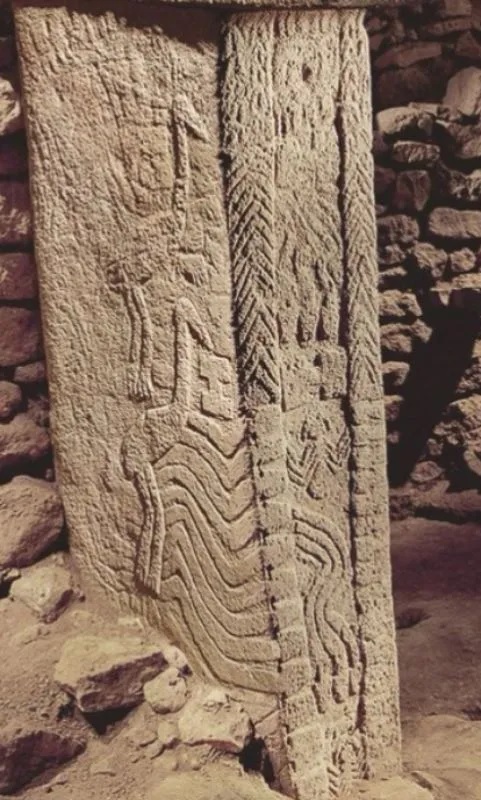
 

Image from: https://ankh-fdn.medium.com/g%C3%B6bleki-tepe-decoded-pillar-33-and-the-advent-of-summer-a91fd87ebd69

Viewing the pillar so that adjoining sides can be seen gives more information. On the left, 2 birds are found. One is pecking at the vertical I. Below this there are the bodies of 9 snakes. They terminate at the bird’s 2 long legs. Or perhaps these snake bodies are the bird’s wings? The rest of the art is not readable from the images. However, these few things speak volumes. The 9 and 2 are essential to the telling of this story. One must know to subtract 9 – 2 to obtain 7. This then provides 79.2 which is the longitude of the island at the bottom of Hudson Bay. The island is known today as Belcher Island and this sounds remarkably like ‘Baal-chair’ or ‘Bel-chair.’ We might guess that this was once the location of magnetic north. It also suggests this is somehow related to the religion of Baal or Bel.

Certainly, these people did not traverse there themselves. It is also highly unlikely they measured these locations themselves. One might also exclaim that 79.2̊ longitude is measured off the Greenwich meridian and that zero point is from ‘current’ not ancient times. But is it?

Recall it was stated that the Biblical flood lasted for 40 days and 40 nights. A square of sides 40 units has a diagonal 56.5 units long. Furthermore, a square of sides 56 units has a diagonal of 79.2.

Of course it should be noted that Noah lived to the grand age of 950 years. The inclination is to see how many months this is, since that age is improbable. Then 950 / 12 = …….. 79.2. Yes!

Even more interesting is the diameter of Earth is 7920 miles.

It is almost as if someone traveled there, fixed the longitude of Belchair Island at 79.2 degrees West and traveled back eastward until they reached 0̊. This implies the zero point was not chosen first but it was a result of choosing that island and fixing that number to it (79.2) because of its relationship to the diameter of the Earth. This suggests that the Greenwich meridian is of very ancient origin. **See below.

It should also be pointed out that the name of the lower round circular arc in Hudson Bay is Nastapoka Arc and this is astoundingly Anglo-Saxon sounding. ‘Nes’ means to survive. ‘Tap’ means tap or impact. ‘Pok’ means pock or in this case round scar such as a crater. So then, the word is ‘surviving tap crater.’ Could it be that the ancient people explored the region after the apocalypse (a-poc-calypse) and discovered the reason for the flood? Would that have been a triple comet strike into the TWO MILE THICK ice sheet that instantly melted creating a worldwide flood?

It is easy then to suggest these pillars are telling the story of the apocalypse. It suggests it was a comet impact and a magnetic pole shift. Other cultures use different images to tell the same story. This moves the date of the flood back to about 10,000 years ago which coincides with global temperature changes. We call it the end of the ice age.

In conclusion, we might conjecture that the religion of the builder’s of Göbekli Tepe is one of long duration. We call it today the religion of Baal but know little of it. Yet, in modern day religions, there are still bits and pieces of it as shown above.

Other posts on Odd Little Purses:

Previous Post:

Next Post

For further information on numbers see:

**Freeborn, B.L., Validating North American Runic Inscriptions, noahsage.com, November 2022.

Similar Articles by the Same Author in PDF and Post:

*Easter Tables

Freeborn, B.L., Ancient Riddles to Test Our Wits: The Secret Chamber, noahsage.com, January 2016. Post here.

Freeborn, B.L., Another Riddle in Stone from Canada, noahsage.com, August 2025. Post here.

Freeborn, B.L., Deciphering the Spirit Pond, Nomans Land and Narragansett Runic Inscriptions, noahsage.com, November 2022. Amulet post. Map stone postPDF only.

Freeborn, B.L., Et in Arcadia Ego – OUOSVAVV DM – Deciphered, noahsage.com, December 2022. Post here.

Freeborn, B.L., Kensington Rune Stone: A New Translation, noahsage.com, February 2023. Post here.

Freeborn, B.L., Rök runestone of Sweden, noahsage.com, April 2023. Post here.

Freeborn, B.L., Runic Riddles: Time Capsules, noahsage.com, December 2022. Post here.

Freeborn, B.L. The Long Debated Bourne Stone, noahsage.com, January 2023. Post here.

Freeborn, B.L., The Nomans Land – Leif Eriksson Inscription, noahsage.com, December 2022. Post here.

Freeborn, B.L., The Narragansett Inscription: A Translation with its Date of Dedication, Author and Inscriber, noahsage.com, October 2022. Post here.

Freeborn, B.L., The Newport Tower: Finding the Date of Dedication, its Designer and Builder, noahsage.com, October 2022. Post here.

Freeborn, B.L., The Wawa Stone and Its Viking Ship, noahsage.com, August 2025. Post here.

ET IN ARCADIA EGO – OUOSVAVV DM – Deciphered

B.L. Freeborn © December 2022        (PDF version here.)

Shugborough_inscription From Wikipedia

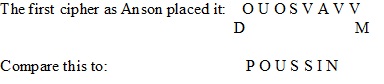
The Shugborough Inscription is a sequence of letters ‘OUOSVAVV’ on the first line and ‘DM’ spaced far apart on the second line. It is on a monument built between 1748 and1756 commissioned by Thomas Anson. Above it is a relief by sculptor Peter Scheemakers which is a variation of the Poussin painting Et in Arcadia ego. The famous painting by Nicolas Poussin displays this inscription on a tomb. It translates from Latin as ‘I am also in Arcadia.’ This inscription has eleven letters on top and three on bottom. The Poussin painting was done in 1637-1638. He did an earlier version in 1627. Previous to this, Guercino painted a similar but different version in 1618-1622. The original inspiration is a poem by Roman poet Virgil known as Ecologues. In this poem from 40 BC the inscription on the tomb of Daphnis is described. The tomb is in ‘Arcades.’ Daphnis was a shepherd in ancient Greek mythology.

From Wikipedia

Although the number of shepherds changes from two to three as the work progresses they all include a tomb. At some point in time the full phrase ‘Et in Arcadia ego’ was developed. The fact that Anson invokes this phrase and adds several elements to it suggests there is more to it besides his still undeciphered cipher some 270 years later.

It would seem he saw something in Et in Arcadia ego that others had not and added the lower inscription as a clue to revealing what is in the original phrase which is most definitely a cipher as well.

Indeed, his efforts resulted in creating a perplexing mystery. The solution to Anson’s ‘OUOSVAVV’ and to the riddle concealed in Et in Arcadia ego follow.

Part I: OUOSVAVV DM

Image Details

Before solving it, note what the image gives us:
• A woman on the left stands tall but looks down.
• The sky is tumultuous. On the upper coffin is a round wreath.
• Her right arm is bent and rests on her hip. It forms an arc.
• There are 3 shepherds each of whom has a staff. One leans to the left by the woman. The other two lean to the right. Two of the staffs seem to join at the bottom in a very large V.
• Two of the shepherds gesture at the inscription. Their thumbs are out creating V’s. It is said they are pointing at the N and R but in fact they frame the letter A.
• The third shepherd rests his arm on the tomb with 3 fingers together. This also appears in the Poussin version.
• Their arms form two arcs. The Poussin uses a shadow to depict a third arm /arc.
• While the other three look at the inscription, the shepherd on the left looks directly at the observer with a smile on his face.

Is he laughing because this is a riddle? With those images in mind, the solutions move forward.

Cipher #1: O U O S V A V V – D M

For background purposes:
Many alphabets have numerical equivalents for their letters called gematria. Hebrew, Greek and Futhork are three which have gematria. Hebrew and Greek gematria are still in use today. Then to complicate matters, just slightly, do not forget there are also Roman Numerals which are letters as well. The solution requires the Hebrew gematria – first.

  • O is 70. A is 1.    U is Vav or 6.    S is S or 60.
  • D is D or 4.   M is M or 40. 
  • V is Vav or 6, but then again it is also a 5 as in a Roman V.

If the line is read as DO then the word ‘do’ is found which refers to Poussin. He ‘did’ it. If the D replaces the O then the word DUO can be spelled. An S follows. Perhaps he meant a DUO of S’s. Missing S found.✓

If the A is replaced by it’s value or 1 or Roman numeral I. Then the I is found.✓

There is no N. However, there is an M just below. In Hebrew gematria M has value 40 and N has value 50. There are two V’s where there should be an N. Two Roman V’s equals 10 and 40 + 10 = 50 ⇒ N. Missing N found. ✓

The first letter is O and as stated previously it has value 70. The P in Hebrew has value 80. Once again add two V’s or 10 and find 70 + 10 = 80 ⇒ P. ✓

The last two letters now spell NM which sounds remarkably like ‘name.’

The inscription then simply reads: DO POUSSIN NaMe. – – One mystery solved. ✓

By creating this exercise, Anson has shown us several clues to resolve the riddle in the original inscription. Note that it required two numeric systems to solve it (Hint #1) and more importantly, fixed the value of the O’s at 70 (Hint #2).

We must pause for a moment for a bit of seemingly irrelevant information. In drafting, when drawing an image of an object, two versions are often shown: the plan view – as if one is looking down; and the side view – as if one is looking at the side. Now – in your minds eye – look at the O’ and U’s as if they are plan and side views of an object. This will be called Anson’s Big Hint.

These -3- letters are followed by an S. Recall S often represents the word South. This idea will repeat later.

Cipher #1 Numbers

This requires numbers for a while…distasteful to many… lovely to others.

  • Yahweh or יהוה or 565 10 can be seen in the last four letters. (If A replaced with I.) The V is 5 and then VI is 6. Then V. Two V’s is 10. Or see it this way. In the fifth and sixth position from the left is V and I. This is 5th and 6th then 5 and 6 or 56.

Fully substituting now for the phrase but using only Hebrew gematria it equates to:

70 6 70 60 6 1 6 6
     4 40

  • Find 76 twice at the start. And it repeats again with 70 60.
  • If the last four are seen as Roman numerals 5 1 5 5 = 16 and 60. Together 16+60 = 76.
  • The pattern of the layout is 2 letters and 8 letters or 28. The product of 4 (on line two) and 70 is 280.
  • The 4 repeats in the 40. They sum to 44.
  • The top line sum is 225 and 4 x 225 is 900.
  • The sum from 60 right becomes 79. The remaining numbers sum to 190. See this as a series 79,190…..or…. 7919.
  • There are four 6’s or 24.

Let’s give some of these meaning.
• The period of Halley’s comet is 76 years.
• There are 24 hours in a day and 24 hours of longitude mark the planet.
• Each hour has 60 minutes.
• The number of seconds of longitude is 86400. This is also the number of seconds in a day. Half of this is 432,000 or 432 for short. Reverse this number and find 234.
• The 900 reminds one the pole lies at 90̊.
• The diameter of the planet is 7920 miles.
• The 28 is repeated twice so it must be important. Indeed, a 40 is present and a square of sides 40 has a diagonal of 56.56 which is a number similar to that just seen above.

All but two of the numbers reference time and/or longitude. One reference is to God and the other is to a comet.

How many of these numbers will repeat in that first phrase ET IN ARCADIA – EGO?

Cipher #2 ET IN ARCADIA EGO

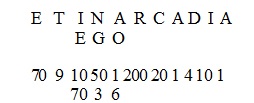
To continue, we convert these lines to their numeric equivalent in Hebrew.

  • Each line begins with 79. (70+9) and (70+3+6). T to A (9+10+50+10) is also 79 and it is followed by 200. This is 79200.
  • Sum of top line (376) minus second line (79) is 297. A jumbled 792.
  • IN (10+50) provides 60.
  • NA (50+1) provides 51.
  • I to R (10+50+10+200) provides 270.
  • N and O (50+6) provides 56. The number of letters on the first line is 11 and on the second is 3 so together as 113 it is twice 56.5.
  • From C to A (20+1+4+10+1) is 36.

This much shorter list gives us 51, 36, 376 and 270 that are new.

  • There are 360̊ in a circle.
  • Due west is at 270̊.
  • The Greenwich Meridian is at latitude 51.51̊.
  • 3 76 should be seen as 3 and 76. We have seen the 3 in the Big Hint OUO.

Evidently then, these numbers do relate to longitude and latitude.

The following important note is made. Normally E should equal 1 and A should equal 70. If this arrangement is chosen, nothing is found. Anson did the same manipulation in his riddle. ‘O’ normally has value 6 but he changed it to 70.

The original phrase Virgil used in his poem was only ‘Arcades.’ Someone in turn added the ET IN and EGO with the latter on the second line and changed ‘Arcades’ to ‘Arcadia.’ Presumably this was done in the same manner we say American for someone from America. The endings are just a change in suffix.

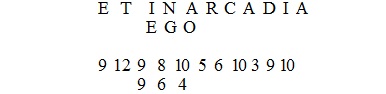
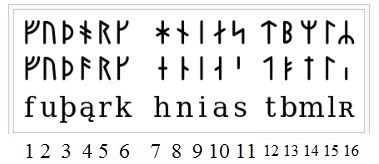
Let’s make it worse. After all, Hint #1 suggests two gematrias may be in play here. Having tried Latin and found nothing, the next one attempted was Futhork. This alphabet is used primarily only by the most northern peoples. This inscription is very reminiscent of their style of runic riddles except in Latin letters. Since positioning is of great importance to runic riddles, it is likely the E was aligned under or almost under the I when this was first written. Furthermore, since it is in Latin and Hebrew gematria provides numbers of interest, it is likely the writer was extremely well educated. So, we proceed by using the Younger Futhork. (E and I share value 9. See chart at end.)

This seems random except the 5 and 6 follow each other. So we begin there:

  • RC is 56.
  • NGO is 864.
  • Sum from R to end is 43.
  • Sum of phrase ‘In Arcadia’ is 70. There are two 9’s one above the other and to the left is (9+12) or 21 so…70, 9,21 or… 7921.
    The letters IN provide 98 which reminds one 89 x 89 = 7920.
  • Sum from first I to last I is 60.
  • Sum from first I to R is 32. Sum of ADIA is 32.
  • Sum from first I to D is 51.
  • Sum from C to last I is 28.
  • Sum of A above O is 14.
  • 9+9 = 18.
  • Sum of the top line is 91 and of the second is 19. Note 91 in reverse is 19.

A few of these are new but actually repeat the same ideas.

  • 14 is half of 28 which is half of 56.
  • 32 is 5.65 x 5.65.
  • There are 180̊ degrees of latitude.
  • There are 19 lines in the Easter table. (See below.)

Evidently, it is far from random! Indeed, it can be summed as follows to find something else of great interest.

When was ‘he’ in Arcadia

This is a date. All the runic riddles, as shown by Alf Mongé (1967), are dated via the Easter Tables. This form of calendar was invented in 525 AD by Dionysius Exiguus but was in use in other forms since 390 AD. In the Easter Tables (used to place Easter – a moveable holiday) each year is identified by three numbers: Line #, Golden Number (GN) and Day Letter (DL). There are 19 lines for 532 years and then the calendar recycles. Each line represents 28 years by GN and DL. Each DL tells what day of the week the year started. (The period of years during which these runic riddles were being written is covered by the appended chart.)

‘Vinland: 1011’ As seen Spirit Pond Map Stone

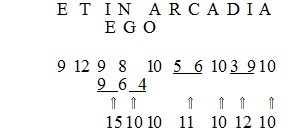
Above we see how a year date is implied by the riddle master. The date should appear twice. Once literally and once at least by confirmation with Line #, GN and DL. One must proceed somewhat by trial and error. Notice the 15. If this is a Line #, it begins with year 1000. Numbers 1010, 1011 and 1012 are present. The first, 1010 has GN 4, DL 1 which is indicated by the 4 next to the 15. Year 1011 and year 1012 are indicated by GN’s 5 and 6 which appear just above them. They have DL’s 7 and 5,6 (leap year) respectively. The DL’s for 1012 are just above. There is no 7 or sum to 7. This gives a span of years from 1010 to 1012 which is very significant. The Spirit Pond runestone SP-3 from Maine dates itself to 1010 and 1011. Also part of the same collection, the amulet stone clearly states Vin 1010; and the Map Stone states Vinland 1011. It can be said then there is support for this interpretation. But it gets better….

Who Wrote It

We know Virgil wrote the original phrase ‘Arcades’ about the year 40 BC. The age of Rome and widespread Paganism. We know Poussin and Guercino both immortalized it around 1630 in its present form. The era of the Pilgrams and witch trials. The above dating suggests that before or in the year 1010 ‘someone’ added the Et In /Ego to the phrase. The era when northern kings of Norway, Denmark and Sweden chose Christianity and began to oppress Paganism earnestly. Anson added his own two lines to those words around 1750. The age when freedom of religion was beginning to take shape. Who then added those three words during the era of Pagan oppression in the north?

Fortunately, many of these encrypted riddles do include the name of the author. Often it is concealed in the telestic/acrostic lines. These are the end letters running down or up the left and right sides of the inscription. In this case EE/AO reveals nothing. Now one should check the letters from both ends as noted by the word count for each line. In this case there are three words on the first line and one on the second. The third letters in, on the first line, are I and D. The first letters on the second are E and O. This is IE from the left and DO from the right.

The letters tell us two things. Anson also found this since he repeated the same ‘DO’ in his riddle. The name of the writer is then IE. But, this is a problem. It is not a name but the Latin phrase ‘ie.’ which is still in use. It essentially means ‘to restate’ or ‘as stated.’ The name then is obvious. ??? It turns out EGO is a male name of Swedish/ Danish/ Norwegian origin. But the text also uses the word ET which means in Latin ‘and.’ Interestingly, another name is also apparent at the same point in the inscription: IN and below it GE – Inge. So it reads:

INGE ET EGO DO – IN ARCADIA – 1010 – 1012

Inge and Ego wrote this – who were in Arcadia in 1010 to 1012

Another mystery appears. Where was Arcadia of the myths and was it a real place in 1010?

Conceal and Anagram

It has become blatantly obvious something else is concealed here. As it happens often in these riddles when an acrostic or telestic requires a letter in a certain position something will be misspelled or words will be compressed together. Let us look at it again. Perhaps if the D is used twice and EGO becomes AGO then it reads:

ET IN ARC / A D / D I / A AGO

Now note: ET spells ‘eat’and AD means ‘fire’ in Old English. It means ‘hell’ in Russian. DI can be taken to mean ‘die’ and ago means ‘in the past.’ Now the phrase becomes: Eat in arc, fire, die, A – a long time ago.

It was eaten in an arc. By fire died A – a long time ago.

The letter framed by the shepherds hands was A. This then is a tomb in memory of ‘A.’ Sound strange? It is about to get even stranger.

We have just assumed the word spacing was compressed. What if this contains anagrams? What words do we see? Die, eat, go, roc(k), net, near, gore, dare, tear, gear, care, gone, ran. And then there is that Big Hint Anson gave…cup or was it a can?

Perhaps this says: ET I I CANADA GORE

No? We can be relatively certain this is the intended meaning by looking at the gematria in Hebrew:

ET I I CANADA       70 9 10 10 20 1 50 1 4 1

GORE                        3 6 200 70

These are found: 7920, 40, 60, 51, 51, 56, 77, 141 and 36, 270, 279. All of which were seen above. But again we have compressed CANADA into one word. Should it be CAN 141? Or CAN AD A? Either way, the whole thing becomes strange. Were Ego and Inge actually in Canada in 1010? Was it even called Canada then?

Virgil used the word ‘Arcades’ and it was where ‘Daphnis’ the shepherd was from. In Latin: ‘arc’ is arc, ‘cade’ is fall, ‘ad’ is to, and ‘caed’ is kill (the root of cadaver). It ends in S. Together it is: arc-fall to death-S. Whereas, Daphnis is not quite so obvious. It is four words together as well: hid-pan-I-S or hid-pan-eye-S. The ending ‘nis’ is remarkably close to ‘N is S’ and English ‘ness’ seen in other runic riddles. A study of many of the names Virgil used are like this. Perhaps the common theme here is Paganism.

It was eaten in an arc. By fire died A – a long time ago.

Inge and Ego wrote this – who were in Canada in 1010 to 1012

Remember – history is written by the victor.

The remainder of the secret is now easy to grasp, if the mind is willing.

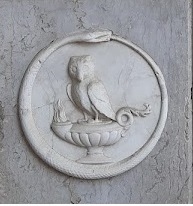
Image at Virgil’s Tomb is reminiscent of Ragnarok.

Previous Post          Next Post

From Wikipedia

Similar Articles by the Same Author

*Easter Tables

** For numeric background see:

**Freeborn, B.L., Validating North American Runic Inscriptions, noahsage.com, November 2022. PDF only.

Freeborn, B.L., Ancient Riddles to Test Our Wits: The Secret Chamber, noahsage.com, January 2016. Post here.

Freeborn, B.L., Another Riddle in Stone from Canada, noahsage.com, August 2025. Post here.

Freeborn, B.L., Deciphering the Spirit Pond, Nomans Land and Narragansett Runic Inscriptions, noahsage.com, November 2022. Amulet post. Map stone postPDF only.

Freeborn, B.L., Et in Arcadia Ego – OUOSVAVV DM – Deciphered, noahsage.com, December 2022. Post here.

Freeborn, B.L., Kensington Rune Stone: A New Translation, noahsage.com, February 2023. Post here.

Freeborn, B.L., Rök runestone of Sweden, noahsage.com, April 2023. Post here.

Freeborn, B.L., Runic Riddles: Time Capsules, noahsage.com, December 2022. Post here.

Freeborn, B.L. The Long Debated Bourne Stone, noahsage.com, January 2023. Post here.

Freeborn, B.L., The Nomans Land – Leif Eriksson Inscription, noahsage.com, December 2022. Post here.

Freeborn, B.L., The Narragansett Inscription: A Translation with its Date of Dedication, Author and Inscriber, noahsage.com, October 2022. Post here.

Freeborn, B.L., The Newport Tower: Finding the Date of Dedication, its Designer and Builder, noahsage.com, October 2022. Post here.

Freeborn, B.L., The Wawa Stone and Its Viking Ship, noahsage.com, August 2025. Post here.

References

Gordon, Cyrus, Riddles in History, Crown Publishers, Inc. New York, 1974.

Landsverk, O.G., Runic Records of the Norsemen in America, Erik J. Friis, Publisher, Rushford, MN, 1974.

Mongé, Alf & O.G. Landsverk, Norse Medieval Cryptography in Runic Carvings, Norseman Press, Glendale, California, 1967.

Derogatory article by Aslak Liestol of Alf Mongé’s work: http://collections.mnhs.org/MNHistoryMagazine/articles/41/v41i01p034-042.pdf  and….

…Landsverk responded to these comments in Ancient Norse Messages pg. 126-129; and often in Runic Records of the Norsemen in America.

Wikipedia articles on: Guercino ‘Et in Arcadia Ego’ ; Virgil ; Poussin ‘Et in Arcadia Ego’ ; Shugborough Inscription ; and many others.

Previous Post          Next Post

Hidden Messages from the Ancients

© 2019 B. L. Freeborn

Here is a short riddle…


את הארוט
סעו נאטטירו פניסו אנו וו את
טסאלפמיס סאדוך ראוא דאטארך רו
פניראדיסנוך,
ווה פנול טי כווט וט כארב טי
,אנו וו את טסום טלוכיוויד.

??????

Use this key:

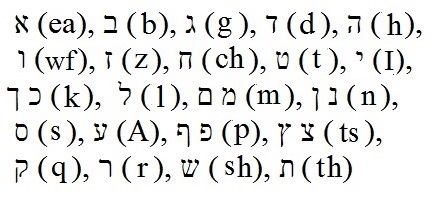
Key to the Hebrew Letters and the Latin Letter that will serve to substitute for it in this study due to font issues.

Using the above key to the Hebrew letters find:

Torah The
the of one using written was
or created ever codes simplest
considering,
it break to took it long how
.difficult most the of one,

Then read them right to left:

The Torah
was written using one of the
simplest codes ever created or,
considering
how long it took to break it,
one of the most difficult.

Apply this same method to this verse from the Torah. (Word order already reversed.)

Deuteronomy Verse 25:14:

לך יהיה לא
בביתך
איפה
איפה
גדולה
וקטנה

Change into Latin letters:

ea-l  h-i-h-i  k-l

c-th-i-b-b

h-p-i-ea

h-p-i-ea

h-l-wf-d-g

h-n-t-q-wf

Into Old English using linked words (letters):

Eall! Hie! Hie! Cyll!
Cuthe-thy-yb-beeb
Haep-pie-ea
Haep-pie-ea
Hleow-wod-dag
Hnat-taque-quo

From Old English to modern:

All! Hy! Hy! It killed!
Clearly then around about it was stranded in tides
It happened as the powerful worms were at the source
At the hollow mound it was senseless as the daggers
collided and changed the direction of its tack as it was leveled

Using the same method:

-Deuteronomy 28:1

גויי כל על

l-a   l-k   i-i-wf-g

Laeg loc eage-iew-wag

The lay and look at the eye was revealed and a wall

Using the same method:

-Deuteronomy 34:6

מול מואב בארץ

ts-r-ea-b   b-ea-wf-m   l-wf-m

Tos-seare-rab beuf-wom loma

It tossed, seared and raved above as it was bent where it looms

And these are some of the numerous other gems:

“Gaze on it all and how it was essentially horrible.”   -Numbers 6:4

“It quelled the living with stones that were abundant
It billowed forth thus as it ebbed at the gorges
in the lands with wasting heat.”    -Numbers 22: 38

“The battles on the living were woeful omens and flames that married.”    -Numbers 22: 41.

Last post —   Back to the first post on this topic


Making Words in Indo-European

© 2019 B. L. Freeborn

It has been suggested in prior posts that the alphabet is the basis of the Indo-European Language. The Hebrew Alphabet is one of the oldest alphabets and was used for this study. (See below.) Each letter already had a sound and a number associated to it. In this study a concept was attached. These symbols then comprise the Indo-European language.

To complete the exercise, let us put it to the test by examining some old Anglo-Saxon words and others. Using the concept list at the bottom observe how it may be used with the following words:

Sun… a combination of s-u-n: continuous-ongoing-yet varying. This aptly describes the sun.

From Anglo-Saxon (Old English): nes which means to survive. It is comprised of n-s: varying yet ongoing.

From Old English nest. It is comprised of n-s-t: varying yet ongoing place.

From Old English os means mouth. In Latin it means bone. It is comprised of o-s: ongoing and continuous.

From Greek chaos means abyss. Today it means confusion. It is comprised of ch-a-o-s: changing-source-ongoing-continuous.

From Old English yth means flood. It is comprised of i-th: eye – of greatest importance. Suggesting the source of the flood.

From Old English toss. It is essentially comprised of ts: to harm by tossing.

From Old English ra means to raid. Comprised of r: explosion/spreading.

From Old English raesc meaning shower. It is comprised of r-sh: explosion/spreading – of the smallest.

Compare to ras meaning to search out. Today it means erase. Comprised of r-z: explosion/spreading – sever.

Compare to raes meaning to rush, attack. Comprised of r-s: explosion/spreading – continuous.

From Old English sar means sore. Comprised of z – r: sever – spread.

From Old English seare means cunning. Comprised of s-r: continuous – spreading.

From Old English net. Comprised of n-t: varying – places of union/ties.

From Old English mag meaning may. Comprised of m-A: more – allowed.

From Old English ag means to gain or take. Comprised of a-g: source-action.

From Old English ah means to gain or take. Comprised of a-h: source-on high.

Now examine the word magnet. Note the contraction of may-ag-net as defined above.

From Old English thoth means yet, that, then at that time. Comprised of th-th: important-extreme.

From Greek tessarace means summit of a four sided tetrahedron. Note the contraction of toss-seare-raes or tossing that continued from an attack.

And the last word for the day…

The seventh word in the Torah (in Latin letters) is ts-r-ea-h which means in Hebrew (when read left to right) the Earth. Note the contraction of toss-seare-ra-ah or a tossing that continued as it raided and gained control.

This all leaves one very much to consider……..!

Significant ideas of the Indo-European Language:

‘a’ source, ‘b’ to be bisected, ‘g’ action, rotation,

Key to the Hebrew Letters and the Latin Letter that will serve to substitute for it in this study due to font issues.

‘d’ a division or state,‘h’ on high, ‘u’,’o’,’wf’ ongoing,

‘z’ to sever, severeness, ‘ch’ to change,

‘t’ a place of union, linear action, ‘I’,’y’ the eye or center,

‘k’ the impact crater and its properties,

‘L’ to lie where it fell, to lay out, to be in a line,

‘m’ more, might, measure of, ‘n’ negation, to reverse in direction yet continue,

‘s’ continuous state of being, unbroken, ‘A’ assigned, custom law,

‘p’ power in the small or great, ‘ts’ to harm by tossing, teasing, twisting, action that harms,

‘q’ magnetic pole and force,

‘r’ behavior of an explosion,

‘sh’ becoming infinitely small or transparent, ephemeral

and ‘th’ denotes importance and order of events.

Last postNext post

Back to the first post on this topic


The Indo-European Language in Summary

© 2019 B. L. Freeborn

It was suggested previously that the alphabet as preserved in the Hebrew Script represents the original Indo-European Language and that each letter represents a sound, number and idea.

David Sacks, author of the excellent work on the alphabet “Letter Perfect: The Marvelous History of out Alphabet from A to Z”, would not approve of anything written here. He relates that the letters were created to describe objects such as houses, sticks, monkeys, mouths and eyes etc.

What has been proposed in these posts and reiterated below is the idea the alphabet was developed to describe physical principles such as continuity, points, and negation. This is the vocabulary of scientists. Their need to relate their discoveries and preserve the history of the apocalypse drove the development of this sound/number/symbol system and resulted in a language that spread from one scientific mind to the next until it was well….. pretty much known world-wide. We find it in its most basic form in Anglo-Saxon (Old English) and in its advanced and far distant forms in such places as Japan and Canada.

From Anglo-Saxon: toss and name (meaning ‘to take possession’);

compare from Japanese: tsunami  (meaning ‘a wave that tosses and takes’).

From Anglo-Saxon: ness (headland), top and pock;

compare to the name in the native language of Hudson Bay:  Nastopoka Arc.

Here is a summary of the significant ideas of the Indo-European Language:

‘a’ source, ‘b’ to be bisected, ‘g’ action, rotation,

‘d’ a division or state,‘h’ on high, ‘wf’ ongoing,

‘z’ to sever, severeness, ‘ch’ to change,

‘t’ a place of union, linear action, ‘I’ the eye or center,

‘k’ the impact crater and its properties,

‘L’ to lie where it fell, to lay out, to be in a line,

‘m’ more, might, measure of, ‘n’ negation, to reverse in direction yet continue,

‘s’ continuous state of being, unbroken, ‘A’ assigned, custom law,

‘p’ power in the small or great, ‘ts’ to harm by tossing, teasing, twisting, action that harms,

‘q’ magnetic pole and force,

‘r’ behavior of an explosion,

‘sh’ becoming infinitely small or transparent, ephemeral

and ‘th’ denotes importance and order of events.

Key to the Hebrew Letters and the Latin Letter that will serve to substitute for it in this study due to font issues.

Before this topic is concluded, let us use the above to look at a few interesting words.

Last postNext post

Back to the first post on this topic

Another Secret Hidden in the Hebrew Alphabet

© 2019 B. L. Freeborn

It was suggested previously that the alphabet as preserved in the Hebrew Script represents the original Indo-European Language and that each letter represents a sound, number and idea.

In the last posts ea, b, g; d, h, wf, z, ch, t; I k, L; m, n, s; A, p, ts; q, r, sh and th were examined.

Consider that the sounds may have been assigned to the numbers to preserve a specific message. Then each time the alphabet was read certain words were spoken.

Does a-b-g-d-h-u-z-ch-t-i-k-l-m-n-s-a-p-ts-q-r-sh-th say something?

It is suggested that it did originally tell a specific story. This is why the letters k, l, m, n have maintained their order as they were transferred into various alphabets. The meaning of the words as they are found in this series was stated at the end of each post. All the words are gathered together below in order.

Does it say….

It ebbed as it was done in a big way. It wandered as it was divided and somehow it was driven away. The warriors chattered at the tie. Increasingly it was killed and lamed. Yet men survived. The story repeated as it put it here and tossed it. It tossed the magnetic pole into a quern as it rushed the sheath.

ea-b or aeb = ebb;

b-g or beg = to do, care for, used today in the phrase “that is very big of you”;

g-d or gad (wandering in lack)

d-h or dah = division, partial

h-wf or hu = how, hwy = why

wf-z or fys = feeze, drive away

z-ch or secg = ‘sedge’, reed, sword, warrior

Key to the Hebrew Letters and the Latin Letter that will serve to substitute for it in this study due to font issues.

ch-t or ‘chette’ = chatter from raescettan = crackle, creak;

t-i or tieg = to tie, bind;

i-k or iec = increase;

k-l or cyll = skin, kill

l-m or lama = cripple, lay;

m-n or man = mankind, force, troop;

n-s or nes = escape, survive

s-A or seg = say, story;

A-p or apa = repeat, manifest;

p-ts or put-toss.

ts-q or toss – cue;

q-r or cweorn = quern; queer = unusual state

r-sh or raesc = shower, raesc = vibrate, quiver;

sh-th or sceath = sheath, covering.

Last postNext post

Back to the beginning of this series

Indo-European: In the Simplest Terms

© 2019 B. L. Freeborn

It was suggested previously that the alphabet as preserved in the Hebrew Script represents the original Indo-European Language and that each letter represents a sound, number and idea.

In the last posts ea, b, g; d, h, wf; z, ch, t; I, k, L; m, n, s; A, p and ts were studied. In this post the last of the letters: q, r, sh and th are examined.

They represent numbers 100, 200, 300 and 400 respectively. The Hebrew Letters are as seen in the image below.

The ‘q’ sound represents the number 100. When pronounced as ‘cue or queue’ it reveals itself. It suggests what happens next or lining up. The word quintessence means the fifth essence or element. The other elements are air, fire, earth, and water. What element exists that is not listed here? Magnetism and it has the ability to make things cue up.

Consider that it suggests the idea: magnetic pole and force.

The next letter ‘r’ has value 200. We find it used in such common words as rush, roar, ray, rage and rake. As before in its related terms 20 and 2 we have a doubling here. It repeats the idea that two comets raged and raked or exploded as they struck.

Consider it suggests the idea: behavior of an explosion.

The next letter provides the sound ‘sh’. It has value 300. We see it used in such words as shim, shimmer, show, shoe, and shy.

Consider that it suggests the idea: becoming infinitely small or transparent, ephemeral.

The last letter provides the sound ‘th’. It has value 400. Numerically this an extraordinary number. It is the ratio between the distances of the Moon and Earth; and Sun and Earth; and their diameters. As a sound, it must be one of the most frequently used in modern English. It is essentially ‘the’ and found in this, that, then, there, thus, thing etc. At one time there was even a second form of the word spelled ‘tha’ which meant then, at that time. We use it to give words importance. Get the book not a book.

Consider that it suggests the idea: denotes importance and order of events.

Key to the Hebrew Letters and the Latin Letter that will serve to substitute for it in this study due to font issues.

From Anglo-Saxon note these examples using these letters:

cwys = bruise, cwec = quicken, cwel = quell;

ra = ran, robbery, ryhe = blanket, rec = to govern;

shy = shoe, foundation, scyg = to shoe, sceaw = show;

theg = to serve, thy = thy, the, after, theb = thief, thaw = thaw.

Note the meaning of the words as they are found in series as provided by the alphabet. Continuing where we left off:

ts-q or toss – cue;

q-r or cweorn = quern, queer = unusual state;

r-sh or raesc = shower, raesc = vibrate, quiver;

sh-th or sceath = sheath, covering.

Before we had these significant ideas: ‘a’ source, ‘b’ to be bisected, ‘g’ action, rotation, ‘d’ a division or state,‘h’ on high, ‘wf’ ongoing, ‘z’ to sever, severeness, ‘ch’ to change, ‘t’ a place of union, linear action, ‘I’ the eye or center, ‘k’ the impact crater and its properties, ‘L’ to lie where it fell, to lay out, to be in a line, ‘m’ more, might, measure of, ‘n’ negation, to reverse in direction yet continue, ‘s’ continuous state of being, unbroken, ‘A’ assigned, custom law, ‘p’ power in the small or great, and ‘ts’ to harm by tossing, teasing, twisting, action that harms. Each is represented by a short sound.

Now we have these ideas: ‘q’ magnetic pole and force, ‘r’ behavior of an explosion, ‘sh’ becoming infinitely small or transparent, ephemeral and ‘th’ denotes importance and order of events.

Last postNext post

In the Indo-European Language: Letters Hold the Power

© 2019 B. L. Freeborn

It was suggested previously that the alphabet as preserved in the Hebrew Script represents the original Indo-European Language and that each letter represents a sound, number and idea.

In the last posts ea, b, g; d, h, wf; z, ch, t; i, k, L; m, n and s were studied. In this post A, p, and ts are examined.

They represent numbers 70, 80 and 90 respectively. The Hebrew Letters are as seen in the image below.

It is suggested the ‘long A’ sound represents the number seventy. This number is of importance when measuring longitude. The distance between each degree is 69.2 miles at the equator. From the pole down it creates a wedge shape which is reflected in both the Latin and Hebrew letter form. Notably in Anglo-Saxon ae meant law, custom.

Consider that it suggests the idea: assigned, custom, law.

The next letter ‘p’ has value 80. We find it used in such common words as point, place, plane and power.

Consider it suggests the idea: power in the small or great.

The next letter provides the sound ‘ts’. It has value 90. Numerically this is an important number. The pole lies at 90 degrees and this is the place where the story of Baal plays out. The comet struck here at the tessarace. (A tessarace is the summit of a tetrahedron or four-sided figure with top and bottom like the Great Pyramid.)

Consider that it suggests the idea: to harm by tossing, teasing, twisting, action that harms.

Key to the Hebrew Letters and the Latin Letter that will serve to substitute for it in this study due to font issues.

From Anglo-Saxon note these examples using these letters:

At = at, awa = world without end, aetys = present, attest, al = fire, burning;

pa = father, pohha = pocket, pawa = peacock;

teosu = harm, injure, tosaw = strew, scatter.

Note the meaning of the words as they are found in the series as provided by the alphabet’s order. Continuing where we left off:

s-A or seg = say, story;

A-p or apa = repeat, manifest;

p-ts or put-toss.

Before we had these significant ideas: ‘a’ source, ‘b’ to be bisected, ‘g’ action, rotation, ‘d’ a division or state,‘h’ on high, ‘wf’ ongoing, ‘z’ to sever, severeness, ‘ch’ to change, ‘t’ a place of union, linear action, ‘I’ the eye or center, ‘k’ the impact crater and its properties, ‘L’ to lie where it fell, to lay out, to be in a line, ‘m’ more, might, measure of, ‘n’ negation, to reverse in direction yet continue, and ‘s’ continuous state of being, unbroken. Each is represented by a short sound.

Now we have these ideas: ‘A’ assigned, custom law, ‘p’ power in the small or great, and ‘ts’ to harm by tossing, teasing, twisting, action that harms.

Last postNext post

Back to first post on this topic

The Indo-European Language: More Numbers and Ideas

© 2019 B. L. Freeborn

It was suggested previously that the alphabet as preserved in the Hebrew Script represents the original Indo-European Language and that each letter represents a sound, number and idea.

In the last posts ea, b, g; d, h, wf; z, ch, t; I, k and L were studied. In this post m, n and s are examined.

They represent numbers 40, 50 and 60 respectively. The Hebrew Letters are as seen in the image below. Now the Hebrew script shows it has something in common with other alphabets such as Latin, Greek and Cyrillic. The letter order of k, l, m, n is consistent in all of these alphabets.

The ‘m’ sound represents the number forty. Biblically this is an important number. The flood lasted 40 days and nights. Moses wandered in the wilderness for 40 years etc. Consider that a square of sides of 40 has a diameter of 56.56 and this is that all important number that only the initiates could see. It conceals the most important measure. Note that the word measure is two words ma and sure. The first means more and the latter suggests we will be sure of it if we measure.

Consider that it suggests the idea: more, might, measure of.

The next letter ‘n’ has value 50. It too has unique properties. It suggests halves as in 50-50. Its original letter form was a down, up, down stroke similar to the modern form with the up then down. The letter suggests it is something that reverses.

Consider it suggests the idea: negation, to reverse in direction yet continue. We find it used in such common words as no, negate, next and nigh.

The next letter provides the sound ‘s’. It has value 60. Like its counterpart 6, it suggests time. In this case time is measured in increments of 60 seconds and minutes. The form of the Hebrew letter is a circle and circles suggest ongoing cycles.

Consider that it suggests the idea: continuous state of being, unbroken.

Key to the Hebrew Letters and the Latin Letter that will serve to substitute for it in this study due to font issues.

From Anglo-Saxon note these examples using these letters:

ma = more, maeg = may, male kinsman, mah = evil;

ne = no, not equal, nag = not to own, neah = almost, lately, finally;

sae = sea, se = thus, seow = sew, bring to fruition.

Note the meaning of the words as they are found in the series as provided by the alphabet’s order. Continuing where we left off:

l-m or lama = cripple, lay;

m-n or man = mankind, force, troop;

n-s or nes = escape, survive.

Before we had these significant ideas: ‘a’ source, ‘b’ to be bisected, ‘g’ action, rotation, ‘d’ a division or state,‘h’ on high, ‘wf’ ongoing, ‘z’ to sever, severeness, ‘ch’ to change, ‘t’ a place of union, linear action, ‘I’ the eye or center, ‘k’ the impact crater and its properties, and ‘L’ to lie where it fell, to lay out, to be in a line. Each is represented by a short sound.

Now we have these ideas: ‘m’ more, might, measure of, ‘n’ negation, to reverse in direction yet continue, and ‘s’ continuous state of being, unbroken.

Last postNext post

Back to first post on this topic

Indo-European as a Language is Laid Out

© 2019 B. L. Freeborn

It was suggested previously that the alphabet as preserved in the Hebrew Script represents the original Indo-European Language and that each letter represents a sound, number and idea.

In the last posts ea, b, g; d, h, wf; z, ch and t were studied. In this post I, k and L are examined.

They represent numbers 10, 20 and 30 respectively. The Hebrew Letters are as seen in the image below. Now the numbers count out the tens.

It is suggested the ‘I’ or ‘y’ sound represents the number ten. Each time a number is multiplied by ten it moves one place to the left and a zero or place holder is added to the right if no other digit (1, 2, 3…) is used. Similarly, division by ten moves the number to the right. Essentially, this is the number all the other numbers are centered around.

Consider that it suggests the idea: the eye or center.

The next letter ‘K’ has value 20. It is twice 10. The double is important here. Recall that it has been suggested this language was invented to transmit the ideas of the Baalists. Central to this is the idea that two comets struck the planet simultaneously. That idea is embodied in this number. The Latin K takes the form of the Phoenician letter for ‘ea.’ Turn it on its side and the idea of a sharp object impacting with a surface is depicted. In the Hebrew forms we see perhaps a precipitous cliff and crater.

Consider it suggests the idea: the impact crater and its properties. We find it used in such common words as crater, cave, cause and collide.

The next letter provides the sound ‘L’. It has value 30. Thirty correlates well with the idea of measurement. Thirty feet is 360 inches. The circle is measured in 360 degrees. A double hour of longitude is 30 degrees etc.  All of which suggest the ordering of things. We find it in such common words as to lie, to lay, land and line.

Consider that it suggests the idea: to lie where it fell, to lay out, to be in a line.

Key to the Hebrew Letters and the Latin Letter that will serve to substitute for it in this study due to font issues.

From Anglo-Saxon note these examples using these letters:

eage = eye, iu = geo, formerly, yb = ymbe = around, at, upon;

caeg = key, essence, caeg = object or place, ceahhe = dawn;

lea = piece of ground, lieg = to lie, at rest, leg = lieg = flame.

Note the meaning of the words as they are found in the series as provided by the alphabet’s order. Continuing where we left off:

t-i or tieg = to tie, bind;

i-k or iec = increase;

k-l or cyll = skin, kill.

Before we had these significant ideas: ‘a’ source, ‘b’ to be bisected, ‘g’ action, rotation, ‘d’ a division or state,‘h’ on high, ‘wf’ ongoing, ‘z’ to sever, severeness, ‘ch’ to change, and ‘t’ a place of union, linear action. Each is represented by a short sound.

Now we have these ideas: ‘I’ the eye or center, ‘k’ the impact crater and its properties, and ‘L’ to lie where it fell, to lay out, to be in a line.

Last postNext post

Back to first post on this topic